|
Getting your Trinity Audio player ready... |
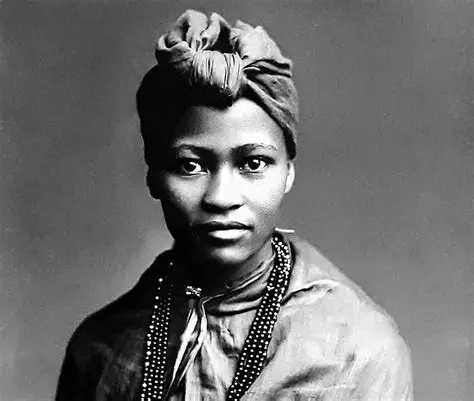
Charlotte Maxeke was a South African educator, Christian leader, social activist and political organizer whose work connected education with the struggle against racial and gender discrimination. Born in 1874, she became one of the first Black South African women to earn a university degree and later emerged as a leading voice in campaigns against discriminatory laws affecting African women. Her activism also helped create organized political space for women in the early twentieth century.
Her life crossed several important worlds. She received missionary education, became a teacher, travelled internationally as a singer, studied in the United States, worked through church organizations and entered the emerging African nationalist movement. Her career shows how education, religion, women’s organizing and political activism could reinforce one another under colonial rule.
The experience broadened her understanding of race, culture and public life, while also revealing the limitations placed on African performers abroad. During her time in Britain, she encountered women’s political ideas and suffrage activism.
Early Life and Family Background
Charlotte Makgomo Mannya was born on April 7, 1874. South African historical records differ over her exact birthplace. The most detailed modern account places her birth in Ramokgopa in the Polokwane district, although Fort Beaufort in the Eastern Cape has also appeared in older accounts. She spent much of her early life in the Eastern Cape, and her family later moved to Kimberley after the discovery of diamonds.
Her early education took place through missionary institutions. In Kimberley, she developed as a teacher and became active in church life. Music also played an important role in her youth. In 1891, she and her sister Katie joined the African Jubilee Choir, beginning an international experience that exposed Maxeke to societies beyond southern Africa.
Education and International Experience
The African Jubilee Choir travelled to Britain, where Maxeke performed before audiences that included Queen Victoria. During her time in Britain, she encountered women’s political ideas and suffrage activism.
Maxeke later travelled to the United States with a church choir. When the tour ended, she remained there to pursue higher education. She enrolled at Wilberforce University in Ohio, an institution associated with the African Methodist Episcopal Church. She studied under educators connected with the Black intellectual tradition, including W. E. B. Du Bois, and graduated with a Bachelor of Science degree. She became one of the first Black South African women to earn a university degree.
Her American education shaped her later work in South Africa. It strengthened her commitment to education, Christian service, racial advancement and organized community action. She also met Marshall Maxeke in the United States, and they later married after returning to South Africa.
Teaching and Christian Work
After returning home, Maxeke combined education with missionary and community work. She helped organize women’s religious activities and worked with the African Methodist Episcopal Church. She and Marshall established the Wilberforce Institute at Evaton, where they taught and promoted Christian education.
Activism and the Struggle Against Pass Laws
Maxeke gradually moved beyond church and education into organized political activism. She opposed discriminatory pass requirements imposed on African women and helped organize resistance in the Orange Free State. In 1913, she was involved in anti-pass protests in Bloemfontein, where African women challenged laws that threatened their freedom of movement and economic security. The campaign became an important episode in the early history of women’s resistance in South Africa.
In 1918, Maxeke founded the Bantu Women’s League of the South African Native National Congress, later associated with the development of organized women’s activism within the African nationalist movement. The organization mobilized women around pass laws and other social issues. Maxeke also led a delegation to Prime Minister Louis Botha to present women’s grievances, followed by further protest activity.
Her activism was not limited to gender issues. She wrote in Xhosa about women’s social and political position and became involved in wider campaigns concerning wages, employment and African rights. She participated in activities connected with the Industrial and Commercial Workers’ Union and supported efforts to improve the economic position of African workers.
Public Leadership and Social Work
Maxeke’s public work crossed racial and organizational boundaries. She addressed women’s reform groups and participated in the Joint Council of Europeans and Bantus. She also pursued practical social work through an employment agency for Africans and probation work with juvenile offenders.
These activities showed that her leadership extended beyond protest politics. Maxeke viewed education, employment, religion and community organization as connected parts of social advancement. Her approach helped establish a model of African women’s public leadership at a time when formal political institutions offered them very limited opportunities.
Later Years and Death
Maxeke remained active in public affairs during her later years. In 1928, she attended a conference in the United States and continued her interest in African welfare and international connections.
Charlotte Maxeke died in Johannesburg on October 16, 1939, at the age of 65. By the time of her death, she had built a public career that combined education, religious service, women’s organization, social work and political activism. Her life had also helped demonstrate that African women could occupy influential positions in intellectual and public life.
Legacy and Historical Significance
Charlotte Maxeke’s historical importance rests on the breadth of her work as well as the barriers she confronted. Her university education challenged the restricted expectations placed on Black women under colonial rule. Her teaching and missionary work expanded access to education, while her political organizing gave African women a stronger collective voice.
Her role in the 1913 anti-pass campaign is particularly significant because it placed women’s resistance at the center of a major struggle against discriminatory legislation. The Bantu Women’s League, which she founded in 1918, provided an organized platform for African women’s political participation.
Maxeke’s influence continued after her death. Institutions, schools and public facilities in South Africa have carried her name, including Charlotte Maxeke Johannesburg Academic Hospital. Her memory has also remained important within South African women’s history and the wider history of the struggle for racial equality.
Frequently Asked Questions
Who was Charlotte Maxeke?
Charlotte Maxeke was a South African educator, activist, social worker and political organizer who campaigned for African women’s rights and opposed discriminatory pass laws.
Where was Charlotte Maxeke educated?
She received early missionary education in the Eastern Cape and later studied at Wilberforce University in Ohio, where she earned a Bachelor of Science degree.
What did Charlotte Maxeke do in 1913?
She helped organize African women’s opposition to pass requirements in Bloemfontein. The campaign became an important early example of organized women’s resistance in South Africa.
What organization did Charlotte Maxeke found?
She founded the Bantu Women’s League in 1918, an organization that mobilized African women around political and social issues.
When did Charlotte Maxeke die?
Charlotte Maxeke died in Johannesburg on October 16, 1939, aged 65.
Conclusion
Charlotte Maxeke’s life linked education, faith, social service and political action. From missionary schools and international musical tours to Wilberforce University and organized resistance in South Africa, she used each stage of her experience to expand opportunities for African people and women. Her career remains an important part of South African history because it shows how women’s leadership developed alongside the broader struggle against racial discrimination.