|
Getting your Trinity Audio player ready... |
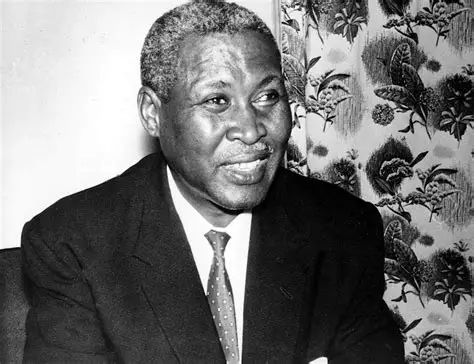
Albert John Mvumbi Luthuli was a South African teacher, traditional chief and anti-apartheid leader. He became the first African to receive the Nobel Peace Prize, earning international recognition for his commitment to nonviolent resistance against racial discrimination. As president of the African National Congress (ANC) from 1952 until his death in 1967, he helped organise opposition to apartheid and promote a democratic, multiracial South Africa.
Known as Chief Albert Luthuli, he combined his Christian faith, traditional leadership and political activism in the struggle for equality. His leadership helped establish the anti-apartheid movement as an international human rights cause.
Early Life and Family Background
Albert Luthuli was born around 1898 near Bulawayo in Southern Rhodesia, present-day Zimbabwe. His father, John Bunyan Luthuli, worked as a teacher, interpreter and evangelist at a Seventh-day Adventist mission. His mother was Mtonya Luthuli.
His father died when Albert was still a child. His mother subsequently returned with him to her family home in Groutville, Natal, in present-day KwaZulu-Natal, South Africa. There, he grew up within the Zulu community and developed a strong connection to his family’s traditions and Christian faith.
Luthuli attended local mission schools before continuing his education at the Ohlange Institute near Durban. The school was founded by John Dube, an important educator and early ANC leader.
His education introduced him to African intellectual and political thought. It also prepared him for a career in teaching, which became his first major profession.
Education and Teaching Career
Luthuli trained as a teacher at the Edendale Methodist Teachers’ Training Institution near Pietermaritzburg. After completing his training in 1917, he began teaching in the Eastern Cape.
He later joined Adams College in Natal, where he taught for approximately 15 years. The institution was an important centre of education for Black South Africans. Luthuli taught and became involved in religious and community activities.
He also served as a lay preacher in the Congregational Church. His Christian beliefs influenced his understanding of justice, human dignity and peaceful resistance.
Teaching gave him experience in leadership and community organisation. However, his responsibilities gradually expanded beyond education as he became more involved in traditional and political affairs.
Traditional Leadership in Groutville
In 1936, Luthuli accepted an invitation to become chief of the Groutville community. He left his teaching position and returned to Natal to serve his people.
As chief, he addressed local concerns involving land, education, agriculture and community development. He also represented the interests of residents in dealings with government authorities.
His position brought him into direct contact with discriminatory government policies. Apartheid had not yet become the official name of the national system, but racial segregation and restrictions on Black South Africans were already deeply established.
Luthuli increasingly opposed policies that undermined African land rights and political participation. His traditional responsibilities therefore became closely connected with his growing political activism.
Entry into the African National Congress
Luthuli joined the African National Congress in 1945 and became involved in its Natal provincial activities. He supported efforts to organise African communities against discriminatory laws and racial exclusion.
His political influence increased during the early 1950s. The ANC launched the Defiance Campaign in 1952, encouraging people to challenge unjust apartheid laws through organised civil disobedience.
Luthuli supported the campaign and became an important figure in the resistance movement. His political activities brought him into conflict with the government, which demanded that he choose between his position as chief and his involvement in the ANC.
When he refused to abandon his political work, the authorities removed him from his traditional leadership position in 1952. The decision strengthened his commitment to the anti-apartheid struggle.
That same year, the ANC elected him president-general. He held the position until his death in 1967.
Leadership and Anti-Apartheid Struggle
As ANC president, Luthuli helped expand the organisation’s influence and strengthen cooperation among different groups opposing apartheid. He supported a broad movement that included African, Indian, Coloured and white opponents of racial discrimination.
His leadership emphasised nonviolent resistance, civil disobedience and public mobilisation. He believed South Africa could become a democratic society in which people of different racial backgrounds enjoyed equal rights.
The government responded to his activities with restrictions. In 1953, authorities banned him from attending public gatherings and confined him to a limited area around his home in Groutville.
Despite these restrictions, Luthuli continued to communicate with ANC members and supporters. He also faced prosecution during the 1956 Treason Trial, in which he and more than 150 other anti-apartheid activists were accused of treason. The charges were eventually withdrawn against him in 1958.
The Sharpeville massacre of March 1960 intensified the struggle. Police killed 69 people during a protest against pass laws, and the government subsequently banned the ANC and the Pan Africanist Congress.
Although the ANC later established its armed wing, Umkhonto we Sizwe, Luthuli continued to emphasise nonviolent resistance publicly. His leadership during this period reflected the difficult choices facing the liberation movement as government repression increased.
Nobel Peace Prize
In 1960, Albert Luthuli received the Nobel Peace Prize for his nonviolent struggle against apartheid. He became the first African recipient of the award.
The honour brought international attention to South Africa’s racial policies and strengthened the global campaign against apartheid. It also recognised Luthuli’s role in promoting peaceful political resistance despite government persecution.
Because of restrictions imposed on him, Luthuli could not travel freely to collect the award immediately. He eventually received it in Oslo, Norway, in December 1961.
In his Nobel lecture, he discussed racial discrimination, human dignity and the need for peaceful coexistence. He presented the struggle against apartheid as part of a wider campaign for human rights.
His award also helped connect South Africa’s liberation movement with international civil rights and anti-racism campaigns.
Death of Albert Luthuli
Albert Luthuli died on July 21, 1967, in Groutville, Natal. He was approximately 69 years old.
He died after being struck by a train while crossing a railway bridge near his home. His death occurred while the apartheid government continued to restrict his movements and political activities.
His passing was a major loss to the ANC and the wider anti-apartheid movement. Oliver Tambo succeeded him as ANC president and continued leading the organisation during its years in exile.
Albert Luthuli’s Legacy
Albert Luthuli remains an important figure in South African and African history. His leadership helped strengthen the ANC during a difficult period of political repression. He also helped bring international attention to the injustice of apartheid.
His Nobel Peace Prize established his place in the history of global human rights activism. It recognised the importance of organised nonviolent resistance and connected South Africa’s liberation struggle with wider international campaigns for equality.
Luthuli’s influence also extended beyond national politics. His Christian beliefs, traditional leadership and commitment to education shaped his approach to public service.
Today, South Africa honours his contributions through institutions, memorials and public programmes. The Luthuli Museum in Groutville preserves his memory and presents his role in the country’s struggle for democracy.
His life remains an example of how education, community leadership and political organisation can contribute to the pursuit of freedom and equal rights.
Frequently Asked Questions
Who was Albert Luthuli?
Albert Luthuli was a South African teacher, traditional chief and anti-apartheid leader. He served as president-general of the ANC from 1952 until his death in 1967.
Why did Albert Luthuli receive the Nobel Peace Prize?
He received the 1960 Nobel Peace Prize for his nonviolent struggle against apartheid and his leadership of resistance to racial discrimination in South Africa.
Was Albert Luthuli the first African to win the Nobel Peace Prize?
Yes. He became the first African recipient of the Nobel Peace Prize in 1960.
What was Albert Luthuli’s role in the ANC?
He served as president-general of the African National Congress from 1952 to 1967. During his leadership, the organisation expanded its resistance to apartheid and built international support.
When did Albert Luthuli die?
Albert Luthuli died on July 21, 1967, in Groutville, South Africa, after being struck by a train.