|
Getting your Trinity Audio player ready... |
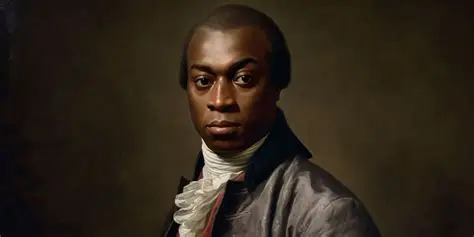
Olaudah Equiano, also known as Gustavus Vassa, was an African-born writer, sailor, merchant and abolitionist whose life became one of the most important personal accounts of the transatlantic slave trade. His 1789 autobiography, The Interesting Narrative of the Life of Olaudah Equiano, or Gustavus Vassa, the African, Written by Himself, brought the experiences of enslavement before a large British reading public.
Equiano’s life stretched across West Africa, the Caribbean, North America and Britain. He experienced kidnapping, enslavement, forced migration and life at sea before purchasing his freedom in 1766.
As a free man, he became a prominent campaigner against the British slave trade. He wrote petitions, addressed the public, worked with abolitionists and used his own experience to challenge arguments that defended slavery.
His autobiography became one of the best-known eighteenth-century slave narratives. It remains an important historical and literary work.
Early Life and Family Background
Olaudah Equiano was born around 1745. In his autobiography, he stated that he was born in an Igbo-speaking community called Essaka, in the region he described as part of the Kingdom of Benin in West Africa.
He described his father as an important member of his community. His account also provides details about local customs, family life, agriculture, religion and systems of political authority.
According to his narrative, Equiano grew up with his sister in a relatively secure household. His childhood ended suddenly when he and his sister were kidnapped.
The two children were separated after being sold to different enslavers. Equiano was moved through several households before eventually reaching the Atlantic coast.
His own account of childhood became an important part of his later argument against slavery. By describing African family life before enslavement, he challenged European ideas that Africans were naturally suited to bondage.
The Debate Over His Birthplace
Equiano’s claimed African birth has become one of the most debated questions in his biography.
In The Interesting Narrative, he clearly identified himself as African and described his childhood in an Igbo community. For generations, historians accepted this account as the foundation of his life story.
However, historian Vincent Carretta later identified archival records that appear to associate Equiano, then known as Gustavus Vassa, with South Carolina. These records led Carretta and some other scholars to argue that Equiano may have been born in the Americas rather than Africa.
Other scholars have challenged that interpretation and defended the credibility of Equiano’s African origins. The debate remains unresolved, with historians continuing to examine baptismal records, naval documents, shipping records and the evidence contained in Equiano’s own narrative.
For BiographyArchives, the most responsible approach is to distinguish between what Equiano himself reported and what later archival research has questioned. His autobiography remains essential evidence, but his birthplace should not be presented as an uncontested fact.
Kidnapping and Enslavement
Equiano stated that he was about 11 years old when he and his sister were kidnapped.
After their separation, he was repeatedly sold. He experienced different forms of domestic and agricultural labor before being taken toward the Atlantic coast.
He eventually encountered European slave traders and was transported across the Atlantic. The journey exposed him to the violence of the transatlantic slave trade, including overcrowding, disease, confinement and the separation of families.
His description of this experience later became one of the most widely read personal accounts of the Middle Passage.
Equiano’s narrative also distinguished between forms of slavery he had encountered in Africa and the plantation slavery he witnessed in the Americas. His observations gave British readers a perspective that was unusual for the period.
Life in the Atlantic Slave Trade
After reaching the Caribbean, Equiano was taken to Virginia. He was eventually purchased by Lieutenant Michael Henry Pascal of the Royal Navy.
Pascal gave him the name Gustavus Vassa, after the sixteenth-century Swedish king Gustav Vasa. Equiano used the name for much of his adult life, even though he continued to identify himself publicly as Olaudah Equiano.
Pascal took him to Britain, where Equiano entered a very different environment from the plantation colonies.
He learned to read and write and gained valuable maritime experience. His life at sea later became central to his ability to earn money and eventually purchase his freedom.
Equiano served aboard British naval vessels during the Seven Years’ War. His experiences included military voyages and dangerous naval operations.
The years at sea also exposed him to international commerce. He developed practical knowledge of navigation, trade and maritime work that later helped him survive as a free man.
Education and Christian Faith
Equiano’s education was closely connected to his years in Britain. He learned English and developed strong literacy skills. Later, he also became increasingly interested in Christianity.
He was baptized at St Margaret’s Church, Westminster, in February 1759. His baptismal record and his own account provide important evidence about this stage of his life.
Christianity became an important part of Equiano’s intellectual and moral outlook.
His religious beliefs appear throughout The Interesting Narrative. He interpreted many events in his life through ideas of providence, morality, freedom and human responsibility.
His faith also connected him with religious communities in Britain that later supported abolitionist campaigns.
Naval Service and Life at Sea
Equiano’s maritime career continued for several years.
He sailed on British vessels and learned skills that allowed him to participate more independently in maritime commerce. He also became familiar with navigation and the wider Atlantic economy.
His experiences brought him into contact with Europe, Africa, the Caribbean and North America.
At the same time, he remained legally enslaved for much of this period. His ability to work and earn money did not automatically give him freedom.
Equiano therefore began saving money whenever possible. He understood that purchasing his freedom could provide the legal independence needed to control his own life.
His maritime knowledge eventually helped him move beyond the narrow economic opportunities available to many formerly enslaved people.
Purchasing His Freedom
Equiano purchased his freedom in 1766.
This was one of the defining turning points of his life. He had moved from being legally enslaved to becoming an independent Black man who could determine his own employment and movements.
Freedom did not end his exposure to racial discrimination or the dangers of the Atlantic world. However, it gave him greater control over his economic and personal life.
Equiano continued working at sea and became involved in commercial activity.
His experiences as a free sailor and merchant also strengthened his understanding of the economic systems that supported slavery. He saw how human beings were treated as commodities within a much larger commercial network.
That experience later informed his abolitionist arguments.
Life as a Free Man
After gaining his freedom, Equiano spent years travelling and working.
He participated in maritime commerce and developed connections in Britain and other parts of the Atlantic world. His occupations included sailor, merchant and trader.
He also became increasingly involved with religious and abolitionist circles.
London eventually became the main center of his public life. There, he encountered people who opposed the slave trade and who recognized the political value of personal testimony from formerly enslaved Africans.
Equiano was not simply a passive witness to the abolitionist campaign. He became an active participant who wrote, petitioned, travelled and addressed audiences.
His experience gave him an unusual position in eighteenth-century British public life.
Abolitionist Campaign
During the 1780s, Equiano became one of the most visible Black voices in Britain’s campaign against the slave trade.
He worked with abolitionists and became associated with the Sons of Africa, a group of African writers and activists living in Britain.
He also supported campaigns organized by British abolitionists and communicated directly with political figures.
In 1788, Equiano petitioned Queen Charlotte, asking her to support efforts to end the slave trade. His petition described the suffering of Africans and appealed to the moral responsibilities of the British monarchy.
Equiano’s public work was significant because abolitionist arguments often depended on testimony from people who had personally experienced slavery.
His position also challenged the common assumption that Africans could not speak for themselves in political debates.
By writing and speaking publicly, Equiano presented himself as an educated, economically independent African who could document the realities of slavery from personal experience.
The Interesting Narrative
Equiano’s most important literary achievement was The Interesting Narrative of the Life of Olaudah Equiano, or Gustavus Vassa, the African, Written by Himself, first published in London in 1789.
The book traces his life from childhood through enslavement, maritime travel, conversion to Christianity, freedom and abolitionist activism.
It became an important work in the history of Black writing in English.
The book’s importance came partly from its personal character. Instead of presenting slavery only as an abstract political issue, Equiano described its effects through the experiences of one person.
The work also gave readers information about the African societies he remembered, the Atlantic slave trade and the lives of enslaved people in different parts of the British Empire.
The autobiography became highly successful. It went through numerous editions during Equiano’s lifetime and helped establish him as a major abolitionist writer. The London Museum records that it was republished eight times during his lifetime.
The book’s influence continued after his death. It became an important text in the development of the slave narrative and remains widely studied in history, literature and African diaspora studies.
Family and Personal Life
Equiano married Susanna Cullen on April 7, 1792, at Soham in Cambridgeshire.
The marriage connected him to an English family and reflected his increasingly established life in Britain.
The couple had two daughters, Anna Maria and Joanna. Anna Maria died in childhood, while Joanna survived into adulthood. Westminster Abbey records the marriage and the two daughters as part of Equiano’s family history.
Equiano’s family life occupied only a limited part of his public writing. His major public identity remained connected to his work as an author and abolitionist.
His marriage also attracted attention because interracial marriage remained socially controversial in eighteenth-century Britain.
Death
Olaudah Equiano died in London on March 31, 1797. He was about 52 years old.
His wife, Susanna, had died the previous year.
Equiano was buried on April 6, 1797. The original burial ground was later cleared, but his historical memory continued to grow through his autobiography and the abolitionist movement.
He died a decade before Britain abolished its participation in the transatlantic slave trade.
The Slave Trade Act of 1807 eventually ended the British slave trade, although slavery itself continued in parts of the British Empire for years afterward.
Equiano therefore did not live to see the legal abolition for which he had campaigned.
Legacy and Historical Significance
Equiano’s greatest historical contribution was the combination of personal testimony, literary skill and political activism.
His autobiography became a major source for understanding how an enslaved African described displacement, forced labor and life in the Atlantic world. It also helped establish the slave narrative as an important literary form.
His work mattered politically because it reached readers who might otherwise have viewed slavery only as an economic or imperial issue.
Equiano placed individual experience at the center of the debate. His account forced readers to confront the human consequences of the slave trade.
His career also challenged racial assumptions in eighteenth-century Britain. He demonstrated that a formerly enslaved African could become an author, merchant, public speaker and political campaigner.
His influence extends beyond Britain. Equiano is now studied as an important figure in African history, Nigerian historical memory, Black British history, African diaspora studies and literature.
His story is especially important in discussions of African agency. Equiano was not only a victim of the slave trade. After gaining freedom, he used literacy, commerce and public advocacy to influence the society in which he lived.
His legacy also remains connected to the debate over historical evidence. The disagreement about his birthplace has encouraged scholars to examine how autobiographical testimony, official records and historical memory should be weighed against one another.
That debate does not erase the importance of his work. His autobiography remains a major historical document and one of the most influential accounts produced by an eighteenth-century African writer.
In 2009, Westminster Abbey commemorated Equiano with a plaque at St Margaret’s Church, recognizing his importance as a writer and abolitionist. More than two centuries after his death, his name remains associated with the struggle to expose and challenge the transatlantic slave trade.
Read More: MKO Abiola Biography: Early Life, Business Career, June 12 Election and Legacy
Conclusion
Olaudah Equiano’s life was shaped by forced migration, enslavement, maritime travel, education, freedom and political activism. His journey from an enslaved child to a successful writer and abolitionist was unusual in the eighteenth-century Atlantic world.
His greatest contribution was giving the struggle against the slave trade a powerful personal voice. Through The Interesting Narrative, he documented experiences that challenged the economic and moral arguments used to defend slavery.
The continuing debate over his birthplace shows why historical biographies require careful treatment of evidence. Yet regardless of that unresolved question, Equiano’s writings, public advocacy and documented life remain central to the history of abolition, African diaspora literature and Black British history.