|
Getting your Trinity Audio player ready... |
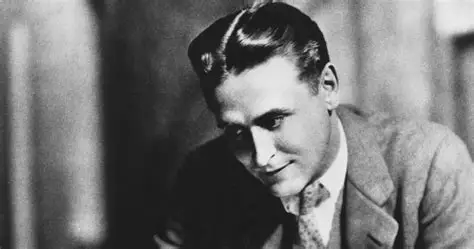
F. Scott Fitzgerald was an American novelist and short-story writer whose fiction captured the aspirations, excesses, anxieties, and disappointments of the 1920s. Best known for The Great Gatsby, he became one of the defining literary voices of the Jazz Age. His writing explored wealth, social class, romantic longing, ambition, identity, and the gap between dreams and reality.
Although Fitzgerald died at only 44, he produced four completed novels, numerous short stories, essays, and other writings. His reputation declined during part of his later life but grew substantially after his death, and The Great Gatsby eventually became a central work of American literature.
Early Life and Family Background
Francis Scott Key Fitzgerald was born on September 24, 1896, in St. Paul, Minnesota. He was named after Francis Scott Key, the American writer who composed the lyrics later used for the United States national anthem. His father, Edward Fitzgerald, came from a Maryland family, while his mother, Mary McQuillan, was the daughter of an Irish immigrant who became a successful wholesale grocer in St. Paul.
Fitzgerald grew up in a comfortable but not wealthy household. His family’s circumstances and his awareness of social class later informed his fiction. He became particularly interested in the difference between inherited privilege and the ambitions of people seeking entry into America’s wealthy social circles.
His early interest in writing appeared during adolescence. He attended the Newman School in New Jersey and later entered Princeton University, where literary ambition became increasingly important to his identity.
Education at Princeton
Fitzgerald entered Princeton in 1913. He did not graduate, but his years at the university strongly influenced his early writing. He became involved with the Princeton Triangle Club and wrote for student publications, developing skills that would later contribute to his professional career.
His academic record was uneven because he devoted considerable energy to writing and extracurricular activities. He became familiar with the social traditions, clubs, ambitions, and hierarchies of university life, material that later appeared in fictional form.
While at Princeton, Fitzgerald developed ambitions to become a successful novelist. His unfinished university experience did not prevent him from pursuing that goal. Instead, his writing became the principal route through which he sought professional recognition.
Military Service and Zelda Sayre
When the United States entered the First World War, Fitzgerald left Princeton and joined the U.S. Army in 1917. He was commissioned as a second lieutenant and trained at Camp Sheridan near Montgomery, Alabama.
While stationed there, he met Zelda Sayre, the daughter of an Alabama Supreme Court justice. Their relationship became central to Fitzgerald’s personal life and later influenced interpretations of his fiction.
Fitzgerald hoped to marry Zelda and establish himself as a successful writer. His first novel, initially developed from his Princeton experiences, became This Side of Paradise. Scribner’s accepted the revised manuscript in 1919, and its publication in 1920 changed his life.
Literary Career and Major Books
This Side of Paradise appeared in 1920 and became an immediate commercial success. The novel portrayed the experiences and ambitions of young Americans and established Fitzgerald as an important voice of his generation. Its success also helped him marry Zelda Sayre in April 1920.
Fitzgerald followed it with The Beautiful and Damned in 1922. The novel examined marriage, wealth, inheritance, ambition, and decline. He also published Flappers and Philosophers in 1920 and Tales of the Jazz Age in 1922, collections that strengthened his association with the culture of the 1920s.
His short stories became an important source of income. Magazines such as The Saturday Evening Post paid well for his fiction, allowing him to support a lifestyle that increasingly became associated with the period he was writing about.
His next major novel, The Great Gatsby, appeared in 1925.
The Great Gatsby
The Great Gatsby is Fitzgerald’s most famous work and the book that secured his lasting place in American literature. Published in 1925, it tells the story of Jay Gatsby, a wealthy and self-invented man whose pursuit of Daisy Buchanan is connected to his larger desire to recreate the past.
The novel is set largely among wealthy communities on Long Island and in New York City. Through Gatsby and the people around him, Fitzgerald examined social class, wealth, romantic idealism, status, and the American pursuit of success. The Library of Congress identifies the novel as a major portrait of the Jazz Age and emphasizes its treatment of wealth, ambition, greed, and social status.
The novel did not become an immediate commercial sensation on the scale of Fitzgerald’s first book. Its reputation grew substantially over subsequent decades. Today, The Great Gatsby is among the most widely read and studied American novels and is frequently regarded as Fitzgerald’s finest work.
Life in Europe and Later Career
After The Great Gatsby, Fitzgerald and Zelda spent considerable time in Europe, particularly France. They became part of the community of American writers and artists living abroad after the First World War. Their social circle included Ernest Hemingway and other prominent expatriate writers.
The Fitzgeralds’ marriage became increasingly difficult. Fitzgerald struggled with heavy drinking, while Zelda experienced serious mental health problems that eventually required prolonged institutional treatment. Their personal difficulties affected Fitzgerald’s writing and finances, although his fiction cannot simply be reduced to autobiography.
In 1934, Fitzgerald published Tender Is the Night. The novel examines wealth, marriage, emotional decline, and life among wealthy expatriates on the French Riviera. Although it did not achieve the commercial success he had hoped for, later readers have recognized its complexity and ambition.
Hollywood and Final Years
By the middle of the 1930s, Fitzgerald’s financial and personal difficulties had intensified. Zelda received psychiatric treatment in Asheville, North Carolina, while Fitzgerald attempted to rebuild his career. He spent the years 1936 and 1937 in the Asheville area before moving to Hollywood.
In Hollywood, Fitzgerald worked as a screenwriter. He also began his final novel, The Last Tycoon, which drew partly on his experiences in the film industry. The novel remained unfinished when he died.
Fitzgerald’s Hollywood years were not a simple return to literary prominence. He faced financial pressure and health problems while trying to regain stability. Nevertheless, The Last Tycoon demonstrated that he continued developing as a novelist near the end of his life.
Personal Life and Death
Fitzgerald married Zelda Sayre in 1920. They had one daughter, Frances Scott Fitzgerald, commonly known as Scottie. Their marriage was marked by periods of affection, conflict, financial difficulty, heavy drinking, and Zelda’s recurring psychiatric illness.
Fitzgerald died in Hollywood on December 21, 1940, at the age of 44. He suffered a heart attack at the apartment of columnist Sheilah Graham, with whom he had been living. His death came before the full revival of his literary reputation.
Zelda survived him but died in 1948 in a fire at Highland Hospital in Asheville, where she was receiving treatment. Their daughter Frances later became involved in preserving and presenting her parents’ literary legacy.
Legacy and Historical Significance
F. Scott Fitzgerald’s importance rests largely on his ability to transform the social atmosphere of his generation into enduring fiction. He wrote about a period of rapid economic growth, changing social behavior, consumer culture, and shifting ideas about class and identity.
His work is particularly important because it does not present wealth as a simple measure of success. Fitzgerald repeatedly examined the emotional costs behind social ambition. His characters often pursue idealized futures while remaining trapped by class divisions, memory, desire, or circumstances beyond their control.
The Great Gatsby has become the clearest expression of these concerns. The Library of Congress includes the novel among the books that shaped America and describes its lasting place in American literary culture.
Fitzgerald’s papers, manuscripts, and correspondence have also become important resources for scholars. Princeton University preserves substantial Fitzgerald collections, including the earliest surviving manuscript of The Great Gatsby.
His literary reputation therefore extends beyond the image of a glamorous Jazz Age writer. Fitzgerald remains significant because his fiction provides a detailed examination of ambition, class, wealth, romantic idealism, and the limits of the American Dream.
Frequently Asked Questions
Who was F. Scott Fitzgerald?
F. Scott Fitzgerald was an American novelist and short-story writer best known for The Great Gatsby and his depictions of the Jazz Age.
What is F. Scott Fitzgerald’s most famous book?
His most famous book is The Great Gatsby, published in 1925. It is widely regarded as a major work of twentieth-century American literature.
Was F. Scott Fitzgerald married?
Yes. He married Zelda Sayre in 1920, and they had one daughter, Frances Scott Fitzgerald.
Did F. Scott Fitzgerald finish college?
No. Fitzgerald attended Princeton University but left without completing his degree. His university experiences nevertheless became important material for his early fiction.
When did F. Scott Fitzgerald die?
Fitzgerald died on December 21, 1940, in Hollywood, California, at the age of 44.
What was F. Scott Fitzgerald’s final novel?
His final novel was The Last Tycoon. He was still working on it when he died, so it remained unfinished.
Conclusion
F. Scott Fitzgerald turned the ambitions and contradictions of early twentieth-century America into some of its most enduring fiction. From This Side of Paradise to The Great Gatsby and Tender Is the Night, his books examined the relationship between wealth, love, status, memory, and aspiration. Although his reputation weakened during parts of his later life, the posthumous revival of his work established him as one of America’s major twentieth-century writers.