|
Getting your Trinity Audio player ready... |
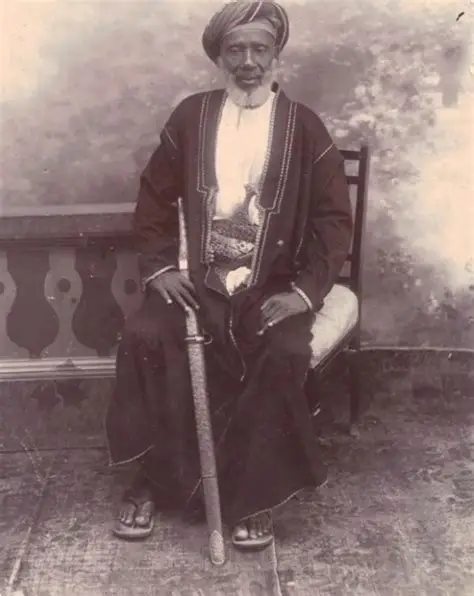
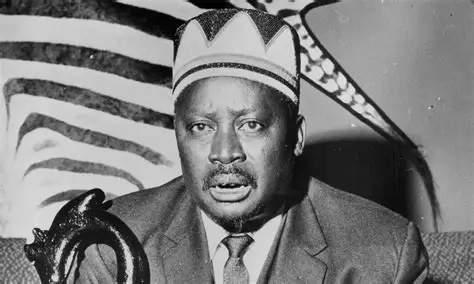
Jaramogi Oginga Odinga was a Kenyan independence leader, politician and the country’s first vice president. He played an important role in the campaign against British colonial rule and later became one of Kenya’s most prominent opposition figures. His political career included service in the government of President Jomo Kenyatta, the formation of an opposition party and years of resistance to one-party rule.
Odinga believed that political independence should bring greater social and economic equality. His autobiography, Not Yet Uhuru, expressed his view that Kenya had not achieved complete freedom simply by ending British colonial administration.
Early Life and Family Background
Jaramogi Ajuma Oginga Odinga was born in October 1911 in Nyamira Kang’o village, in the Sakwa area of Bondo, western Kenya. His parents were Odinga Raila and Opondo Nyamagolo. He belonged to the Luo community.
His birth name was Obadiah Adonijah. He later abandoned his Christian names and became known as Oginga Odinga. The title Jaramogi connected him to the traditional leadership and history of the Luo people.
Odinga grew up in a society experiencing major changes under British colonial administration. Mission schools, Christianity and colonial economic policies increasingly influenced community life.
His early experiences shaped his interest in education, African identity and the political rights of local communities.
Education and Teaching Career
Odinga began his formal education at Maranda Primary School in 1926. He later attended Maseno School and Alliance High School, where he developed a strong academic foundation.
In 1937, he proceeded to Makerere College in Uganda. He graduated in 1939 with a diploma in education.
After completing his studies, Odinga returned to Kenya and began teaching at Maseno School in 1940. He taught mathematics and became known for his commitment to students. From 1943 to 1946, he served as headteacher of the Maseno Veterinary School.
His experience in education strengthened his belief that Africans needed greater control over their institutions and economic opportunities. However, he eventually left teaching to pursue business and community organisation.
Business Activities and Community Leadership
In the 1940s, Odinga became involved in commercial activities. He helped establish the Luo Thrift and Trading Corporation, which supported business development and economic cooperation among members of the Luo community.
The organisation operated commercial enterprises and helped create opportunities for local people. Odinga believed economic independence was an important part of the wider struggle for political freedom.
He also participated in community organisations, including the Luo Union. These activities expanded his influence and helped him build relationships across different parts of Kenya.
Between 1947 and 1949, he served on the Central Nyanza District Council and the Sakwa Location Advisory Council. His involvement in local affairs gradually developed into a wider political career.
Role in Kenya’s Independence Struggle
Odinga became increasingly involved in nationalist politics during the late 1940s. He joined the Kenya African Union (KAU), which campaigned for African political rights and greater self-government.
He developed a close political relationship with Jomo Kenyatta, who became a leading figure in the independence movement. Odinga supported efforts to secure Kenyatta’s release after colonial authorities detained him during the Mau Mau Emergency.
In 1957, Odinga was elected to the Legislative Council as one of the African representatives. He became chairman of the African Elected Members Organisation, which sought to strengthen African political representation.
He also participated in the formation of the Kenya African National Union (KANU) in 1960. The party brought together several nationalist leaders and became a major force in the campaign for independence.
Odinga served as KANU’s vice president. His political influence grew as Kenya moved towards self-government and independence.
Kenya’s First Vice President
Kenya gained independence from Britain on December 12, 1963. Odinga joined the first national government as Minister for Home Affairs.
When Kenya became a republic on December 12, 1964, Jomo Kenyatta became president and Odinga became the country’s first vice president. He also continued serving as Minister for Home Affairs.
However, the relationship between the two leaders deteriorated. Odinga supported socialist economic policies and favoured closer relations with China, the Soviet Union and other socialist countries. Kenyatta’s government followed a different political and economic direction.
Odinga also criticised inequality and questioned whether independence had delivered meaningful improvements for ordinary Kenyans.
These disagreements created serious tensions within KANU and the national government.
Formation of the Kenya People’s Union
In April 1966, Odinga resigned as vice president and left KANU. He established the Kenya People’s Union (KPU), an opposition party that advocated a different economic and political direction.
The party attracted supporters who wanted greater attention to poverty, land distribution and social equality. Former government officials and other politicians joined Odinga’s opposition movement.
His break with Kenyatta marked a major turning point in Kenyan politics. It also established him as one of the country’s leading opposition figures.
In 1969, political tensions increased following violence during Kenyatta’s visit to Kisumu. Security forces killed people during the unrest, and the government banned the KPU. Odinga and other party leaders were detained.
He remained in detention until 1971, when the government released him. He later returned to KANU but did not regain his earlier influence within the ruling party.
Opposition to One-Party Rule
Odinga continued to challenge restrictions on political competition during the administrations of Jomo Kenyatta and Daniel arap Moi.
His political activities brought further difficulties. In 1982, the government expelled him from KANU after he attempted to organise an alternative political movement. Kenya had become a de facto one-party state, making opposition politics increasingly difficult.
Odinga continued advocating political reform and greater democratic participation. He criticised restrictions on civil liberties and called for a system that allowed competing political parties.
In 1991, he helped establish the Forum for the Restoration of Democracy (FORD), a movement that brought together politicians and activists seeking the return of multiparty democracy.
The government eventually restored multiparty politics. In 1992, Odinga contested the presidential election as the FORD candidate but finished fourth.
His participation marked an important moment in Kenya’s transition away from one-party rule.
Not Yet Uhuru: His Autobiography
In 1967, Odinga published his autobiography, Not Yet Uhuru. The title means “Not Yet Freedom” in Swahili.
The book examined his political experiences, Kenya’s independence movement and his disagreements with the post-independence government.
It also expressed his belief that independence should involve more than transferring political authority from colonial administrators to African leaders. He argued that economic inequality and restrictions on political freedom could prevent ordinary citizens from enjoying the benefits of independence.
The autobiography remains an important historical account of Kenya’s independence struggle and early postcolonial politics.
Death of Jaramogi Oginga Odinga
Jaramogi Oginga Odinga died on January 20, 1994, in Kisumu, Kenya. He was 82 years old.
His death came less than two years after Kenya’s return to multiparty elections. He had remained active in national politics until his final years.
He left behind a major political legacy and a family that continued to participate in Kenyan public life. His son, Raila Odinga, later became one of the country’s most prominent political leaders and served as prime minister from 2008 to 2013.
Jaramogi Oginga Odinga’s Political Legacy
Jaramogi Oginga Odinga remains an important figure in Kenya’s independence history and democratic development. His contributions included supporting the nationalist movement, serving as the country’s first vice president and establishing an organised opposition to the Kenyatta government.
His political disagreements with the ruling establishment also shaped Kenya’s early multiparty debate. Through the Kenya People’s Union and later FORD, he challenged restrictions on political competition and advocated greater democratic participation.
His belief in economic equality influenced his political positions throughout his career. He argued that national independence should improve the lives of ordinary citizens rather than simply change who controlled the government.
His autobiography, Not Yet Uhuru, continues to provide insight into his political ideas and experiences. His life remains an important part of the history of Kenyan nationalism, opposition politics and the struggle for democratic government.
Frequently Asked Questions
Who was Jaramogi Oginga Odinga?
Jaramogi Oginga Odinga was a Kenyan independence leader and politician. He became the country’s first vice president and later led opposition movements against one-party rule.
When was Jaramogi Oginga Odinga born?
He was born in October 1911 in Nyamira Kang’o village, in the Bondo area of western Kenya.
Was Oginga Odinga Kenya’s first vice president?
Yes. He became Kenya’s first vice president in December 1964, when the country became a republic under President Jomo Kenyatta.
Why did Oginga Odinga resign as vice president?
He disagreed with Kenyatta’s government over political and economic policies. He supported socialist ideas and criticised inequality, leading him to leave KANU and resign as vice president in 1966.
What is Not Yet Uhuru about?
Not Yet Uhuru is Oginga Odinga’s 1967 autobiography. It discusses his role in Kenya’s independence movement and his belief that political independence had not achieved complete freedom for ordinary citizens.
When did Jaramogi Oginga Odinga die?
He died on January 20, 1994, in Kisumu, Kenya, at the age of 82.