|
Getting your Trinity Audio player ready... |
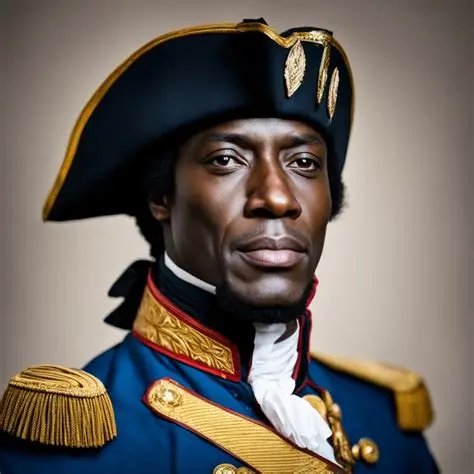
Toussaint Louverture was a Haitian revolutionary leader whose life became inseparable from the struggle against slavery and colonial rule in the Caribbean. Born enslaved in the French colony of Saint-Domingue around 1743, he rose from plantation life to become a general and the dominant political leader of the colony during the Haitian Revolution. His military ability, diplomacy, and political ambition placed him at the centre of one of the most important revolutions of the modern Atlantic world.
Toussaint did not live to see Haiti become independent in 1804. French forces captured him in 1802 and transported him to France, where he died at Fort de Joux in April 1803. However, his leadership helped defend the abolition of slavery and established political and military conditions that made Haitian independence possible.
Early Life and Family Background
Toussaint was born on the Bréda plantation near Cap-Français, in the northern part of Saint-Domingue, present-day Haiti. Historical records generally place his birth around 1743, although some older sources give different dates. He was born into slavery, and accounts of his family describe African ancestry and connections to the wider West African world.
Details about his childhood remain incomplete. Unlike many wealthy European figures of his period, Toussaint left relatively few records about his early years. Later evidence from his correspondence indicates that he became literate and acquired knowledge that was unusual for an enslaved person in Saint-Domingue.
Before the revolution, Toussaint gained increasing responsibility on the plantation. He was eventually freed in 1776. After gaining his freedom, he married Suzanne Simone Baptiste in 1777 and remained connected to the Bréda area. He also became financially established and was involved in agricultural production.
Education and Freedom
Toussaint’s education remains partly uncertain, but surviving letters demonstrate that he could communicate effectively in French and Creole and had considerable intellectual ability. Historical accounts also associate him with knowledge of religious and philosophical ideas that later influenced his political outlook.
His experience before 1791 was important because he understood both plantation society and the lives of enslaved workers. This background helped him navigate the competing interests of plantation owners, free people of color, formerly enslaved people, European powers, and French officials during the revolution.
By the time the great uprising began in 1791, Toussaint was already a free Black man with experience in plantation administration. He initially remained cautious rather than immediately becoming the principal leader of the revolt.
Toussaint and the Haitian Revolution
The Haitian Revolution began in 1791 in Saint-Domingue, then France’s richest Caribbean colony. Its economy depended heavily on enslaved African labor, while the colony contained complex divisions among white planters, free people of color, enslaved workers, and competing political factions.
Toussaint joined the revolutionary struggle after the uprising had begun. He initially served among insurgent forces and reportedly used his knowledge of medicine and surgery to assist wounded fighters. His military abilities soon became more important than his earlier role as a plantation administrator.
The conflict became increasingly complicated as France, Spain, and Britain sought influence over Saint-Domingue. Toussaint first cooperated with Spanish forces before changing allegiance after French commissioners abolished slavery in the colony. France formally extended abolition throughout its colonies in 1794.
Toussaint then fought on the French side against British and Spanish forces. His victories helped strengthen French control while also increasing his own authority over the colony.
Military Leadership and Political Rise
Toussaint developed a reputation as a disciplined commander and skilled negotiator. He understood that military strength alone could not secure the future of Saint-Domingue, so he used diplomacy to manage relationships with rival European powers.
By 1796, he had become commander-in-chief of the colony’s forces. He subsequently helped drive British troops from Saint-Domingue. In 1800, his forces defeated opposition led by André Rigaud in the conflict commonly known as the War of Knives.
Toussaint’s authority expanded further in 1801 when his forces entered the Spanish-controlled eastern part of Hispaniola. He brought the territory under his administration, giving him control over the island.
His growing power concerned Napoleon Bonaparte’s government in France. Napoleon wanted to restore stronger French authority over its Caribbean possessions and regarded Toussaint’s increasingly independent government as a serious challenge.
Governor of Saint-Domingue
Toussaint’s leadership was not limited to warfare. He attempted to rebuild an economy devastated by years of rebellion and international conflict. Plantation agriculture remained central to Saint-Domingue’s economy, so his government required agricultural workers to return to plantations under strict labor regulations.
This policy created an important contradiction in his leadership. Toussaint defended the abolition of slavery, yet he imposed compulsory agricultural labor and military discipline on many formerly enslaved workers. Supporters viewed the policy as necessary for economic survival, while critics saw it as a severe restriction on the freedom won through revolution.
He also encouraged trade, administration, public works, and the restoration of agricultural production. His government attempted to maintain order while balancing the demands of formerly enslaved people, merchants, plantation interests, and foreign governments.
The Constitution of 1801
One of Toussaint’s most significant political acts came in 1801 when Saint-Domingue adopted a new constitution. The constitution confirmed the abolition of slavery and established Toussaint as governor-general for life. It gave him extensive executive authority and allowed him to designate a successor.
The document did not formally declare independence from France. Instead, it presented Saint-Domingue as an autonomous colony within the French imperial system. This position reflected Toussaint’s complicated strategy. He wanted to protect emancipation while avoiding a confrontation with France that could threaten the colony’s survival.
The constitution nevertheless demonstrated how far his authority had developed. Saint-Domingue was effectively operating with considerable autonomy under his government.
Capture, Imprisonment and Death
Napoleon responded by sending a large expedition under General Charles Leclerc in 1802. French forces initially appeared strong enough to defeat Toussaint’s government, while several of his leading commanders eventually reached agreements with the French.
Toussaint agreed to a settlement and withdrew from active command. French authorities subsequently arrested him in June 1802 and deported him to France. He was imprisoned at Fort de Joux in the Jura region, where the harsh climate and poor conditions damaged his health.
Toussaint Louverture died in prison on April 7, 1803. He never returned to Saint-Domingue and never witnessed the final defeat of French forces.
Legacy and Historical Significance
Toussaint Louverture occupies a central place in the history of the Haitian Revolution because he connected military resistance with political organization. He demonstrated that formerly enslaved people could build an effective army, negotiate with powerful foreign governments, and administer a territory during a period of extraordinary conflict.
His legacy also contains difficult contradictions. He defended permanent emancipation while enforcing compulsory plantation labor. He promoted constitutional government while accepting extensive personal authority. These tensions make his historical career more complex than a simple story of liberation.
After his death, Jean-Jacques Dessalines and other revolutionary leaders continued the struggle. French forces were defeated, and Haiti declared independence on January 1, 1804. Toussaint therefore became one of the principal figures whose leadership preceded the creation of the first independent Black republic in the modern world.
His name remains associated with resistance to slavery, Black political leadership, Haitian nationalism, and the wider history of Atlantic revolutions. His writings, military career, constitutional project, and imprisonment continue to attract historians because they reveal both the possibilities and contradictions of revolutionary power.
Frequently Asked Questions
Who was Toussaint Louverture?
Toussaint Louverture was a formerly enslaved man who became a general and political leader during the Haitian Revolution in Saint-Domingue.
When was Toussaint Louverture born?
He was born around 1743 on the Bréda plantation near Cap-Français in Saint-Domingue, although historical sources differ on his exact birth date.
Was Toussaint Louverture a slave?
Yes. Toussaint was born into slavery but gained his freedom in 1776, before becoming a leading revolutionary figure.
What did Toussaint Louverture accomplish?
He helped organize military resistance during the Haitian Revolution, fought foreign forces, strengthened autonomous government in Saint-Domingue, and defended the abolition of slavery.
How did Toussaint Louverture die?
French authorities captured him in 1802 and imprisoned him at Fort de Joux in France. He died there on April 7, 1803.
Did Toussaint Louverture see Haiti become independent?
No. He died in 1803, one year before Haiti declared independence from France on January 1, 1804.
Conclusion
Toussaint Louverture’s life reflects the extraordinary political and military struggles created by slavery, colonialism, and revolution in the late eighteenth-century Atlantic world. From slavery on a plantation in Saint-Domingue, he rose to become the colony’s dominant military and political leader. Although he died before Haitian independence, his leadership helped establish the conditions under which the revolutionary movement ultimately defeated French colonial rule.