|
Getting your Trinity Audio player ready... |
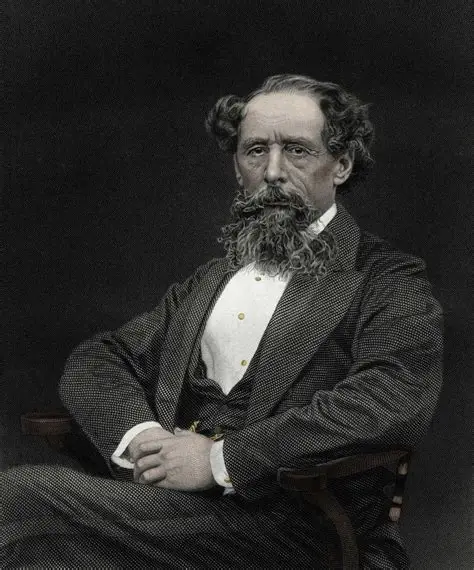
Charles Dickens was an English novelist, journalist and social critic whose books became some of the most influential works of nineteenth-century literature. Born in Portsmouth in 1812, he rose from a difficult childhood to become one of the most famous writers of the Victorian age.
Dickens created memorable characters such as Oliver Twist, David Copperfield, Ebenezer Scrooge, Pip, Miss Havisham and Sydney Carton. His novels explored poverty, child labor, debt, crime, education, class inequality and the harsh conditions faced by vulnerable people in Victorian Britain.
His personal experiences strongly influenced his writing. When his father was imprisoned for debt, Dickens was forced to leave school and work in a factory as a child. The experience left a deep impression on him and later informed some of his most powerful writing about poverty and social injustice.
During his lifetime, Dickens became an international literary celebrity. His novels were widely read, serialized and adapted for the stage. More than 150 years after his death, his works remain in print and continue to influence literature, theatre, film and popular culture.
Early Life and Family Background
Charles John Huffam Dickens was born on February 7, 1812, in Portsmouth, England. His father was John Dickens, a clerk in the Navy Pay Office. His mother was Elizabeth Barrow Dickens. The family moved several times during Charles’s childhood because of his father’s employment.
Dickens spent part of his early childhood in Chatham, Kent, before the family moved to London. His early years contained both pleasant memories and growing financial difficulties. John Dickens struggled with debt. By 1824, the situation had become severe enough for him to be imprisoned in the Marshalsea debtors’ prison.
The imprisonment had a profound effect on Charles. Most of the family eventually joined John, while Charles was sent away to work. The experience became one of the most important influences on his later writing.
Childhood Poverty and the Blacking Factory
When Charles Dickens was about 12, he was sent to work at Warren’s Blacking Factory, where he pasted labels onto pots of shoe polish. The work was poorly paid and physically demanding. More importantly, Dickens experienced the sudden loss of the education and childhood life he had expected.
His parents’ financial problems forced him into an adult world before he was ready. The young Dickens lived in difficult circumstances while his family dealt with his father’s imprisonment. Although he eventually returned to school and moved into a different working life, he kept the memory of this period largely private for many years.
The experience later appeared indirectly in his fiction. The emotional force of David Copperfield’s childhood, for example, reflects Dickens’s understanding of a child being separated from ordinary family life and pushed into work. His experience also helped shape his lifelong interest in children living in poverty.
The Charles Dickens Museum notes that Dickens kept this period largely hidden during his lifetime and that details became widely known only after his death.
Education and Early Working Life
Dickens’s formal education was interrupted by his family’s financial problems. After his father’s release, Charles returned to school for a period. He later left formal education and began working as a clerk in a solicitor’s office.
He also taught himself shorthand. This skill opened the door to journalism. Dickens became a parliamentary reporter and developed a close understanding of British politics, public institutions and the workings of London society.
His work as a reporter trained him to observe people closely. He noticed differences in speech, appearance, manners and social position. These observations later became central to his fiction. Dickens also developed an interest in acting during his youth. He reportedly considered a professional acting career and had arranged an audition at Covent Garden Theatre, but illness prevented him from attending.
Writing eventually provided the career he had been seeking.
Journalism and the Rise of Boz
Dickens began publishing sketches of London life under the pen name Boz. These pieces described ordinary people, public places and everyday experiences with humor and sharp observation. They eventually appeared together as Sketches by Boz.
His journalistic background gave Dickens an important advantage as a novelist. He understood how to capture attention quickly. He also knew how to create vivid scenes and memorable characters. In 1836, Dickens married Catherine Hogarth, the daughter of journalist George Hogarth. Around the same period, his literary career entered a decisive new stage.
He was invited to provide writing for a publication involving illustrations by Robert Seymour. The project developed into The Pickwick Papers. The series became an enormous success.
The Charles Dickens Museum records that the monthly circulation grew from just over 400 copies at the beginning to more than 40,000 by the end. Dickens had become a literary sensation.
Literary Career and Major Novels
The success of The Pickwick Papers gave Dickens the financial and professional freedom to pursue a full literary career. His next major novel was Oliver Twist, which began appearing in serialized form in 1837. The novel follows an orphan who grows up within the harsh institutions of Victorian England. Through Oliver’s experiences, Dickens examined poverty, workhouses, crime and the treatment of vulnerable children.
The novel was serialized in Bentley’s Miscellany between 1837 and 1839.
Dickens followed it with other major works, including:
- Nicholas Nickleby
- The Old Curiosity Shop
- Barnaby Rudge
- Martin Chuzzlewit
- Dombey and Son
- David Copperfield
- Bleak House
- Hard Times
- Little Dorrit
- A Tale of Two Cities
- Great Expectations
- Our Mutual Friend
These novels covered a remarkable range of subjects.
David Copperfield drew heavily on themes connected to Dickens’s own childhood. Bleak House examined the failures of the legal system. Hard Times focused on industrial society and education. Great Expectations explored ambition, class and personal identity.
A Tale of Two Cities, meanwhile, placed its story against the background of the French Revolution.
Dickens also created some of the most recognizable characters in English literature. His characters often combined humor, exaggeration and emotional depth.
The British Library’s collections preserve extensive records relating to his novels, including manuscripts and publishing documents for Nicholas Nickleby, Oliver Twist, Great Expectations, A Tale of Two Cities and Our Mutual Friend.
Dickens and Victorian Social Conditions
Dickens’s fiction was deeply connected to the social conditions of nineteenth-century Britain.
The Victorian period brought rapid industrialization, urban growth and economic change. London became a vast city marked by enormous differences between wealth and poverty.
Children could be employed in dangerous or exhausting conditions. Workhouses housed some of the poorest members of society. Debtors could be imprisoned because they could not pay what they owed.
Dickens turned these conditions into stories that ordinary readers could understand.
He did not write political treatises in the traditional sense. Instead, he created characters whose experiences made social problems personal.
Oliver’s treatment exposes the cruelty of institutions dealing with poor children. The struggles of the Cratchit family in A Christmas Carol show the pressures faced by low-income workers.
Dickens’s concern with social conditions became an important part of his historical significance.
His work also had limits. He was not a systematic political reformer, and his views on particular social issues could be complicated or inconsistent. His importance lies more in his ability to make social problems visible to a mass reading public.
A Christmas Carol and Social Reform
One of Dickens’s most influential works was A Christmas Carol, published in 1843.
The story follows Ebenezer Scrooge, a wealthy but emotionally isolated businessman whose encounter with supernatural visitors forces him to reconsider his treatment of other people.
The book was partly connected to Dickens’s concern about poverty and child welfare.
Rather than presenting these issues through a parliamentary report, he turned them into a short, emotionally powerful story.
The result was an immediate success.
The Charles Dickens Museum notes that Dickens wrote the work rapidly and that it has remained in print since its publication.
The story also helped strengthen the cultural association between Christmas, generosity and charitable feeling.
Its characters and themes have since appeared in countless stage productions, films, television programs and adaptations.
Later Career and Public Readings
Dickens continued writing throughout the 1850s and 1860s. He edited and published journals, including Household Words and All the Year Round. All the Year Round began publication in 1859, and Dickens owned a 75 percent share of the publication.
These publications allowed him to control more of the way his work reached the public. Dickens was also an energetic public performer.
He began giving public readings from his works and eventually developed dramatic performances that attracted large audiences. His popularity extended beyond Britain. During his first visit to the United States in 1842, he received enormous public attention. His international reputation continued to grow as his books circulated in different countries.
By the later part of his career, Dickens was not simply a novelist. He was a public figure whose appearances attracted large crowds. The Charles Dickens Museum describes him as one of the most famous people of his era and notes the extraordinary level of public enthusiasm surrounding him.
Personal Life and Family
Charles Dickens married Catherine Hogarth on April 2, 1836.
They had 10 children:
- Charles Dickens Jr.
- Mary Dickens
- Kate Macready Dickens
- Walter Landor Dickens
- Francis Jeffrey Dickens
- Alfred D’Orsay Tennyson Dickens
- Sydney Smith Haldimand Dickens
- Henry Fielding Dickens
- Dora Annie Dickens
- Edward Bulwer Lytton Dickens
The large family created considerable responsibilities for Dickens. He worked intensely and travelled frequently while maintaining a demanding literary schedule. Several of his children later became involved in publishing, military service, law and other professions.
Dickens’s family life was not always peaceful. His relationship with Catherine became increasingly strained during the later years of their marriage.
Separation from Catherine Dickens
Dickens and Catherine separated in 1858. The separation attracted public attention because Dickens was already a famous public figure. Dickens continued living and working separately from Catherine, while she remained connected to the family home and their children.
His relationship with Ellen Ternan, a young actress, has been the subject of extensive historical discussion. The precise nature of their relationship has been debated by biographers, although modern scholarship generally recognizes that they had a close relationship. Dickens’s private life became more complicated during the same period that his public career remained highly successful.
His separation from Catherine also affected how later generations viewed him. The social reformer who wrote sympathetically about vulnerable people could also be a difficult husband and employer. A balanced biography therefore needs to acknowledge both sides of his life.
Later Years and Death
In his final decade, Dickens continued to write, edit publications and give public readings. He published Great Expectations in serialized form from 1860 to 1861. The novel follows Pip, an orphan who unexpectedly receives financial support and begins to believe that he will become a gentleman.
He also published Our Mutual Friend between 1864 and 1865. The novel was his final completed work. Dickens’s health declined during his later years, although he continued working.
On June 9, 1870, Charles Dickens died at Gad’s Hill Place in Kent. He was 58 years old. He had suffered a stroke the previous day. Dickens had expressed a preference for a quiet funeral. Instead, he was buried in Poets’ Corner at Westminster Abbey, reflecting the extraordinary national importance attached to his work.
His death caused widespread public mourning. The Charles Dickens Museum records that his death shocked the public and that the image of his empty writing chair became a powerful symbol of the loss of a beloved writer.
Read More: Whitney Houston Biography: Early Life, Career and Legacy
Legacy and Historical Significance
Charles Dickens’s greatest historical achievement was his ability to combine popular storytelling with close observation of society. His novels reached readers across different social backgrounds. Through characters, humor and dramatic plots, he made issues such as poverty, child labor, debt and institutional cruelty easier for a mass audience to understand.
His literary influence has been enormous. Many of his characters have become part of everyday cultural language. Scrooge, Oliver Twist, Miss Havisham, Pip, Fagin and David Copperfield remain recognizable far beyond the original books.
Dickens also helped establish the importance of serialized fiction in nineteenth-century publishing. His stories were often released in installments, encouraging readers to follow characters over extended periods. This publishing model created a direct relationship between author and audience and contributed to Dickens’s extraordinary popularity.
His influence extends beyond literature. His works have inspired films, television series, theatre productions, radio dramas, musical adaptations and children’s editions. The Charles Dickens Museum notes that his stories continue to generate new adaptations and remain widely read.
Dickens also left an important record of Victorian Britain. His novels are not straightforward historical documents, but they preserve details about the language, institutions, social tensions and urban life of his period.
His treatment of poverty remains particularly important. He did not invent concern about social inequality, but his storytelling gave those concerns an emotional reach that few writers of his generation matched. His legacy is also more complicated than simple praise.
Historical Significance
Some modern readers criticize his portrayals of race, class and gender. Others question aspects of his personal conduct and relationships. These debates do not remove his literary importance, but they provide a fuller understanding of the man behind the books. Today, Dickens remains one of the central figures in English literature.
His former London home at 48 Doughty Street is preserved as the Charles Dickens Museum, which continues to promote research, education and public understanding of his life and work. Most of his books remain in print, studied in schools and universities, and adapted for new generations.
His historical significance ultimately comes from the unusual combination of literary imagination, commercial success and social observation. Dickens turned the experiences of Victorian Britain into stories that continue to be read more than 150 years after his death.