|
Getting your Trinity Audio player ready... |
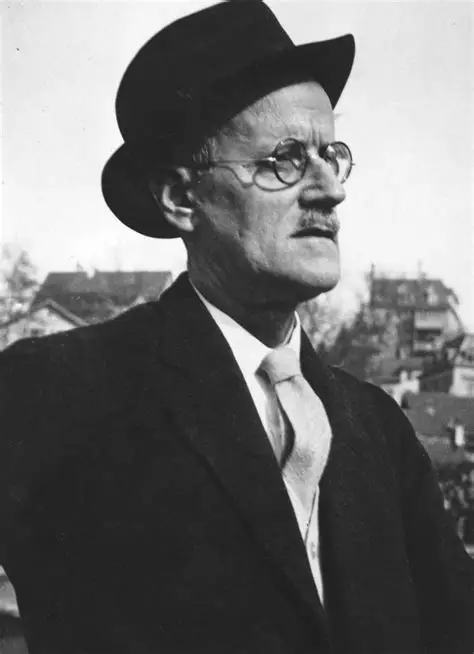
James Joyce was an Irish writer whose experimental approach to language, memory, consciousness and narrative transformed twentieth-century literature. Born in Dublin in 1882, he spent most of his adult life outside Ireland, yet Dublin remained the central setting and imaginative source of much of his writing. His major works include Dubliners, A Portrait of the Artist as a Young Man, Ulysses and Finnegans Wake.
Joyce became famous for treating ordinary experiences as subjects worthy of complex literary treatment. He combined detailed observations of Dublin life with symbolism, mythology, shifting perspectives, interior monologue and increasingly experimental uses of language. His work influenced generations of novelists and remains central to modernist literary studies.
Early Life and Family Background
James Augustine Aloysius Joyce was born on February 2, 1882, in Rathgar, Dublin. He was the eldest surviving child in a large family headed by John Stanislaus Joyce and Mary Jane Murray Joyce. His father’s declining finances eventually created severe instability for the household, an experience that later informed Joyce’s understanding of poverty, family life and social decline.
Joyce grew up during a period when Ireland remained under British rule and debates over religion, nationalism and cultural identity shaped public life. These tensions became important elements in his fiction. Rather than writing conventional nationalist literature, Joyce examined Irish society through individual experience, family conflict, religion, sexuality and political uncertainty.
Education and Formative Years
Joyce received a strong Jesuit education. He attended Clongowes Wood College in County Kildare before transferring to Belvedere College in Dublin. He later studied modern languages at University College Dublin and graduated in 1902.
His education introduced him to European languages, philosophy, literature and classical traditions. Joyce developed an especially strong interest in writers such as Henrik Ibsen and became increasingly determined to develop an independent artistic identity.
After graduation, he briefly travelled to Paris with plans to study medicine. He returned to Dublin in 1903 when his mother became seriously ill. Her death that year deeply affected him and became part of the emotional background of later writings.
Leaving Ireland and Early Writing
On June 10, 1904, Joyce met Nora Barnacle, a young woman from Galway who became his lifelong companion. Later that year, they left Ireland together and began a life on the European continent. They lived in places including Pola, Trieste and Zurich, while Joyce supported the family partly through teaching English.
Joyce and Nora eventually had two children, Giorgio and Lucia. Although they lived together from 1904, they did not formally marry until 1931. Their long relationship became an important part of Joyce’s personal life and influenced interpretations of several female characters in his fiction.
During his early years abroad, Joyce continued writing about Dublin. Distance did not reduce his interest in Ireland. Instead, it gave him the perspective to examine his native city with unusual precision.
Dubliners and A Portrait of the Artist as a Young Man
Joyce’s first major prose collection was Dubliners, published in 1914 after years of difficulty finding a publisher. The stories portray different aspects of Dublin life, including childhood, adolescence, family relationships, social expectations and religious influence. The collection includes the celebrated story “The Dead.”
His next major work was A Portrait of the Artist as a Young Man, published in 1916. The novel follows Stephen Dedalus as he develops from childhood toward artistic independence. Stephen’s struggle with family, Catholicism, nationalism and artistic ambition reflected several concerns that were also important in Joyce’s own life.
The novel demonstrated Joyce’s growing interest in presenting consciousness from within rather than simply describing events from an external viewpoint. This technique became increasingly important in his later work.
Ulysses and Literary Recognition
Joyce’s most famous novel, Ulysses, was published in Paris on February 2, 1922, his fortieth birthday. Sylvia Beach, proprietor of the Paris bookstore Shakespeare and Company, published the first complete edition.
The novel follows Leopold Bloom and Stephen Dedalus through Dublin during one day, June 16, 1904. Joyce used Homer’s Odyssey as a structural framework while transforming an ancient heroic journey into the experiences of ordinary people in a modern city.
The novel’s sexual content and unconventional language created major legal and publishing problems. Its serialization in the United States led to obscenity proceedings, and the work was not legally published there until 1934 after a federal court ruling.
Ulysses established Joyce as one of the defining figures of literary modernism. Its techniques include stream of consciousness, parody, symbolism, interior monologue, linguistic experimentation and multiple narrative styles.
Finnegans Wake and Late Career
After completing Ulysses, Joyce began work on his final major book. The project was initially published in sections under the title Work in Progress and eventually appeared as Finnegans Wake in 1939. Joyce worked on it for approximately sixteen years.
Finnegans Wake pushed his experimentation with language further than any previous work. Joyce combined English with multilingual wordplay, invented expressions, literary references and complex sound patterns. The result was difficult for many readers and generated sharply different critical responses.
The book remains one of the most demanding works in modern literature. Joyce’s surviving manuscripts and notebooks provide unusually detailed evidence of how he constructed his texts. The University at Buffalo’s James Joyce Collection contains more than 10,000 pages of working papers and extensive manuscript material relating to Ulysses and Finnegans Wake.
Personal Life and Family
Joyce and Nora Barnacle remained together throughout their adult lives. Their son Giorgio was born in 1905, while their daughter Lucia was born in 1907. The family lived in several European cities, particularly Trieste, Zurich and Paris.
Joyce’s eyesight deteriorated severely during his later years, and he underwent numerous operations. His family also faced serious difficulties surrounding Lucia’s deteriorating mental health. These circumstances added considerable pressure during the long period in which Joyce was writing Finnegans Wake.
Joyce and Nora formally married in London in 1931. The civil marriage helped protect Nora’s legal and inheritance rights after decades of living together.
Later Years and Death
When the Second World War threatened Paris, Joyce and his family eventually moved to Switzerland. They settled in Zurich, where Joyce’s health continued to decline.
James Joyce died in Zurich on January 13, 1941, aged 58, following surgery for a perforated ulcer. He was buried at Fluntern Cemetery in Zurich. Nora survived him and died in 1951.
Legacy and Historical Significance
James Joyce’s historical importance comes from the scale of his influence on modern fiction. He expanded the possibilities of narrative by making consciousness, language and subjective perception central elements of the novel.
Dubliners established a detailed literary portrait of Irish urban life. A Portrait of the Artist as a Young Man explored artistic development and personal independence. Ulysses demonstrated how ordinary events could support an extraordinarily complex literary structure, while Finnegans Wake pushed English prose toward an almost entirely experimental form.
Joyce’s manuscripts have also become important resources for literary scholarship. The University at Buffalo holds what it describes as the world’s largest James Joyce collection, including drafts, notebooks, correspondence, photographs and publishing records.
His influence extends beyond Ireland. Writers, scholars and artists continue to study his treatment of language, consciousness, identity, memory and urban experience. Bloomsday, observed annually on June 16, also reflects the continuing cultural importance of Ulysses and its Dublin setting.
Frequently Asked Questions
Who was James Joyce?
James Joyce was an Irish novelist, short-story writer and poet best known for Dubliners, A Portrait of the Artist as a Young Man, Ulysses and Finnegans Wake.
When was James Joyce born?
James Joyce was born on February 2, 1882, in Rathgar, Dublin.
What is James Joyce famous for?
Joyce is famous for transforming modern fiction through experimental narrative techniques, stream of consciousness, complex symbolism and innovative uses of language.
What is James Joyce’s most famous book?
Ulysses, published in 1922, is generally regarded as his most famous novel. It follows Leopold Bloom and Stephen Dedalus through Dublin on June 16, 1904.
When did James Joyce die?
James Joyce died on January 13, 1941, in Zurich, Switzerland, aged 58.
Conclusion
James Joyce transformed the possibilities of modern literature without abandoning the city and culture that shaped him. Although he spent most of his adult life away from Ireland, Dublin remained the central landscape of his imagination. Through Dubliners, A Portrait of the Artist as a Young Man, Ulysses and Finnegans Wake, he created a body of work that continues to influence how writers approach language, consciousness and narrative.