|
Getting your Trinity Audio player ready... |
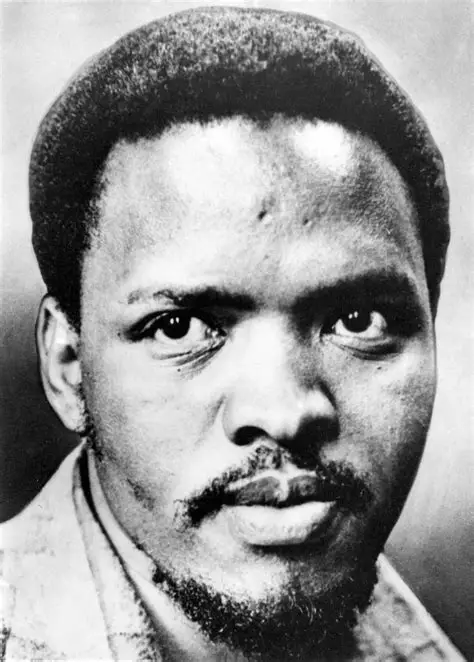
Stephen Bantu Biko was a South African activist, thinker and leading figure in the Black Consciousness Movement. He challenged apartheid by arguing that political freedom required psychological liberation, dignity and confidence among Black South Africans. Through student organisation, community work and political writing, Biko created a powerful new language of resistance during a period when the apartheid government had banned major liberation organisations.
Early Life and Family Background
Stephen Bantu Biko was born on December 18, 1946, in Tylden near King William’s Town in the Eastern Cape. He grew up as apartheid became South Africa’s official system of racial segregation and political exclusion. His family valued education, while his early experiences exposed him to the inequalities that shaped Black life.
Biko’s political awareness developed while he was still young. His older brother Khaya became involved with the Pan Africanist Congress and was arrested on suspicion of political activity. The experience brought police scrutiny into the family and helped Biko understand the risks faced by Black political activists.
Education and Formative Years
Biko attended Lovedale College but left after political tensions surrounding the institution and his brother’s arrest. He later studied at St Francis College in Marianhill, a Roman Catholic school in Natal. His education introduced him to Christian ideas, but he increasingly questioned the role of white authority in determining the lives and ambitions of Black South Africans.
In 1966, Biko entered the University of Natal Medical School in Durban. He initially participated in the National Union of South African Students, a multiracial student organisation. He soon became dissatisfied with its predominantly white leadership and argued that Black students needed organisations capable of defining their own political priorities.
Formation of SASO and Black Consciousness
In 1968, Biko and other Black students helped establish the South African Students’ Organisation, known as SASO. The organisation developed independently of white student leadership and gave Black students greater control over their political activities. Biko became its first president in 1969.
SASO provided an important organisational base for Black Consciousness. Biko believed apartheid did more than control political rights, education and employment. It also damaged the confidence of oppressed people by promoting the idea that white culture and identity were superior.
Black Consciousness therefore emphasised dignity, self-reliance, cultural identity and collective action. Biko argued that oppressed communities needed to develop their own political confidence rather than depend on others to define or lead their liberation.
His ideas spread beyond university campuses. They influenced students, community activists, religious thinkers and young people searching for new ways to challenge apartheid after the African National Congress and Pan Africanist Congress had been banned. Black Consciousness became an important force among South African youth during the 1970s.
Community Work and Political Activism
Biko’s activism extended beyond student politics. In 1972, he became involved with Black Community Programmes after leaving his medical studies. The organisation promoted community development, education, leadership training and practical self-help projects.
One important project was the Zanempilo Community Health Centre near King William’s Town. It opened in 1975 and provided primary healthcare while also becoming a centre for community activity and political discussion. Biko supported programmes that demonstrated how Black communities could develop institutions to address their own needs.
Biko also became the first president of the Black People’s Convention in 1972. The organisation sought to extend Black Consciousness beyond student politics and create a broader political constituency. Biko and his colleagues also supported leadership training and youth organisations that later helped develop a new generation of activists.
Biko became an influential political writer. His essays examined identity, racism, religion, culture and liberation. His writings were later collected in I Write What I Like, first published in 1978. The book remains the best-known collection of his political thought and explains the importance he placed on psychological liberation.
Banning, Detention and Final Years
The apartheid government increasingly regarded Biko as a threat. In March 1973, authorities imposed a banning order that restricted his movement and political activity. He was confined to the King William’s Town area and prevented from participating openly in political gatherings.
Despite these restrictions, Biko continued community work and political organising. He also became an important voice during the SASO and Black People’s Convention trial in 1976. That year, the Soweto uprising demonstrated the depth of youth resistance to apartheid. Black Consciousness influenced many young activists, although Biko did not claim that his movement alone caused the uprising.
Biko spent more than 100 days in prison toward the end of 1976. Security authorities arrested him again on August 18, 1977, near Grahamstown and took him to security police facilities in Port Elizabeth.
Death in Police Custody
Biko died on September 12, 1977, while in police custody. He had suffered severe head injuries during detention and was transported from Port Elizabeth to Pretoria in a seriously weakened condition. He died shortly after arriving at Pretoria Central Prison.
The authorities initially offered explanations that attempted to distance the police from responsibility for his condition. An inquest followed, but it failed to provide a satisfactory explanation for the injuries surrounding his final detention. The circumstances of Biko’s death provoked widespread condemnation inside South Africa and abroad.
His funeral in King William’s Town drew thousands of mourners and international diplomatic representatives. The apartheid government soon intensified its campaign against Black Consciousness organisations and banned several groups associated with the movement. Biko’s death consequently became a major international symbol of apartheid’s repression.
Personal Life and Family
Biko married Ntsiki Mashalaba, with whom he had children. He also had a long relationship with Mamphela Ramphele, a physician and fellow activist who worked closely with him in community programmes. Their relationship produced a son, Hlumelo Biko, who was born after Biko’s death.
His family life developed alongside his political work. His friendships and partnerships connected him to students, medical workers, writers, clergy and community organisers who helped sustain Black Consciousness during years of government repression.
Legacy and Historical Significance
Stephen Biko’s historical importance rests on the connection he made between political resistance and personal dignity. He challenged the assumption that liberation depended only on changing political institutions. For Biko, oppressed people also needed to reject the internalised belief that they were inferior.
His ideas influenced generations of South African activists. Black Consciousness provided an intellectual framework for youth resistance during the 1970s and contributed to a political culture that challenged apartheid’s racial hierarchy. After his death, many activists carried aspects of his ideas into organisations that continued the liberation struggle.
Biko also left an important literary legacy. I Write What I Like preserved his arguments in his own voice and allowed later generations to engage directly with his political thought. His writings continue to inform discussions about African identity, race, psychology, political freedom and liberation.
His influence extends beyond South Africa. Black Consciousness became part of wider debates about African dignity, self-determination and resistance to systems that define one group as superior to another. Biko died before apartheid ended, but his political vocabulary survived the system he opposed.
Frequently Asked Questions
Who was Stephen Biko?
Stephen Bantu Biko was a South African activist and thinker who became the leading figure associated with the Black Consciousness Movement.
What was Black Consciousness?
Black Consciousness was a political and philosophical approach that encouraged Black South Africans to reclaim dignity, identity, confidence and collective power under apartheid.
What organisation did Steve Biko lead?
Biko became the first president of the South African Students’ Organisation in 1969. He later became the first president of the Black People’s Convention.
Why was Steve Biko arrested?
Apartheid security authorities arrested Biko because of his political activities and alleged involvement in promoting resistance. His final arrest occurred on August 18, 1977.
How did Steve Biko die?
Biko died in police custody on September 12, 1977, after suffering severe head injuries during detention.
What book is Steve Biko known for?
His best-known collection is I Write What I Like, a posthumous compilation of his political writings. It was first published in 1978.
Conclusion
Stephen Biko became one of the most important intellectual voices of the South African anti-apartheid struggle. He connected political resistance with dignity, identity and psychological freedom. His work in student politics, community development and political writing gave Black Consciousness both an intellectual foundation and a practical organisational form.
Biko died at only 30, but his ideas continued to influence resistance to apartheid and later debates about race, identity and liberation. His life remains an important part of South African history because it demonstrates how political thought can reshape a struggle even when its leading thinker does not live to see victory.