|
Getting your Trinity Audio player ready... |
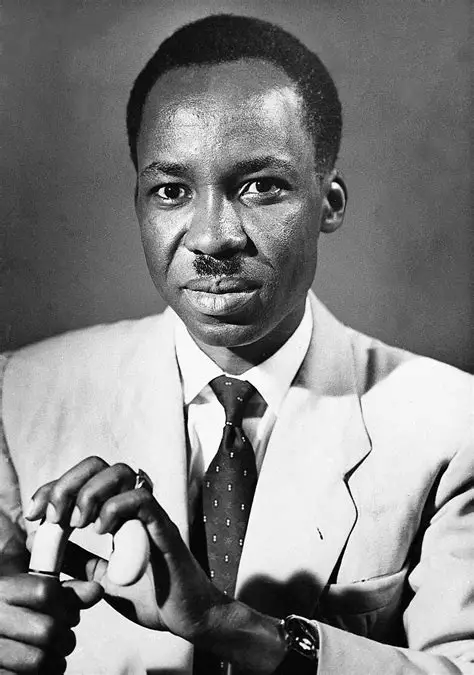
Julius Nyerere was a Tanzanian teacher, nationalist, political leader and the first president of the United Republic of Tanzania. Born in 1922 in Tanganyika, he led the campaign for independence from British colonial rule and became one of the most prominent African leaders of the twentieth century. He later promoted African unity, socialism, self-reliance and the liberation of countries still under colonial or minority rule.
Known affectionately as Mwalimu, meaning “Teacher,” Nyerere combined political leadership with a strong interest in education and public service. His government introduced the philosophy of Ujamaa, a form of African socialism centered on communal responsibility and self-reliance. His record also included difficult economic policies, restrictions on political pluralism and controversial forced villagization. Understanding Nyerere therefore requires attention to both his achievements and the challenges of his political program.
Early Life and Family Background
Julius Kambarage Nyerere was born on April 13, 1922, in Butiama, in the Mara region of northern Tanganyika. He belonged to the Zanaki people, one of the smaller ethnic communities in the territory. His father, Chief Nyerere Burito, was a traditional chief.
Nyerere grew up during British colonial rule, when Tanganyika was administered as a British mandate after the First World War. His early experiences in a rural society later influenced his interest in education, agriculture and the social organization of village communities.
Education and Teaching Career
Nyerere received his early education through Catholic missionary institutions. He attended Tabora Boys’ School before continuing his studies at Makerere College in Uganda, where he trained as a teacher. He later attended the University of Edinburgh in Scotland and became the first Tanganyikan to study at a British university.
At Edinburgh, he studied history and economics and developed a broader understanding of European political thought. He also encountered socialist ideas that influenced his later political philosophy. After returning to Tanganyika, he worked as a teacher and became known for his commitment to education.
Teaching remained central to his identity throughout his political career. The nickname Mwalimu reflected both his professional background and the way he presented himself as an educator in public life.
Entry into Politics
Nyerere entered formal politics in the early 1950s as Tanganyika’s independence movement gained momentum. In 1954, he helped establish the Tanganyika African National Union, or TANU, which became the principal organization campaigning for self-government.
Nyerere’s political strategy emphasized mass organization and negotiation rather than an armed struggle against British rule. TANU built support across different communities and regions, helping create a broader nationalist movement in a territory with considerable ethnic and religious diversity.
His leadership quickly attracted international attention. He represented Tanganyika at international forums and helped articulate the case for independence before British authorities and the wider international community.
Independence and Leadership of Tanganyika
Tanganyika achieved independence on December 9, 1961. Nyerere initially became prime minister and then served as president after Tanganyika became a republic in 1962. Tanganyika also joined the United Nations in December 1961, with Nyerere signing the country’s declaration accepting the obligations of the UN Charter.
Nyerere faced the difficult task of building a new state from a colonial administration. His government expanded education and sought to create a national identity that could unite citizens across ethnic, religious and regional differences.
He also promoted Africanization of government institutions while attempting to avoid the development of ethnic political competition. His approach placed national unity at the center of Tanzania’s early political development.
Formation of Tanzania and Ujamaa
In 1964, Tanganyika united with Zanzibar to form the United Republic of Tanzania. Nyerere became president of the new state. United Nations records identify him as the first president of the United Republic of Tanzania.
In 1967, Nyerere’s government adopted the Arusha Declaration, which placed socialism and self-reliance at the center of national development. The policy promoted collective approaches to agriculture, greater state control of major industries and reduced dependence on foreign ownership and assistance.
The government subsequently expanded public education and health services while promoting rural development. Ujamaa villages became a major instrument of the policy. The government encouraged rural populations to live and work collectively, although later implementation included compulsory relocation that generated serious criticism.
Tanzania’s economic experience under Ujamaa was mixed. The state expanded social services and national institutions, but agricultural production, public finances and economic efficiency faced significant difficulties. Economic pressures eventually contributed to reforms that moved Tanzania away from extensive state control.
African Liberation and International Leadership
Nyerere’s influence extended far beyond Tanzania. He strongly opposed colonialism, apartheid and minority rule in southern Africa. Tanzania provided political support and sanctuary to several liberation movements, and Dar es Salaam became an important base for African nationalist organizations.
His government supported movements including the African National Congress, the South West Africa People’s Organization and the Zimbabwe African National Union. Tanzania also became one of the Front-Line States that coordinated support for liberation movements in southern Africa.
Nyerere helped establish the broader diplomatic framework for African liberation and became one of the important intellectual figures behind the Organization of African Unity. He also advocated cooperation among developing countries and participated in international debates concerning economic inequality and the global political system.
His foreign policy included military action as well as diplomacy. In 1978, Uganda under Idi Amin invaded Tanzania, and Tanzanian forces subsequently entered Uganda. The conflict contributed to Amin’s removal from power in 1979.
Retirement and Later Years
Nyerere voluntarily stepped down as Tanzania’s president in 1985 and was succeeded by Ali Hassan Mwinyi. The United Nations later highlighted his decision to leave office through an orderly constitutional transition.
Retirement did not end his public work. He continued to participate in African affairs and chaired the South Commission from 1987 to 1990. He also remained involved in efforts to promote African cooperation and development.
In his final years, Nyerere served as a mediator in the Burundi peace process. He continued working toward a negotiated settlement despite declining health.
Death
Julius Nyerere died in London on October 14, 1999, aged 77, after suffering from leukemia. His death prompted tributes from African governments and international institutions. The United Nations described him as the first president of Tanzania and highlighted his role in African liberation and his support for international cooperation.
Legacy and Historical Significance
Julius Nyerere’s historical significance rests on several interconnected areas. He helped lead Tanganyika to independence, contributed to the formation of Tanzania and developed a political philosophy centered on African socialism and self-reliance.
His commitment to African liberation also had consequences beyond Tanzania. By providing support to liberation movements and hosting political organizations, Tanzania became an important base for struggles against colonialism, apartheid and minority rule in southern Africa.
His domestic record remains more contested. Ujamaa expanded state involvement in education, health and rural development, but its economic results were uneven. One-party political structures also limited political competition. These tensions form an important part of the historical assessment of Nyerere’s presidency.
Nyerere’s continuing reputation also reflects his role as an African intellectual and educator. His writings and speeches addressed nationalism, socialism, education, development and African unity. His political career therefore belongs not only to the history of Tanzania but also to the wider history of postcolonial Africa.
Frequently Asked Questions
Who was Julius Nyerere?
Julius Nyerere was a Tanzanian nationalist, teacher and political leader who led Tanganyika to independence and became the first president of Tanzania.
When did Tanzania gain independence?
Tanganyika became independent from British rule on December 9, 1961. Tanganyika later united with Zanzibar in 1964 to form Tanzania.
What was Julius Nyerere’s political philosophy?
Nyerere promoted African socialism through Ujamaa, emphasizing social equality, collective responsibility, self-reliance and national control of key economic resources.
Why was Julius Nyerere called Mwalimu?
Mwalimu means “Teacher” in Swahili. The title reflected Nyerere’s profession as a teacher and his continuing emphasis on education.
When did Julius Nyerere die?
Julius Nyerere died in London on October 14, 1999, aged 77, after suffering from leukemia.
Conclusion
Julius Nyerere was a central figure in Tanzania’s transition from colonial rule to independence and in the wider African liberation movement. His political philosophy shaped Tanzania’s early development, while his support for southern African liberation gave the country an important regional role. His presidency also produced difficult economic and political consequences that remain part of his historical record.
Nyerere’s life ultimately brought together education, nationalism, African unity and public service. His influence continued after he left office, particularly through his work for African peace and liberation. His legacy remains closely connected with the history of Tanzania and the wider struggle for political independence across Africa.