|
Getting your Trinity Audio player ready... |
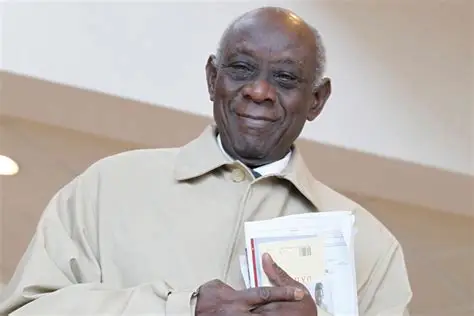
Locksley Edmondson was a Jamaican scholar whose work connected African politics, Caribbean studies, international relations and the African diaspora. He spent much of his career examining race, political development and the relationships between Africa and Black communities across the world.
Edmondson became particularly associated with Cornell University, where he helped strengthen Africana Studies as an academic field. He served as director of Cornell’s Africana Studies and Research Center from 1991 to 1996. He also taught at universities in Africa, Europe, the Caribbean and North America.
His scholarship treated Africa and its diaspora as interconnected subjects rather than separate areas of study. Through teaching, research and international academic work, Edmondson helped establish Pan-Africanism as a serious field of scholarly inquiry.
He died in Ithaca, New York, on August 18, 2026, at the age of 92.
Early Life and Family Background
Locksley Edmondson was born in Jamaica in 1934. He grew up in a family that placed a strong emphasis on education.
His parents were Stanford and Olga Edmondson. His father became Jamaica’s Superintendent of Schools and later served as an Anglican minister. He had also risen from poverty in St. Thomas Parish, making his own educational journey an important example for his children.
Education was taken seriously in the Edmondson household. As a child, Locksley and his sister Norma reportedly began studying Latin at five o’clock each morning. His academic ability eventually earned him the nickname “Flaccus,” after the Roman poet Horace.
He attended Jamaica College in Kingston. The school had educated several prominent Jamaican political and intellectual figures. His years there provided an early foundation for the academic career that followed.
Education and Formative Years
Edmondson later moved to England to continue his education. He studied at the University of Birmingham, where he earned a Bachelor of Social Sciences with honours.
His studies combined political science, economics and sociology. This interdisciplinary foundation became important to his later work because his scholarship rarely treated politics as an isolated subject.
Birmingham also exposed him to students from Africa and Asia. Through these relationships, he encountered the political debates surrounding colonialism, Marxism, nationalism and Pan-Africanism.
He also experienced racism while living in Britain. These experiences contributed to his understanding of race and international relations.
Edmondson later earned both a master’s degree and a doctorate in political science from Queen’s University in Kingston, Ontario, Canada.
His education therefore crossed several intellectual and geographical traditions. Jamaica, Britain, Canada and later Africa all became important parts of his academic development.
Early Academic Career
Edmondson developed an international teaching career long before international academic mobility became common.
He taught at the University of Waterloo in Canada and later spent several years at Makerere University in Uganda. Makerere was then one of the leading centres of higher education in Africa.
His time in Uganda brought him into contact with important African and Caribbean intellectuals. Among those associated with his wider intellectual circle were C.L.R. James, Ali Mazrui and Ngũgĩ wa Thiong’o.
At Makerere, Edmondson also served as director of General Development Studies. The programme represented his interest in interdisciplinary education and development.
He later taught at the University of Denver and Southern Illinois University at Carbondale.
His career then took him back to Jamaica. At the University of the West Indies, Mona, he taught political science and served as Dean of Social Sciences from 1976 to 1980.
This international experience became one of his defining strengths. Edmondson had taught across Africa, the Caribbean, Europe and North America, giving him a broad perspective on political and racial questions.
Career at Cornell University
Edmondson first taught at Cornell University in the early 1970s. He worked in the Department of Government from 1970 to 1973 before returning to the university a decade later.
In 1983, he joined Cornell’s Africana Studies and Research Center. He remained there for more than three decades and eventually became Professor Emeritus.
The centre provided a natural home for Edmondson’s interests. His research covered international relations involving Africa and the Caribbean, as well as race relations and the wider Black world.
At Cornell, he became known as a demanding but influential teacher. Former students remembered his emphasis on careful research, strong writing and serious debate.
His teaching also reflected his international outlook. He encouraged students to examine political issues through historical, racial and global perspectives rather than through a single national framework.
Leadership in Africana Studies
Edmondson served as director of the Africana Studies and Research Center from 1991 to 1996.
The position placed him in an important phase of the development of Africana Studies at Cornell. The centre had been founded by James Turner and was designed to study the African diaspora as a connected intellectual and historical field.
During Edmondson’s leadership, the centre continued developing its academic identity and international connections.
He also served as director of Cornell’s National Resource Center in African Studies from 1991 to 1994. The programme received support from the U.S. Department of Education.
His administrative work was not limited to Cornell. Earlier in his career, he had held academic leadership positions at Makerere and the University of the West Indies.
These experiences gave him a practical understanding of how institutions could support African and Caribbean scholarship.
Scholarship, Publications and Books
Edmondson published widely on Africa, the Caribbean, race, international relations and the African diaspora.
His work included studies of Black political movements and the relationship between Africa and Caribbean societies. He also examined the historical development of race as an international political issue.
Among his notable publications were studies on the internationalization of Black Power, Africa and the African diaspora, Caribbean nation building, trans-Atlantic slavery and Pan-Africanism.
He contributed to the UNESCO General History of Africa project. His work on Africa and the developing regions appeared in Volume VIII of the major historical series.
Edmondson also wrote about African history and African Studies in the Black diaspora. Other research explored Black America as a political diaspora and the relationship between the Caribbean diaspora and its homeland.
His scholarship was often interdisciplinary. Political science provided his main academic foundation, but he drew on history, sociology, race studies and international relations.
His work was later featured in Pan-African Connections, a 2021 collection examining intellectual activism and the development of Pan-African institutions. The volume placed Edmondson within a generation of scholars who connected African, Caribbean and African-American studies.
Pan-Africanism and International Work
Pan-Africanism occupied an important place in Edmondson’s intellectual life.
He viewed African societies and their diaspora communities as parts of a wider historical and political system. His research therefore examined relationships between Africa, the Caribbean and Black communities in North America.
He was also active in international organisations and scholarly forums. He participated in UNESCO expert meetings and contributed to United Nations-related academic discussions.
His international work included activities connected with the UN Economic Commission for Africa and other international institutions.
Edmondson also participated in initiatives involving Haiti, Burkina Faso, Nigeria and South Africa. His work extended beyond academic writing into institutional development and intellectual exchange.
This combination of scholarship and international engagement helped make his work relevant beyond university classrooms.
Caribbean Studies and Academic Leadership
Edmondson played an important role in Caribbean scholarship.
He was a founding member of the Caribbean Studies Association and later served as its president from 1996 to 1997. He had previously served as vice president and on its executive council.
He also led the African Studies Association of the West Indies and served as president of the New York African Studies Association.
His professional service reflected the same principle that shaped his scholarship. Caribbean studies, African studies and diaspora studies could benefit from greater interaction.
In 2013, the New York African Studies Association gave him its Distinguished Africanist Award.
Cornell later honoured his contribution through the 2017 symposium “Pan-African Connections.” The event brought together scholars and former students to discuss his intellectual contribution.
Personal Life and Family
Edmondson’s personal life was closely connected to his Jamaican identity and his academic career.
He married Elizabeth Robinson in Jamaica in 2003. He was survived by his wife, Elizabeth, and children Georgette, Belinda, Magnus and Alisha, along with grandchildren and a great-grandchild.
Those who knew him described him as a devoted teacher, father and grandfather.
He retained strong connections to Jamaica throughout his life. He was also known for his interest in cricket, jazz, literature and Anglican hymns.
His personality combined intellectual seriousness with a strong sense of humour. Colleagues and students remembered him as a lively debater who welcomed serious disagreement.
Later Years and Death
Edmondson eventually became Professor Emeritus at Cornell after a career spanning more than five decades.
He remained connected to Africana Studies and to the wider academic community after his retirement. His influence also continued through former students and colleagues who carried his ideas into universities and institutions around the world.
Cornell recognised him as an influential scholar of the African diaspora and Caribbean studies. Colleagues particularly highlighted his role in strengthening the intellectual foundations of Africana Studies.
Locksley Edmondson died in Ithaca, New York, on August 18, 2026. He was 92.
His death marked the passing of a scholar whose professional life had crossed continents while remaining firmly connected to Jamaica and the wider Black world.
Legacy and Historical Significance
Edmondson’s most important legacy lies in the connections he established between fields that were often studied separately.
His scholarship treated Africa, the Caribbean and the African diaspora as related historical and political subjects. This approach helped reinforce a broader understanding of Pan-Africanism within academic research.
His Cornell career also gave institutional strength to Africana Studies. As a professor and director, he helped develop a centre that became an important place for studying African and diaspora experiences.
His international teaching career added another dimension. He did not approach Africa and the Caribbean only from a North American university. He had taught and worked in the regions he studied.
His influence therefore came through several channels: scholarship, teaching, institutional leadership and international engagement.
For students, his legacy is also reflected in the generations of scholars he taught. Many encountered African and Caribbean political questions through his comparative approach.
Edmondson’s life demonstrates how an academic career can become part of a wider intellectual movement. His work helped preserve the idea that the histories of Africa and its diaspora are deeply connected.
Read More: Édouard Balladur Biography: Early Life, Education, Political Career, Family and Legacy
Conclusion
Locksley Edmondson was a major Jamaican scholar whose career connected Africa, the Caribbean and the wider African diaspora. His work crossed national and disciplinary boundaries while maintaining a strong commitment to Pan-African intellectual traditions.
Through Cornell University, the University of the West Indies, Makerere University and other institutions, he influenced students and scholars across several continents. His leadership in Africana and Caribbean studies also strengthened the institutions that supported research into the Black world’s interconnected histories.
Edmondson died in 2026 at the age of 92. His enduring contribution is the intellectual framework through which he examined Africa and its diaspora as connected parts of a wider political and historical experience.