|
Getting your Trinity Audio player ready... |
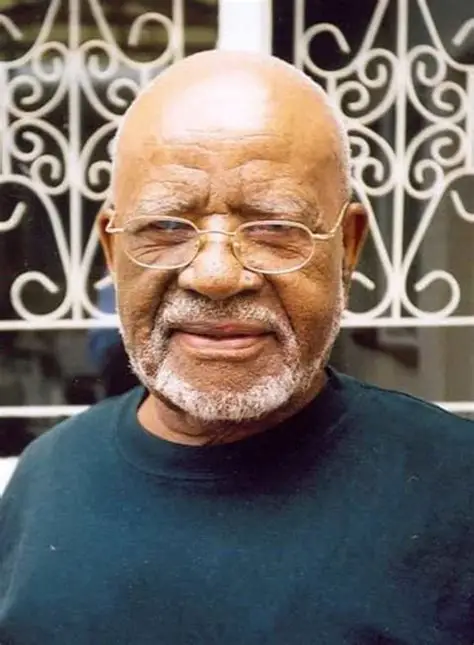
Es’kia Mphahlele was a South African writer, teacher, scholar and cultural activist whose work gave literary expression to Black life under apartheid. Born in Pretoria in 1919, he experienced poverty, racial discrimination and restrictions on education before becoming one of Africa’s most influential literary figures. His autobiography Down Second Avenue remains a major account of Black South African life in the apartheid era.
Mphahlele also developed the idea of African Humanism, which placed human dignity, cultural identity and communal values at the centre of African intellectual life. His career took him from South African classrooms to Nigeria, Kenya, France and the United States before he returned home in 1977.
Early Life and Family Background
Es’kia Mphahlele was born Ezekiel Mphahlele on December 17, 1919, in Marabastad, Pretoria. His parents sent him to live with his paternal grandmother in Maupaneng near present-day Polokwane during part of his childhood. He later returned to Marabastad, where he began his formal education.
Mphahlele grew up in an environment shaped by poverty and racial segregation. These experiences later became important material for his autobiographical writing. Rather than treating hardship simply as personal misfortune, he used literature to examine how racial policies affected education, family life, work and individual identity.
He attended St Peter’s College in Rosettenville before proceeding to Adams College in Natal. There, he trained as a teacher and qualified in 1940. He later completed his secondary education through correspondence while working as a teacher and shorthand typist.
Education and Teaching Career
Teaching became central to Mphahlele’s early professional life. He taught English and Afrikaans at Orlando High School and became active in the Transvaal African Teachers Association. His work brought him into conflict with the apartheid government’s plans for African education.
The Bantu Education system sought to place Black education under tighter state control and prepare African students for restricted social and economic roles. Mphahlele opposed the system and participated in teachers’ resistance. In 1952, the authorities dismissed him from teaching and permanently prevented him from working in government-controlled schools.
The ban forced him to seek other forms of employment. He briefly worked at the Ezenzeleni Institute for the Blind before teaching in Basutoland, now Lesotho. In 1955, he joined Drum magazine, where he worked as a political reporter, sub-editor and fiction editor.
Writing and Down Second Avenue
Mphahlele began publishing fiction while working in education. His first collection, Man Must Live, appeared in 1946 and established him as an emerging African writer. He later produced short stories for Drum, including stories about Black urban life and the social pressures created by apartheid.
His most famous book, Down Second Avenue, appeared in 1959. The autobiography traces his childhood, education, teaching career and growing awareness of racial injustice. It also portrays Marabastad and other Black communities with an intimacy that made the book both a personal memoir and an important historical document.
The book established Mphahlele internationally as an important African literary voice. It demonstrated how autobiography could document political oppression without reducing literature to political propaganda.
Exile and African Literary Culture
Mphahlele left South Africa in 1957 after the apartheid authorities restricted his professional opportunities. He moved to Nigeria, where he worked in education and became increasingly involved in the development of African literature and cultural institutions.
His years in Nigeria brought him into contact with major African writers and intellectuals, including Chinua Achebe, Wole Soyinka and Christopher Okigbo. He also became associated with Black Orpheus, an influential literary journal that helped create space for African and African diasporic writing.
His exile continued through France, Kenya, Zambia and the United States. During these years, he taught, wrote, organised literary programmes and participated in international cultural discussions. His experiences abroad broadened his understanding of African identity and strengthened his interest in African Humanism.
Academic Career and Major Books
Mphahlele expanded his formal education while in exile. He earned a BA in 1949, an honours degree in 1956 and an MA with distinction in 1957 through the University of South Africa. In 1968, he earned a doctorate from the University of Denver.
His scholarly work included The African Image, published in 1962, which examined African literature in South Africa and considered how African characters appeared in writing produced by European authors. He later published Voices in the Whirlwind and Other Essays, extending his examination of African and African American literature.
His fiction included The Wanderers and Chirundu. He also published Afrika My Music in 1984, a second autobiographical work reflecting on his experiences, relationships and return to South Africa.
Return to South Africa
After two decades away, Mphahlele returned to South Africa in 1977. He joined the University of the Witwatersrand and became the institution’s first Black professor. He also helped establish its Department of African Literature, creating an important academic space for the systematic study of African writing.
His return came during the final decade of apartheid. Rather than making conventional party politics the centre of his work, he concentrated on literature, education and cultural development. He continued to write and teach while encouraging greater recognition of African intellectual traditions.
His achievements received international recognition. He received honorary degrees and other awards, and he was nominated for the Nobel Prize in Literature. In 1998, Nelson Mandela awarded him the Order of the Southern Cross, then one of South Africa’s highest honours.
Personal Life and Death
Mphahlele married Rebecca Mochedibane in 1945. They had five children. Rebecca remained an important part of his personal life and died in 2004, four years before her husband.
Mphahlele spent his later years writing, teaching and supporting literary and cultural activities. He died in Lebowakgomo, Limpopo, on October 27, 2008, at the age of 88. His death marked the passing of a writer whose career had crossed the major cultural and political boundaries of twentieth-century Africa.
Legacy and Historical Significance
Es’kia Mphahlele occupies an important place in modern African literature because he connected literary craft with the lived experiences of ordinary Black South Africans. His writing examined apartheid without reducing his characters to victims. Instead, he portrayed their ambitions, relationships, humour, frustrations and efforts to preserve dignity.
Down Second Avenue remains particularly significant because it combines personal memory with social history. Through his childhood and education, Mphahlele showed how segregation affected everyday life long before its political consequences became the central subject of international attention.
His idea of African Humanism also became an important part of his intellectual legacy. He argued for an understanding of African identity rooted in human relationships, cultural experience and dignity. His work therefore extended beyond opposition to apartheid and addressed broader questions about what African literature and intellectual life could represent.
Mphahlele’s influence also survives through institutions and generations of writers and scholars who continue to study his work. His life demonstrates how education, literature and cultural organisation could become forms of resistance and self-definition during a period of severe political repression.
Frequently Asked Questions
Who was Es’kia Mphahlele?
Es’kia Mphahlele was a South African writer, teacher, academic and cultural activist best known for Down Second Avenue and his work on African literature and African Humanism.
When was Es’kia Mphahlele born?
He was born on December 17, 1919, in Marabastad, Pretoria, South Africa.
What is Es’kia Mphahlele best known for?
He is best known for Down Second Avenue, his autobiographical account of growing up and becoming an educator under apartheid.
Why did Mphahlele leave South Africa?
He left in 1957 after apartheid authorities banned him from teaching in government-controlled schools because of his opposition to the Bantu Education system.
When did Es’kia Mphahlele die?
Mphahlele died on October 27, 2008, in Lebowakgomo, Limpopo, at the age of 88.
Conclusion
Es’kia Mphahlele transformed difficult personal experiences into literature of lasting historical and intellectual value. His teaching career, exile, scholarship and writing reflected the wider struggle of Black South Africans to secure education, dignity and cultural recognition.
Through Down Second Avenue, his fiction, essays and academic work, Mphahlele documented a society undergoing profound racial and political change. His contribution to African literature remains significant because he combined literary achievement with a sustained examination of identity, human dignity and African cultural experience.