|
Getting your Trinity Audio player ready... |
Introduction
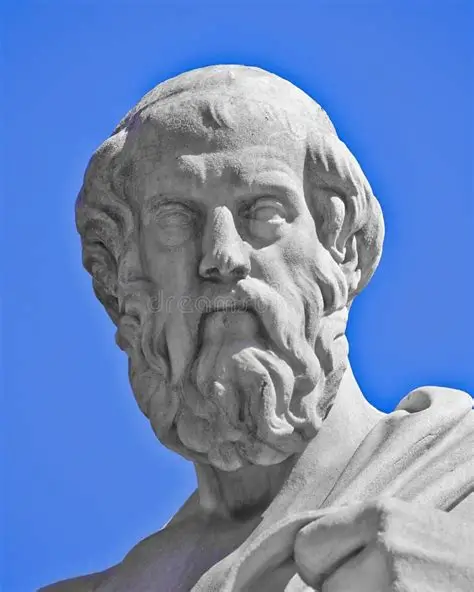
Plato was an ancient Greek philosopher whose ideas became one of the foundations of Western philosophy. Born in Athens during the 5th century BCE, he was a student of Socrates and later became the teacher of Aristotle. Through his dialogues, Plato explored justice, politics, knowledge, morality, education, reality and the nature of the ideal state.
His influence extended far beyond ancient Greece. Plato founded the Academy in Athens, one of the earliest enduring institutions of higher learning in the Western world, and his writings became central to philosophical education for centuries. Although many details of his personal life remain uncertain, his intellectual legacy is exceptionally well documented through the works attributed to him and the traditions that developed around his teaching.
Who Was Plato?
Plato was a Greek philosopher who lived during a period of intense political and intellectual change in ancient Athens. He was born around 428 or 427 BCE and died around 348 or 347 BCE.
His original name may have been Aristocles, while “Plato” was reportedly a nickname, although the details surrounding the name are uncertain. Most of what is known about him comes from later historical accounts and his philosophical dialogues rather than from a surviving autobiography.
Plato’s importance rests primarily on his philosophical writings and his influence as a teacher. His works are usually written as dialogues in which Socrates and other characters discuss difficult questions about human existence.
Rather than presenting philosophy as a collection of simple answers, Plato used conversation and argument to investigate how people should live and what it means to know something.
Early Life and Family Background
Plato was born into an aristocratic Athenian family. Ancient traditions associate his family with prominent political figures, although some details of his ancestry are uncertain. He grew up during the final decades of Athens’ classical period. This was an extraordinary era in Greek history, but it was also marked by war and political instability.
The Peloponnesian War between Athens and Sparta dominated much of Plato’s youth. Athens eventually suffered defeat in 404 BCE, and the city’s political system experienced major upheaval.
These events influenced Plato’s later thinking about government and political leadership. His writings repeatedly question whether ordinary political competition produces good government and whether those who govern possess the knowledge and moral character necessary to lead.
Plato and Socrates
The most important intellectual influence on Plato was Socrates. Socrates did not leave written works of his own, so much of the traditional understanding of his ideas comes from writers who knew him or wrote about him, especially Plato.
Plato appears to have been deeply influenced by Socrates’ method of questioning. Socrates challenged assumptions by asking people to explain what they believed and exposing contradictions in their arguments.
Plato later made Socrates the central speaker in many of his dialogues. The relationship between the historical Socrates and the Socrates presented in Plato’s writings is difficult to determine with certainty. Some dialogues may preserve aspects of Socratic thought, while others increasingly express Plato’s own philosophical ideas.
The death of Socrates was especially important to Plato. In 399 BCE, Socrates was tried and executed by Athens after being accused of impiety and corrupting the city’s youth. The event appears to have reinforced Plato’s concerns about political judgment, justice and the ability of democratic societies to make wise decisions.
Plato’s Philosophy
Plato’s philosophy covered a remarkably wide range of subjects. His works addressed questions about reality, knowledge, morality, politics, education, mathematics, art and the human soul.
One of his most famous ideas is the theory of Forms. Plato argued that the visible world is not the highest level of reality. Behind changing physical things, he proposed the existence of eternal and intelligible Forms, such as Justice, Beauty and Goodness. For Plato, individual things in the physical world are imperfect examples of these deeper realities.
His philosophy also emphasized the importance of knowledge. He distinguished between genuine understanding and mere opinion, arguing that human beings should use reason to move beyond appearances and seek deeper truths.
Education therefore became central to his thought. Plato believed that developing the mind and character was essential for creating good individuals and a properly ordered society.
The Republic and Political Thought
Plato’s most famous work is The Republic, a dialogue examining justice and the ideal political order. The work asks a fundamental question: what is a just society, and what does it mean for an individual to live justly?
Plato presents an idealized state divided into different social functions. At the top are philosopher-rulers, individuals who have supposedly received the education necessary to understand the highest principles of justice and goodness.
His concept of the philosopher-king became one of the most influential and controversial ideas in political philosophy. Plato was deeply skeptical of political systems based simply on popular opinion. His experience of Athens and the execution of Socrates contributed to his concern that political power could be exercised without genuine knowledge.
At the same time, Plato’s political writings should be understood within the context of ancient Greek city-states rather than modern democratic societies. His ideas have influenced political philosophy for centuries, but they have also been criticized for their elitism and distrust of popular government.
The Academy and Teaching
Plato founded the Academy in Athens, probably around 387 BCE. The Academy became one of the most important intellectual centers of the ancient Greek world. Students studied philosophy, mathematics and other areas of knowledge, and the institution continued in various forms for centuries after Plato’s death.
The Academy’s significance lies not only in its connection to Plato but also in the model of organized intellectual inquiry it represented. Plato’s teaching influenced generations of thinkers, including Aristotle, who studied at the Academy for many years.
The institution helped establish Athens as a major center of philosophical education and contributed to the development of traditions of systematic learning that influenced later educational institutions.
Major Works
Plato’s surviving works are primarily philosophical dialogues. Scholars have debated the exact chronology and authenticity of some works, but several are central to his legacy.
The Republic
The Republic examines justice, education, politics, the nature of knowledge and the ideal state. It contains several of Plato’s most famous philosophical ideas, including the allegory of the cave and the concept of philosopher-rulers.
Symposium
Symposium explores love and desire through a series of speeches. It became particularly influential for Plato’s account of the movement from physical attraction toward contemplation of higher forms of beauty.
Apology
Apology presents Socrates’ defense during his trial in Athens. It is one of the most important sources for understanding the philosophical image of Socrates created by Plato.
Phaedo
Phaedo describes the final hours of Socrates and explores questions concerning the soul, death and philosophical life.
Timaeus
Timaeus examines cosmology, nature and the structure of the universe. It became particularly influential in later philosophical and scientific traditions.
Laws
Laws is generally regarded as one of Plato’s later works. It presents a more practical discussion of legislation and government than The Republic.
Plato and Aristotle
Plato’s most famous student was Aristotle, who joined the Academy when he was about 17 years old and remained associated with it for roughly two decades.
Although Aristotle was deeply influenced by Plato, the two philosophers developed important differences.
Plato emphasized the existence of eternal Forms and placed considerable importance on abstract philosophical knowledge. Aristotle developed a more empirical approach, paying greater attention to observation, classification and the study of the natural world.
Their relationship illustrates Plato’s enormous influence. Even where later philosophers rejected aspects of his thought, they often did so while responding directly to questions Plato had helped establish.
Historical Context
Plato lived during a period when Athens was experiencing the consequences of war, political instability and changing ideas about citizenship and government.
The Peloponnesian War weakened Athens and exposed tensions within the Greek city-state system. After Athens’ defeat, the Thirty Tyrants briefly established an oligarchic government before democracy was restored.
Socrates’ execution followed several years of political turmoil.
These events help explain why Plato devoted so much attention to justice, political leadership and education. His philosophy was not developed in isolation from society. It emerged from a world in which political decisions could determine the survival of cities and individuals.
Plato’s work also reflected the intellectual culture of ancient Greece, where philosophers were increasingly asking questions about nature, morality, knowledge and the proper organization of society.
Later Life and Death
After founding the Academy, Plato continued teaching and writing for the remainder of his life.
Ancient accounts also associate him with political experiments in Syracuse, where he became involved with members of the ruling family. His efforts to influence political leadership there were not successful, illustrating the difficulty of translating his philosophical ideas about ideal government into practical politics.
The precise circumstances of Plato’s death are uncertain. He is generally believed to have died around 348 or 347 BCE in Athens.
Unlike many later historical figures, Plato left no autobiography that provides a complete account of his life. Much of what is known about him has therefore been reconstructed from his writings, later biographical traditions and references by other ancient authors.
Legacy and Historical Significance
Plato’s historical significance is difficult to overstate. His writings became one of the principal foundations of Western philosophical thought and influenced discussions of metaphysics, ethics, political theory, education and epistemology for more than two millennia.
His influence was especially strong in later Greek philosophy, Roman thought, early Christian theology and medieval Islamic and European intellectual traditions.
Philosophers repeatedly returned to questions first developed in systematic form within his dialogues. What is justice? What is genuine knowledge? What makes something beautiful? What is the relationship between the physical world and deeper reality? How should society be governed?
These questions remain central to philosophy today.
His influence also extended beyond philosophy. Concepts associated with Plato have shaped political theory, religious thought, literature, education and theories of knowledge.
The Academy provided an important historical model for organized higher learning, while his dialogues demonstrated how philosophical ideas could be explored through structured argument and conversation.
Plato’s legacy is not without controversy. His political model has been criticized for placing too much authority in the hands of an intellectual elite. His theory of Forms has also been challenged by philosophers who reject the existence of separate, eternal realities.
Yet disagreement with Plato is itself part of his legacy. Philosophers have spent centuries developing, modifying or rejecting his ideas, often while continuing to engage with the questions he made central.
His influence can therefore be measured not simply by the number of people who accepted his philosophy, but by the extraordinary number of thinkers who felt compelled to respond to it.
Plato remains one of the defining intellectual figures of ancient Greece because he helped establish philosophy as a systematic investigation of reality, knowledge, morality and political life.
Read More: Nelson Mandela Biography: Early Life, Apartheid Struggle, Presidency and Legacy
Frequently Asked Questions
Who was Plato?
Plato was an ancient Greek philosopher and student of Socrates who founded the Academy in Athens and became one of the most influential thinkers in Western philosophy.
When was Plato born?
Plato was probably born around 428 or 427 BCE in Athens or its surrounding region.
What was Plato famous for?
Plato was famous for his philosophical dialogues, his theory of Forms, his ideas about political philosophy and his founding of the Academy.
What is Plato’s most famous book?
The Republic is generally considered Plato’s most famous work. It examines justice, politics, education and the ideal state.
Who was Plato’s teacher?
Plato’s most important teacher was Socrates, whose ideas and method of questioning strongly influenced Plato’s philosophical development.
Who was Plato’s most famous student?
Plato’s most famous student was Aristotle, who studied at the Academy for many years before developing his own philosophical system.
What was Plato’s Academy?
The Academy was an institution of philosophical and intellectual study founded by Plato in Athens around 387 BCE.
When did Plato die?
Plato is generally believed to have died around 348 or 347 BCE in Athens.
Conclusion
Plato was one of the most consequential philosophers of the ancient world. As a student of Socrates, teacher of Aristotle and founder of the Academy, he helped establish intellectual traditions that would influence philosophy and education for centuries.
His writings examined questions that remain fundamental today, including the nature of truth, justice, knowledge, morality and political leadership. Although many of his ideas remain contested, his influence has never disappeared.
Plato’s documented legacy is ultimately the history of questions as much as answers. By making those questions central to philosophical inquiry, he became one of the enduring intellectual figures of world history.