|
Getting your Trinity Audio player ready... |
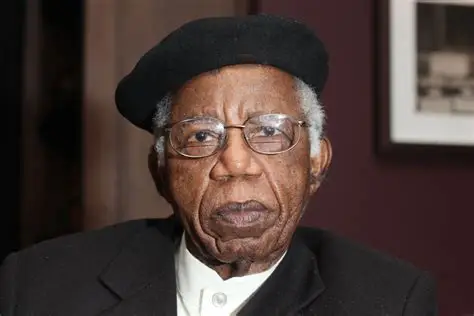
Chinua Achebe was a Nigerian novelist, poet, critic, editor and intellectual whose work transformed the place of African literature in the world. He became internationally famous for Things Fall Apart, his 1958 novel about Igbo society and the disruption caused by colonialism. The book challenged literary portrayals that presented Africa as a continent without complex histories, cultures or political institutions.
Achebe’s importance extended beyond literature. Born under British colonial rule, he lived through Nigerian independence, political instability and the Nigerian Civil War. He also promoted other African writers, criticized political corruption and became an important voice on African identity, colonialism and history. His life therefore belongs not only to the history of Nigerian literature but also to the broader history of modern Africa.
Early Life and Family Background
Chinua Achebe was born Albert Chinualumogu Achebe on November 16, 1930, in Ogidi, in present-day Anambra State, southeastern Nigeria. He grew up during British colonial rule, at a time when indigenous Igbo traditions existed alongside Christianity, missionary education and colonial administration.
His father, Isaiah Okafo Achebe, was a teacher and Christian evangelist. His mother, Janet Anaenechi Iloegbunam, came from a family strongly connected to Igbo traditions and oral culture.
This combination of influences shaped Achebe’s understanding of the world. He encountered Christianity through his family while also living within a society whose traditions, proverbs, customs and social institutions had developed long before colonial rule.
That background became important to his later writing. Achebe did not portray Igbo society as perfect, but he showed that it possessed its own systems of government, religion, economics, family relationships and moral values. His childhood therefore gave him an intimate understanding of the cultural world that would later become central to Things Fall Apart.
Education and Formative Years
Achebe attended schools in southeastern Nigeria before entering Government College Umuahia in 1944. The institution was one of the leading secondary schools in colonial Nigeria and provided a rigorous education heavily influenced by British traditions.
In 1948, he entered University College Ibadan. He initially studied medicine but later changed his course and studied subjects including English, history and theology. His university years exposed him to European literature and encouraged him to think critically about how Africa was represented in books.
Achebe did not reject European literature. Instead, he became increasingly concerned that many influential works presented Africa through stereotypes and colonial assumptions. He believed African writers needed to tell their own stories and restore complexity to representations of African societies.
This became one of the central intellectual foundations of his career.
Career and the Rise of a Writer
After graduating in 1953, Achebe worked briefly as a teacher before joining the Nigerian Broadcasting Corporation in 1954. Broadcasting introduced him to professional writing, editing and communication with large audiences.
He later travelled to Britain for training with the BBC. By 1961, he had become director of external broadcasting at the Nigerian Broadcasting Corporation.
His career developed during a crucial period in Nigerian history. Nationalist politics were growing, and Nigeria was approaching independence, which it achieved in 1960. Achebe was therefore working as a writer and broadcaster during the transition from colonial rule to self-government.
His first novel, Things Fall Apart, appeared in 1958, two years before independence. Its publication marked a turning point in African literature.
Things Fall Apart and Its Historical Importance
Things Fall Apart tells the story of Okonkwo, a respected but troubled man in the fictional Igbo community of Umuofia. Through his personal struggles, Achebe examines family, masculinity, religion, social status and political authority.
The novel also describes the arrival of Christian missionaries and British colonial administration. Their presence gradually disrupts the existing social order.
What made the book historically important was its perspective. Instead of presenting Africa as a passive background to European exploration, Achebe placed an African community at the center of the story.
He showed that Igbo society had its own political structures, religious beliefs, economic relationships and traditions before colonial intervention. At the same time, he acknowledged internal conflicts and weaknesses within the community.
The result was not simply a celebration of precolonial Africa. It was a complex historical portrait of a society experiencing profound change.
Things Fall Apart eventually became one of the most widely read African novels in the world. It has been translated into numerous languages and remains a major text in the study of African literature, colonialism and cultural history.
Major Literary Works
Achebe continued exploring the consequences of colonialism and political change throughout his career.
No Longer at Ease, published in 1960, examined the difficulties facing an educated Nigerian during the transition from colonial rule to independence. Its protagonist, Obi Okonkwo, struggles with social expectations, bureaucracy, corruption and the pressures of modern Nigerian life.
Arrow of God, published in 1964, returned to colonial-era Igboland. The novel examined traditional religious authority, political leadership and the growing influence of British colonial power.
In A Man of the People, published in 1966, Achebe turned directly toward post-independence political corruption. The novel appeared during a period of serious political instability in Nigeria and became closely associated with the country’s troubled political transition.
His later novel, Anthills of the Savannah, published in 1987, addressed military dictatorship, political power, journalism and the struggle for democracy.
Achebe also wrote essays, poetry, children’s literature and political works. His 1983 book The Trouble with Nigeria was a direct criticism of the country’s political leadership and problems of governance.
Achebe and African Literature
Achebe’s influence extended beyond the books he personally wrote. He played an important role in creating opportunities for other African writers.
In 1962, he became the founding editor of Heinemann’s African Writers Series. The series became an important platform for African authors and helped introduce their work to international readers.
This editorial role significantly expanded Achebe’s historical contribution. He was not simply a successful writer. He helped build a literary environment in which other African writers could gain international recognition.
Achebe also played an important role in debates about language. Although he wrote primarily in English, he incorporated Igbo proverbs, expressions and cultural patterns into his prose.
His approach demonstrated that English could be adapted to communicate African experiences. It also contributed to continuing debates among African writers about whether African literature should primarily be written in European languages or indigenous African languages.
Through his fiction, criticism and editorial work, Achebe helped establish African literature as an important part of global literary scholarship.
Achebe and the Nigerian Civil War
The Nigerian Civil War became one of the most consequential events in Achebe’s life.
In 1967, the southeastern region of Nigeria declared independence as Biafra following years of political instability, military coups and ethnic violence. The conflict lasted until 1970 and resulted in enormous suffering, including displacement, hunger and loss of life.
Achebe strongly supported Biafra and served as one of its cultural ambassadors. He travelled internationally to speak about the conflict and draw attention to the humanitarian crisis.
The war also affected him personally. His close friend, the poet Christopher Okigbo, was killed during the conflict while fighting for Biafra.
The experience influenced Achebe’s poetry and later writing. Decades afterward, he published There Was a Country: A Personal History of Biafra in 2012. The book provided his personal interpretation of the war and its political background.
Achebe’s position on Biafra remains an important part of understanding his historical life. It also demonstrates that he was not merely an observer of Nigerian history. He participated directly in one of the country’s most consequential political conflicts.
Later Career and Personal Life
After the civil war, Achebe continued his literary and academic career. He taught at the University of Nigeria, Nsukka, and later spent many years at Bard College in the United States. In 2009, he joined Brown University as a professor.
Achebe married Christie Chinwe Okoli in 1961. They had four children: Chinelo, Ikechukwu, Chidi and Nwando.
His family life remained relatively private, while his public career increasingly focused on literature, teaching, politics and African history.
In 1990, Achebe suffered a serious automobile accident in Nigeria that left him paralyzed from the waist down. He subsequently spent much of his later life in the United States but continued writing and teaching despite his disability.
In 2007, he received the Man Booker International Prize in recognition of his contribution to literature. He also received numerous honorary degrees and other international distinctions.
Death
Chinua Achebe died on March 21, 2013, in Boston, Massachusetts, at the age of 82.
His death was widely regarded as the passing of one of Africa’s most influential writers and intellectuals. By the time of his death, his work had become central to the study of African literature and the cultural history of colonial and postcolonial Africa.
His final major book, There Was a Country, had appeared only months earlier and ensured that his personal interpretation of the Biafran experience would remain part of historical discussions about Nigeria.
Achievements and Contributions
Transforming African Literature
Achebe helped change the position of African literature in international literary culture. His novels demonstrated that African societies could be represented with complexity and historical depth.
Writing Things Fall Apart
Things Fall Apart became his defining literary achievement and one of the most influential African novels ever published. It introduced millions of readers to an African perspective on colonialism and cultural change.
Promoting African Writers
Through the African Writers Series, Achebe helped provide an international platform for other African authors. His editorial influence therefore extended far beyond his personal bibliography.
Challenging Colonial Representations
Achebe challenged literary portrayals that reduced Africa to stereotypes. He argued through both fiction and criticism that Africans had histories and perspectives that deserved serious representation.
Documenting Nigerian Political History
His novels and essays addressed colonialism, independence, corruption, military rule, nationalism and civil war. His work consequently became an important literary record of modern Nigerian political experience.
Legacy and Historical Significance
Chinua Achebe’s legacy rests on several interconnected achievements.
First, he changed the way African societies could be represented in literature. His characters were neither stereotypes nor symbols without depth. They were people living within complex communities shaped by history, religion, politics and personal choices.
Second, Achebe helped restore African agency to narratives about colonialism. Things Fall Apart showed that colonialism was not simply the arrival of European civilization in an empty historical space. It was an encounter with societies that already possessed their own institutions and traditions.
Third, his influence extended to other African writers. Through his editorial work, Achebe helped strengthen African publishing and contributed to the international circulation of African literature.
His political and historical significance is equally important. He experienced colonial rule, Nigerian independence, political instability and civil war. His writings reflected those experiences and preserved important perspectives on the challenges facing Nigeria after independence.
Achebe’s legacy is therefore larger than his most famous novel. He was a novelist who transformed literature, an editor who supported other writers, a critic who challenged colonial assumptions and an intellectual who participated directly in the political history of his country.
His work continues to matter because the questions he raised remain relevant. Who has the authority to tell history? How should cultures represent themselves? What happens when political independence does not resolve deeper social problems? And how can literature preserve the memory of societies undergoing dramatic change?
These questions help explain why Achebe remains one of the defining figures in Nigerian and African intellectual history.
Read More: Who Was Martin Luther? Biography, Reformation, Achievements and Legacy
Frequently Asked Questions
Who was Chinua Achebe?
Chinua Achebe was a Nigerian novelist, poet, critic, editor and academic best known for Things Fall Apart.
When was Chinua Achebe born?
He was born on November 16, 1930, in Ogidi, southeastern Nigeria.
What was Chinua Achebe famous for?
He was famous primarily for writing Things Fall Apart, a landmark novel about Igbo society and colonialism.
What are Chinua Achebe’s major books?
His major works include Things Fall Apart, No Longer at Ease, Arrow of God, A Man of the People, Anthills of the Savannah and There Was a Country.
What did Chinua Achebe contribute to African literature?
He helped transform African literature, challenged colonial representations of Africa and promoted other African writers through his editorial work.
What was Achebe’s role in the Biafran War?
Achebe supported Biafra and served as a cultural ambassador during the Nigerian Civil War. He later wrote about the conflict in There Was a Country.
Was Chinua Achebe married?
Yes. He married Christie Chinwe Okoli in 1961, and they had four children.
When did Chinua Achebe die?
Chinua Achebe died on March 21, 2013, in Boston, Massachusetts, at the age of 82.
Why is Chinua Achebe historically important?
Achebe is historically important because he transformed African literature, challenged colonial narratives and helped preserve African perspectives on the history and culture of the continent.
Conclusion
Chinua Achebe was far more than the author of Things Fall Apart. He was one of the major intellectual figures of modern Africa, using literature, criticism and public engagement to challenge colonial representations and give African experiences greater authority in global culture.
His life reflected the major transformations of 20th-century Nigeria, from colonial rule and independence to political crisis and civil war. His lasting legacy lies in the literature he created, the African writers he helped promote and the historical perspectives he preserved for later generations.
Achebe remains an important historical figure because his life demonstrates how one writer could influence not only literature but also the cultural understanding of an entire continent.