|
Getting your Trinity Audio player ready... |
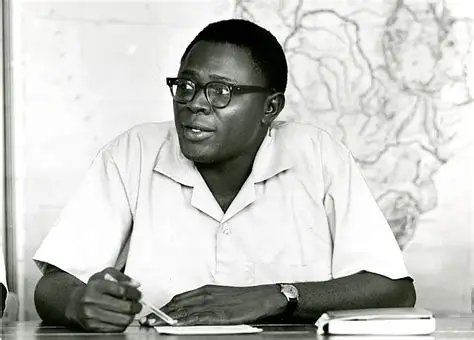
Akinlawon Ladipo Mabogunje was a pioneering Nigerian geographer whose research transformed the study of urbanisation, regional planning and economic development in Africa. He became the first African president of the International Geographical Union and helped establish geography as an important discipline for understanding Nigeria’s cities, population movements and development challenges. His expertise also contributed to planning Nigeria’s federal capital, Abuja.
Mabogunje combined academic research with practical public service. Through his books, teaching and policy advice, he challenged scholars to understand African urban development through local histories and economic conditions rather than simply applying European and American theories. He died on August 4, 2022, aged 90, leaving a lasting influence on geography and development planning across Africa.
Early Life and Education
Akinlawon Mabogunje was born on October 18, 1931, in Kano, northern Nigeria. He began his education in Kano before moving to Ibadan, where he attended Ibadan Grammar School and completed his secondary education in 1948. His academic interests, particularly his enthusiasm for geography, helped shape his future career.
In 1949, Mabogunje gained admission to University College Ibadan, now the University of Ibadan. He graduated in 1953 with a general Bachelor of Arts degree from the University of London. He then continued his studies at University College London, earning an honours degree in geography in 1956, a master’s degree in 1958 and a doctorate in geography in 1961.
His doctoral research examined Lagos as an urban centre and laid the groundwork for his lifelong interest in African cities. Mabogunje believed that geography could explain how people, economic activities, political institutions and physical environments interacted to shape societies.
Academic Career at the University of Ibadan
Mabogunje joined the University of Ibadan’s geography department in 1958 as an assistant lecturer. He advanced rapidly through the academic ranks and became a professor of geography in 1965. His appointment made him the first Nigerian professor of geography and an important figure in the development of the discipline across Africa.
He served as dean of the Faculty of the Social Sciences from 1968 to 1970 and head of the Department of Geography from 1972 to 1975. He also directed the university’s Planning Studies Programme from 1972 to 1981, helping develop the academic foundation for urban and regional planning.
His teaching encouraged students to investigate the relationship between geographical conditions and social change. He examined how migration, trade, political authority, population growth and economic opportunities influenced the development of cities and rural communities.
Mabogunje also helped train a generation of African geographers and planners. His students and colleagues carried his methods into universities, research institutions and public agencies, strengthening the connection between geographical scholarship and practical development policy.
After 23 years of academic service, he voluntarily retired from the university in 1981. He continued to advise governments, development organisations and private institutions throughout the following decades.
Major Books and Contributions to Geography
Mabogunje’s scholarship challenged the assumption that theories developed to explain European and North American cities could automatically explain African urbanisation. He argued that African cities developed through distinctive combinations of trade, agriculture, political authority and historical change.
His 1968 book, Urbanization in Nigeria, became one of his most influential publications. It examined the growth of Nigerian cities, the movement of people from rural areas and the social and economic forces behind urban expansion. The book helped establish urbanisation as a major subject in African geographical research.
In The Development Process: A Spatial Perspective, published in 1980, Mabogunje explored how development unfolded across geographical spaces. He examined the relationship between economic activity, institutions, population distribution and regional inequality. His analysis encouraged planners to consider the different conditions that shaped development across regions.
He also contributed to research on rural development, environmental challenges, housing and population movements. Rather than treat geography as a purely descriptive subject, he used it to explain why development occurred unevenly and how governments could respond to those differences.
His approach helped establish a more distinctly African perspective within geographical scholarship. By placing local economic systems and historical experiences at the centre of his analysis, he challenged researchers to develop explanations grounded in the realities of African societies.
Akin Mabogunje and the Planning of Abuja
One of Mabogunje’s most important contributions outside academia involved the development of Abuja as Nigeria’s federal capital. In the 1970s, the federal government began planning a new capital to replace Lagos, which faced growing congestion and administrative pressures.
Mabogunje contributed expertise to the Federal Capital Development Authority and helped shape discussions about the new city’s development. His work connected geographical research with the practical challenges of establishing a capital that could serve a growing country.
The decision to develop Abuja required more than selecting a location. Planners had to consider population distribution, transport, land use, infrastructure, housing and the relationship between the proposed capital and surrounding communities. Mabogunje brought his knowledge of urban systems and regional development to these questions.
He advocated the use of Nigerian professionals in the planning and construction of the city. His broader work also stressed the importance of understanding the social and economic effects of major development projects, particularly on communities affected by relocation and changing land use.
Abuja’s development involved many planners, architects, engineers and government officials, but Mabogunje became one of the influential Nigerian scholars associated with its conception and implementation. His contribution demonstrated how academic expertise could help guide national infrastructure and urban policy.
International Leadership and Recognition
Mabogunje achieved international prominence through his leadership in geographical research. He served as president of the International Geographical Union from 1980 to 1984, becoming the first African to hold the position. His appointment brought greater international recognition to African geographical scholarship.
He also worked with international organisations and research institutions, including bodies associated with the United Nations, development policy and urban management. These roles allowed him to contribute African perspectives to international discussions about cities, population change and economic development.
His achievements earned several major honours. In 1980, he received the Nigerian National Order of Merit, one of the country’s highest recognitions for intellectual and academic achievement. He later became the first African scholar elected as a foreign associate of the United States National Academy of Sciences in 1999.
In 2017, Mabogunje received the Vautrin Lud Prize, an internationally recognised award often described as the highest distinction in geography. The award acknowledged his contributions to the discipline and reinforced his standing as one of the most influential geographers of his generation.
Death and Lasting Legacy
Akin Mabogunje died in Lagos on August 4, 2022, at the age of 90. His death marked the passing of a scholar whose work connected academic research with Nigeria’s urban and regional development.
His legacy extends beyond his books and international honours. He helped establish geography as a practical tool for addressing urban growth, housing, migration, regional inequality and economic planning. His teaching also influenced generations of researchers who continued to investigate the changing relationship between people, places and development.
Mabogunje’s work remains relevant as African cities face rapid population growth, pressure on infrastructure, informal settlements and environmental challenges. His emphasis on local conditions and evidence-based planning offers an important foundation for understanding these issues.
Conclusion
Akin Mabogunje helped transform African geography through his research on urbanisation, regional planning and development. As a professor at the University of Ibadan, he trained scholars and advanced the study of African cities. His contribution to Abuja’s development demonstrated the value of applying geographical knowledge to national planning, while his international leadership brought wider recognition to African scholarship. His work remains an important part of Nigeria’s intellectual and development history.
Frequently Asked Questions
Who was Akin Mabogunje?
Akin Mabogunje was a Nigerian geographer, professor and development adviser known for his research on urbanisation, regional planning and African development.
When was Akin Mabogunje born?
He was born on October 18, 1931, in Kano, Nigeria.
What was Akin Mabogunje’s contribution to Abuja?
He advised on the development of Nigeria’s new federal capital through his work with the Federal Capital Development Authority and contributed expertise in urban and regional planning.
Which books did Akin Mabogunje write?
His major works include Urbanization in Nigeria (1968) and The Development Process: A Spatial Perspective (1980).
What international recognition did Akin Mabogunje receive?
He became the first African president of the International Geographical Union and received the Vautrin Lud Prize in 2017. He was also elected a foreign associate of the United States National Academy of Sciences.
When did Akin Mabogunje die?
He died in Lagos, Nigeria, on August 4, 2022, aged 90.