|
Getting your Trinity Audio player ready... |
Introduction
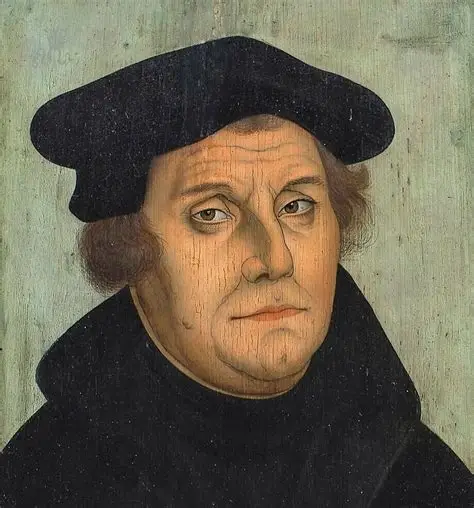
Martin Luther was a German priest, theologian and professor whose ideas changed the course of European history. Born in 1483, he became one of the most important figures of the Protestant Reformation after speaking out against practices within the Roman Catholic Church, particularly the sale and abuse of indulgences. His views on faith, grace and the authority of the Bible spread quickly and challenged some of the most powerful religious institutions of his time.
Luther did not set out with the intention of starting a new branch of Christianity. At first, he wanted to challenge what he believed were serious problems within the church and push for change. However, his teachings soon grew into a much bigger conflict, bringing him into direct opposition with Pope Leo X, Holy Roman Emperor Charles V and other church and political authorities.
His writings and teachings eventually inspired a movement that spread across Europe, changing the way many people understood Christianity, religious education and the Bible. Even after his death in 1546, Luther’s influence continued to shape religion, politics and European society for generations.
Early Life and Family Background
Martin Luther was born on November 10, 1483, in Eisleben in the County of Mansfeld, within the Holy Roman Empire. His parents were Hans Luther and Margarethe Luther. His father worked in the mining industry and became financially successful, giving the family a relatively secure position in the community.
Not long after Martin’s birth, the family moved to Mansfeld, where he spent much of his childhood. His upbringing took place in a deeply Christian society in which the Roman Catholic Church played a central role in religious, social and political life. The religious environment of late medieval Germany would become important to Luther’s later development.
Luther received his early education in schools that emphasized Latin, discipline and religious instruction. His parents expected him to pursue a respectable professional career, and his early academic abilities eventually led him toward university education.
Education and Formative Years
Luther studied at the University of Erfurt, where he received a broad education in the liberal arts. He earned a bachelor’s degree in 1502 and a master’s degree in 1505. His education exposed him to philosophy, rhetoric, logic and other subjects that formed the intellectual foundation for his later theological work.
His father wanted him to study law, and Luther initially entered legal studies. His plans changed dramatically in 1505 after a deeply troubling experience during a thunderstorm. Luther vowed to become a monk if he survived the storm, and soon afterward he entered the Augustinian monastery in Erfurt.
His decision represented a major break with his family’s expectations. It also began a period of intense religious reflection that would shape the rest of his life.
Martin Luther Becomes a Monk
Luther entered the Augustinian order in 1505 and was ordained as a priest in 1507. He took his religious duties extremely seriously and became deeply concerned about sin, repentance, divine judgment and the possibility of salvation.
His spiritual struggles became a defining feature of his early religious life. Luther sought certainty through prayer, confession, fasting and rigorous religious discipline, but he remained troubled by questions about whether human beings could ever become sufficiently righteous before God.
His theological development eventually led him toward a different understanding of salvation. Rather than viewing salvation primarily as something earned through human religious works, Luther increasingly emphasized God’s grace and the role of faith.
He continued his academic training and eventually became a doctor of theology. In 1512, he joined the faculty at the University of Wittenberg, where he taught biblical studies. His position gave him an influential platform from which his theological ideas could develop and circulate.
Career as a Theologian and Professor
At Wittenberg, Luther became known as an energetic scholar and preacher. He lectured extensively on books of the Bible, including Psalms, Romans, Galatians and Hebrews. His study of scripture increasingly shaped his understanding of Christian doctrine.
The theological environment of the period was complicated. The church possessed enormous religious and political influence, while universities and scholars were debating questions about authority, salvation and the relationship between scripture and church tradition.
Luther’s work developed within this broader intellectual environment. His disagreements with certain church practices gradually became more serious, especially his objections to the sale of indulgences.
The 95 Theses and the Beginning of the Reformation
The event that brought Luther international attention occurred in 1517. He wrote a document known as the Ninety-Five Theses, formally titled Disputation on the Power and Efficacy of Indulgences. The document questioned the theological basis and practice of indulgences, which were associated with the remission of temporal punishment for sin.
Luther intended the theses as propositions for theological debate. They were written in Latin and circulated rapidly after being printed and translated. The new printing technology allowed his arguments to reach audiences far beyond Wittenberg.
The traditional story says that Luther dramatically nailed the 95 Theses to the door of the Castle Church in Wittenberg on October 31, 1517. The event became one of the most famous images associated with the Reformation, although historians have questioned whether the nailing actually occurred. What is firmly documented is that Luther wrote to church authorities on October 31, 1517, criticizing indulgence practices and enclosing his theses.
The controversy quickly expanded beyond the original dispute. Luther’s writings challenged broader questions about church authority, salvation and the role of scripture, helping transform a theological disagreement into a major European religious movement.
Conflict with the Catholic Church
Luther’s arguments increasingly brought him into conflict with the leadership of the Roman Catholic Church. His writings attracted supporters but also provoked condemnation from church authorities.
In 1520, Pope Leo X issued a formal warning threatening Luther with excommunication unless he withdrew several of his teachings. Luther refused to abandon his position and publicly rejected the papal order.
In January 1521, Luther was formally excommunicated. His conflict then moved beyond the church into the political structure of the Holy Roman Empire.
The Diet of Worms and the Wartburg Years
In 1521, Luther appeared before the Diet of Worms, an imperial assembly presided over by Emperor Charles V. He was asked to reconsider his writings and teachings.
Luther refused to recant. His stand at Worms became one of the defining moments of the Reformation because it demonstrated his willingness to confront both religious and political authorities over matters of conscience and theology.
After the Diet of Worms, Luther was declared an outlaw under the Edict of Worms. However, Frederick the Wise, Elector of Saxony, provided protection. Luther was taken secretly to Wartburg Castle, where he lived under the name Junker Jörg.
During his time at Wartburg, Luther translated the New Testament into German. His translation helped make scripture more accessible to German-speaking readers and became an important milestone in the development of the German language.
Martin Luther’s Major Achievements
Leading the Protestant Reformation
Luther’s greatest historical achievement was his role in initiating and shaping the Protestant Reformation. His criticisms of indulgences developed into a much broader challenge to Catholic authority and religious practice.
The movement did not remain confined to Germany. Reformers across Europe developed their own movements, and Protestant Christianity eventually emerged in numerous forms.
Emphasizing Faith and Grace
Luther’s theology placed strong emphasis on salvation through faith and divine grace rather than the idea that human beings could earn salvation through religious works.
These teachings became central to Lutheran theology and influenced other Protestant traditions. They also contributed to major debates about the nature of Christian faith and religious authority.
Promoting Biblical Accessibility
Luther’s translation of the Bible into German was among his most important practical contributions. He wanted ordinary German-speaking Christians to have greater access to scripture.
His German Bible also influenced the development of written German. The translation helped establish linguistic patterns that contributed to a more widely understood form of the language.
Expanding the Reach of Religious Ideas
Luther was an exceptionally prolific writer. Pamphlets, sermons, theological works and other publications allowed his arguments to reach large audiences.
The printing press was crucial to this process. Luther’s ideas could be reproduced and distributed much faster than earlier theological debates, helping turn his personal dispute into a mass movement.
Historical Context of the Reformation
Luther’s rise cannot be separated from the conditions of early 16th-century Europe. The Roman Catholic Church was the dominant Western Christian institution, but debates about church reform had existed for generations before Luther.
The Renaissance had encouraged new forms of scholarship, including renewed interest in classical languages and ancient texts. Humanist scholars increasingly emphasized returning to original sources, including the biblical texts themselves.
At the same time, the printing press was transforming communication. Religious arguments that once circulated primarily among scholars and clergy could now reach merchants, artisans, students and other sections of society.
Political conditions also mattered. The Holy Roman Empire was a collection of territories with competing rulers and interests. Some German princes supported Luther for religious reasons, while others also saw opportunities to increase their independence from outside church authority.
The Reformation therefore became both a religious and political transformation. Luther’s theology was central, but its spread was also shaped by technology, scholarship, politics and social change.
Personal Life and Family
Luther’s personal life changed significantly after he rejected clerical celibacy as an obligatory religious requirement. In 1525, he married Katharina von Bora, a former nun who had left religious life during the Reformation.
Their marriage became an important example of the changing attitudes toward clerical marriage within emerging Protestant communities. Luther and Katharina established a household in Wittenberg and had six children, although two died in childhood.
Katharina played an important role in managing the household and finances. Luther’s home also became a gathering place for students, colleagues and visitors, giving his family life a social and intellectual dimension.
Later Years and Death
Luther continued writing, teaching and preaching throughout the later decades of his life. He remained deeply involved in the development of Lutheran churches and in debates over doctrine and religious practice.
The Reformation, however, had developed into a movement larger than Luther himself. Different reformers disagreed over theology, worship and church organization, while political authorities increasingly shaped the direction of religious change.
Luther also became involved in the German Peasants’ War of 1524 to 1525. Although some rebels drew inspiration from reformist ideas, Luther strongly condemned the uprising and supported the authorities’ efforts to suppress it. His position remains an important and controversial aspect of his political and social thought.
Luther’s health declined during his final years. He died in Eisleben on February 18, 1546, at the age of 62. He was buried at the Castle Church in Wittenberg.
Controversies and Difficult Aspects of Luther’s Legacy
Martin Luther’s historical legacy is not exclusively positive. His later writings included deeply hostile statements about Jews, including a notorious 1543 work that advocated harsh measures against Jewish communities.
These writings have been widely condemned by later scholars, religious communities and institutions. They must be considered when evaluating Luther as a historical figure, particularly because later generations have debated the relationship between his anti-Jewish writings and subsequent traditions of European antisemitism.
It is important, however, to distinguish Luther’s own writings from the much later political ideologies that developed centuries after his death. His statements cannot simply be treated as a direct explanation for modern antisemitism, but they remain a serious and troubling part of his historical record.
Luther also held conservative positions on social order and strongly opposed the Peasants’ War. His reputation therefore reflects a complicated combination of major theological innovation, religious conviction, political conservatism and deeply problematic attitudes toward other groups.
Legacy and Historical Significance
Martin Luther remains one of the most consequential religious figures in European history. His challenge to Catholic practices helped initiate a transformation that permanently divided Western Christianity and produced new Protestant traditions.
The churches that developed from his teachings became known collectively as Lutheran churches. Lutheranism spread across parts of Germany and into Scandinavia and other regions of northern Europe, while Luther’s ideas also influenced wider Protestant debates.
His influence extended beyond theology. The Reformation contributed to changes in education, literacy, political authority, church-state relations, music, publishing and European culture. Luther’s German Bible translation was particularly important because it connected religious reform with language and literacy.
His life also illustrates the enormous historical power of communication. Luther was not the first person to criticize aspects of the medieval church, nor was he the only reformer of his generation. His importance came partly from the combination of theological conviction, political circumstances and the rapidly expanding printing industry.
The long-term consequences were immense. The religious divisions associated with the Reformation contributed to political conflicts and wars across Europe, while the emergence of Protestant churches reshaped the religious map of the continent.
For Christians and historians, Luther therefore remains both a reformer of extraordinary influence and a deeply complex historical figure. His achievements cannot be separated from the controversies and prejudices that also formed part of his life.
Read More: Dani Beckstrom: Wikipedia, Bio, Net Worth, Age, Height, Measurements, Weight Loss, Husband, Career
Frequently Asked Questions
Who was Martin Luther?
Martin Luther was a German theologian, Augustinian monk, priest and professor whose teachings helped initiate the Protestant Reformation in the 16th century.
When was Martin Luther born?
Martin Luther was born on November 10, 1483, in Eisleben in the Holy Roman Empire, in what is now Germany.
What was Martin Luther famous for?
Luther is best known for his criticism of indulgences, his 95 Theses of 1517, his theological teachings and his central role in the Protestant Reformation.
What were Martin Luther’s major achievements?
His major achievements included helping launch the Protestant Reformation, developing influential teachings about faith and grace, producing extensive theological writings and translating the Bible into German.
Where was Martin Luther educated?
Luther studied at the University of Erfurt, where he received degrees in the liberal arts before entering the Augustinian religious order and pursuing theological studies.
Why did Martin Luther write the 95 Theses?
Luther wrote the 95 Theses to raise theological objections to the practice of indulgences and to encourage debate about the church’s teaching and practices.
Did Martin Luther really nail the 95 Theses to a church door?
The famous story that Luther nailed the 95 Theses to the Castle Church door on October 31, 1517 has been questioned by historians. The documented evidence confirms that he sent his theses to church authorities that day, but the dramatic nailing story is not equally well established.
Was Martin Luther married?
Yes. Luther married Katharina von Bora in 1525. They had six children.
When did Martin Luther die?
Martin Luther died on February 18, 1546, in Eisleben at the age of 62.
Why is Martin Luther historically important?
Luther is historically important because his theological challenge to established Catholic practices helped trigger the Protestant Reformation and permanently changed European religious, political and cultural history.
Conclusion
Martin Luther was far more than the monk associated with a famous list of theological propositions. His intellectual development, religious convictions and confrontation with powerful institutions helped produce one of the most significant transformations in European history.
His influence reached theology, language, education, publishing, politics and culture, while his writings helped establish the foundations of Lutheran Christianity and contributed to the wider Protestant tradition. At the same time, his hostility toward Jews and his positions during periods of social unrest remain essential parts of an honest assessment of his life.
More than four centuries after his death, Martin Luther remains historically significant because the questions he raised about religious authority, scripture, faith and institutional reform changed the course of Western Christianity. His legacy is therefore both transformative and complex, making him one of the most important figures of the European Reformation.