|
Getting your Trinity Audio player ready... |
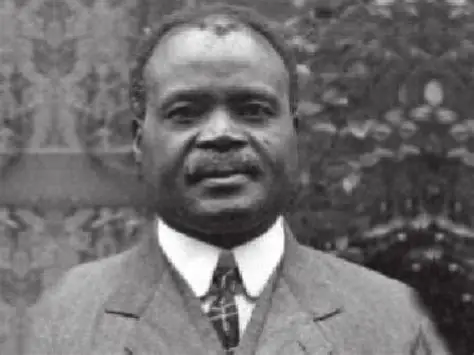
Josiah Tshangana Gumede (1867–1946) was a South African teacher, journalist and political leader who helped organise African resistance to racial discrimination. He became president-general of the African National Congress (ANC) in 1927 and held the position until 1930. His political career reflected the growing demand among Black South Africans for political representation, land rights and equal treatment under colonial and segregationist governments.
Gumede belonged to an early generation of African nationalists who believed that organised political action could challenge racial oppression. He helped establish the Natal Native Congress and the South African Native National Congress, the organisation that later became the ANC. His leadership also introduced new political ideas into the movement through his engagement with international anti-imperialist organisations and communist groups.
Early Life and Education
Josiah Tshangana Gumede was born on October 9, 1867, in Healdtown, near Fort Beaufort in the Eastern Cape, South Africa. His father, John Gumede, belonged to the Ngwane people and followed the Christian faith. Gumede grew up in a society where missionary education offered some African children opportunities to develop literacy and professional skills, even as colonial rule restricted their political and economic freedom.
He received his early education at the Healdtown Wesleyan Mission School before attending the Native College, commonly known at the time as the Kaffir Institute, in Grahamstown around 1882 or 1883. The institution provided religious and practical education to African students. Gumede attended with the intention of qualifying as a teacher.
After completing his studies, he began teaching at Somerset East. He later worked at the Amanzimtoti Institute, now associated with Adams College, in Natal. His teaching career exposed him to the challenges facing African communities and strengthened his understanding of the importance of education in social development.
Gumede’s time at Amanzimtoti also introduced him to other African intellectuals and future political figures. However, his interests gradually expanded beyond education. He became increasingly involved in public affairs and the political questions affecting African communities.
Early Political Activism and the Natal Native Congress
Gumede’s political development took place during a period of expanding colonial control over African land, labour and traditional leadership. He became involved in disputes concerning the authority of African chiefs and the treatment of their communities by colonial officials.
In 1895, he served as an adviser and representative to Chief Ncwadi of the Ngwane. He used his education and administrative experience to defend the chief’s authority against interference by colonial officials. This work gave him practical experience in political negotiation and advocacy.
Gumede also became involved in efforts to establish organisations through which Africans could express their grievances. In 1900, he helped found the Natal Native Congress alongside Martin Luthuli and Saul Msane, with the assistance of Harriette Colenso. The organisation sought to educate Africans about their rights, represent their interests and provide a collective platform for challenging discriminatory policies.
He served in its leadership and became an important organiser. The Congress gave African communities a more formal structure for political engagement at a time when colonial authorities largely excluded them from meaningful decision-making.
Gumede also participated in Iliso Lesizwe Esimnyama, an organisation that brought together African Christians and traditional leaders. Its activities reflected his interest in African unity and the protection of community interests.
Role in the Founding of the ANC
The formation of the South African Native National Congress (SANNC) in 1912 marked a major development in organised African politics. The organisation later adopted the name African National Congress in 1923.
Gumede was among its founding members. He supported the effort to unite African political organisations across different regions and create a national platform for opposing racial discrimination. His experience in the Natal Native Congress made him an important contributor to this wider movement.
The SANNC initially relied heavily on petitions, constitutional appeals and delegations to challenge discriminatory laws. Gumede participated in these efforts. In 1919, he joined an ANC delegation that travelled to Europe to present African grievances to the British government and seek changes to South Africa’s racial policies.
The delegation also hoped to influence the post-First World War settlement. Its efforts did not produce the political changes African leaders wanted. The experience strengthened concerns about the limitations of appeals to British authorities.
Gumede continued working within the ANC and contributed to the development of its political organisation. In 1921, he became a full-time general organiser, travelling to build support and strengthen the movement’s financial position.
Presidency of the African National Congress
Gumede became president-general of the ANC in July 1927, succeeding Zaccheus Richard Mahabane. His election came during a period of growing frustration with the government’s racial policies and disagreement within the ANC about how to respond.
He advocated a more forceful approach to African political resistance. His thinking had also developed through contact with international anti-imperialist movements and socialist organisations. He believed African liberation required broader alliances and stronger political mobilisation.
In 1927, Gumede represented the ANC at the League Against Imperialism conference in Brussels, Belgium. He travelled with James La Guma, a member of the Communist Party of South Africa. During his international journey, Gumede also visited Germany and the Soviet Union.
His visit to the Soviet Union influenced his political outlook. He became more interested in communism and its opposition to imperialism and racial exploitation. He also developed closer relations with the Communist Party of South Africa, believing that cooperation between African nationalists and organised workers could strengthen resistance to oppression.
When he returned to South Africa in February 1928, supporters welcomed him at a public gathering in Cape Town. His experiences abroad had strengthened his belief in international solidarity and more militant political action.
However, his approach generated disagreement within the ANC. Some members opposed his close relationship with communists and worried that the organisation was becoming too closely associated with communist politics. Others questioned his administration of the movement and its financial difficulties.
These disagreements weakened his position. At the ANC’s annual conference in April 1930, Gumede lost the presidency to Pixley ka Isaka Seme. His departure reflected a serious division over the organisation’s political direction and its relationship with communist groups.
Although his presidency lasted only three years, it exposed the growing debate within African nationalism about constitutional protest, mass mobilisation and international alliances.
Journalism and Later Political Activities
Gumede continued to participate in public affairs after leaving the ANC presidency. He believed journalism could educate African communities and provide a platform for political discussion.
He became associated with Abantu-Batho, an important African newspaper established in 1912. Through his editorial and journalistic work, he promoted African political awareness and criticised policies that restricted Black South Africans’ rights.
He also remained involved in organisations representing African workers and communities. He supported opposition to pass laws and discriminatory legislation that limited African movement, employment and access to land.
During the 1930s, Gumede participated in efforts to oppose government proposals that further restricted African political rights. He attended meetings of the All African Convention in 1935, where African representatives discussed a collective response to discriminatory legislation.
He continued assisting African communities, including people seeking justice over land disputes and unfair treatment. His political influence declined compared with his years as ANC president, but he remained committed to public service.
In December 1943, the ANC honoured Gumede as an honorary life president. The recognition acknowledged his contribution to the organisation’s foundation and development.
Death and Legacy
Josiah Tshangana Gumede died on November 6, 1946, in the Eastern Cape, aged 79. He lived long enough to witness the continued development of organised African resistance, although the political system he had opposed remained firmly in place.
His contribution to South African history rests on his role in building political organisations that gave African communities a collective voice. Through the Natal Native Congress and the SANNC, he helped establish structures that supported the development of African nationalism.
His ANC presidency also brought debates about international solidarity, workers’ movements and more direct political resistance into the organisation. Although his communist associations divided ANC leaders, they reflected his search for strategies capable of challenging racial oppression.
Gumede’s journalism further strengthened his contribution. He understood that political organisation required communication and public education. Newspapers such as Abantu-Batho helped African leaders discuss national issues and mobilise public opinion.
His legacy belongs to the early history of South Africa’s liberation movement. He helped build the institutions, political networks and arguments that later generations developed into a wider struggle against apartheid.
Conclusion
Josiah Tshangana Gumede was an important pioneer of organised African nationalism in South Africa. As a teacher, journalist and political organiser, he worked to defend African rights and challenge racial discrimination. His leadership of the ANC from 1927 to 1930 brought new debates about international alliances and political resistance into the movement. His contribution remains part of the history of the ANC and the long struggle for equality in South Africa.
Frequently Asked Questions
Who was Josiah Tshangana Gumede?
Josiah Tshangana Gumede was a South African teacher, journalist and political activist. He helped establish the Natal Native Congress and the South African Native National Congress, which later became the ANC.
When did Josiah Gumede become ANC president?
He became president-general of the African National Congress in July 1927 and served until April 1930.
What did Josiah Gumede contribute to African nationalism?
He helped organise African political resistance, supported national political representation and promoted cooperation between African nationalists and other anti-imperialist movements.
Why did Josiah Gumede lose the ANC presidency?
He lost the presidency in 1930 amid disagreements within the ANC over his communist associations, political direction and administration of the organisation.
When did Josiah Tshangana Gumede die?
He died on November 6, 1946, aged 79.