|
Getting your Trinity Audio player ready... |
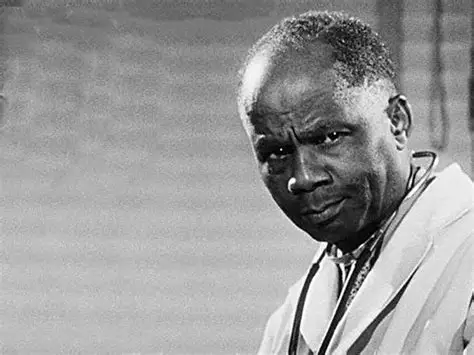
Alfred Bitini Xuma (1893–1962) was a South African physician and political leader who served as president-general of the African National Congress (ANC) from 1940 to 1949. He belonged to a generation of African professionals who used education, public service and political organisation to challenge racial discrimination. His achievements in medicine demonstrated the possibilities of advanced education for Black South Africans, while his political leadership helped rebuild the ANC during a difficult period in its history.
Xuma became one of the first Black South African physicians to establish a successful medical practice in Johannesburg. He also strengthened the ANC’s national organisation, revised its constitution and encouraged cooperation among African political groups. His leadership helped prepare the organisation for the more assertive resistance campaigns that followed in the 1950s.
Early Life and Education
Alfred Bitini Xuma was born on March 8, 1893, in Manzana, a village in the Engcobo district of the Transkei, in present-day Eastern Cape, South Africa. He was the seventh child of Abraham Mangali Xuma and Elizabeth Cupase Xuma. His parents were Wesleyan Christians who valued education and supported his early schooling.
Xuma attended a mission school in Manzana before enrolling at Clarkebury Institute. The institution provided education to African students who wanted to pursue teaching and other professions. He proved to be a strong student and qualified as a primary school teacher in 1911.
While at Clarkebury, Xuma became involved in a student protest against inequalities in African education. The protest reflected his growing awareness of the racial barriers that limited educational opportunities for Black South Africans. He understood that academic achievement alone could not remove the restrictions imposed by the colonial system.
After qualifying, he taught in the Eastern Cape and saved money to continue his education abroad. In 1913, he left South Africa for the United States. His decision required considerable determination because he had limited financial resources and needed to work while studying.
Medical Education in the United States and Europe
Xuma initially studied at the Tuskegee Institute in Alabama, where he received an education that combined academic instruction with practical training. He later attended the University of Minnesota, where he completed a Bachelor of Science degree in 1920.
His path to medical qualification involved several institutions and financial difficulties. He studied at Marquette University and the Lewis Institute in Chicago before continuing his medical training at Northwestern University. He supported himself through different jobs, including work as a waiter, shipping clerk and labourer.
In 1926, he graduated with a medical degree from Northwestern University. He then pursued further clinical training in obstetrics, gynaecology and surgery. His professional development took him to Hungary and Britain, where he gained additional medical experience and completed examinations required for practice in the British Empire.
In October 1927, he passed the qualifying examinations of the Royal College of Physicians and Surgeons of Edinburgh. He returned to South Africa later that year, bringing with him medical qualifications that were exceptionally rare among Black South Africans at the time.
Medical Career in Johannesburg
Xuma settled in Johannesburg in 1928 and established a medical practice in Sophiatown. He became the first Western-trained Black physician to practise privately in the city. His arrival marked an important development in South African medical history, where racial discrimination restricted professional opportunities for Black practitioners.
He built a reputation as a capable physician and treated patients from different racial communities. His practice served many African patients, but he also treated white patients who sought his medical care. He defended the right of patients to choose their doctors based on professional ability rather than race.
Xuma’s medical career also exposed him to the wider social conditions affecting African communities. He recognised that poor health often resulted from poverty, overcrowding, inadequate housing and limited access to land. Xuma therefore connected medical practice with broader questions of public welfare.
He supported improvements in rural health, agricultural education and working conditions. Xuma also opposed policies that offered Africans inferior medical training and restricted their professional advancement.
In addition to his private practice, Xuma became involved in educational and community institutions. He supported efforts to improve African schools and expand opportunities for young people to pursue higher education. His professional success gave him a platform from which to advocate for wider social reform.
Entry into African Politics
Although Xuma initially concentrated on medicine, he gradually became more active in political affairs during the 1930s. He opposed government policies that restricted African land ownership, political representation and civil rights.
In 1935, he became vice-president of the All-African Convention, an organisation formed to coordinate African opposition to discriminatory government policies. The convention brought together representatives from different communities and political organisations to discuss the future of African rights in South Africa.
Xuma also participated in efforts to defend the Cape African franchise, which allowed a limited number of qualified African men to vote under restrictive conditions. Government proposals threatened to remove even these limited political rights.
His political work expanded his influence beyond Johannesburg. He became known as a professional leader who could connect African political demands with wider debates about education, economic opportunity and constitutional rights.
President of the African National Congress
On December 16, 1940, Xuma was elected president-general of the African National Congress at its conference in Bloemfontein. He succeeded Robert Mangaliso Sobukwe? No, Xuma succeeded Zaccheus Richard Mahabane. His election marked the beginning of a major effort to restore the organisation’s strength and national influence.
When Xuma assumed leadership, the ANC faced organisational weaknesses, limited finances and declining political activity in several areas. He believed the movement needed stronger administration, wider membership and a clearer political programme.
He travelled across South Africa to rebuild local branches and encourage greater participation. Xuma also worked to improve the organisation’s finances and strengthen communication between its national leadership and provincial structures.
One of his most important contributions was the revision of the ANC constitution. In 1943, he helped develop a new constitution that provided a stronger organisational framework. The changes supported the development of a more coordinated national movement.
Xuma’s presidency also coincided with the emergence of new generations of African political activists. In 1944, the ANC Youth League became formally established within the organisation. Its young leaders included Anton Lembede, Nelson Mandela, Walter Sisulu and Oliver Tambo. They wanted the ANC to adopt a more direct approach to political mobilisation.
Xuma also supported the development of women’s participation in the organisation. The ANC Women’s League was established in 1948, with his wife, Madie Hall Xuma, playing an important role as its first president.
His administration encouraged cooperation with other political organisations. In 1947, Xuma joined the leaders of the Natal and Transvaal Indian Congresses in signing the cooperation agreement commonly known as the Doctors’ Pact. The agreement strengthened joint opposition to discriminatory government policies.
In 1943, the ANC also adopted African Claims, a document that outlined African demands for political and civil equality. It drew on the principles of the Atlantic Charter and presented a programme for a more democratic South Africa.
Political Disagreements and Departure from the ANC Presidency
Despite his organisational achievements, Xuma faced growing disagreements within the ANC. Younger activists increasingly demanded mass action, boycotts and more direct resistance to racial discrimination. They believed the organisation needed a stronger programme to challenge the government.
Xuma favoured a more cautious approach and remained reluctant to endorse the Youth League’s proposed Programme of Action without reservations. This disagreement became central to the ANC’s leadership contest in 1949.
Members of the Youth League offered to support his re-election if he formally accepted their programme. Xuma declined. At the ANC’s December 1949 conference, delegates elected James Moroka as president-general instead.
His departure marked the end of nearly nine years of leadership. Although he lost the presidency, his earlier work had helped restore the ANC’s national structures and prepare it for a new period of political resistance.
Later Life and Death
After leaving the ANC presidency, Xuma remained involved in public affairs, education and community development. He continued to speak against racial discrimination and supported initiatives that expanded educational opportunities for African children.
He also opposed the planned removal of Black residents from Sophiatown during the 1950s. As a respected community figure and property owner, he participated in efforts to defend the neighbourhood and its residents against forced removals.
Alfred Bitini Xuma died on January 27, 1962, in Johannesburg, aged 68. His death came before the ANC’s armed struggle became a major feature of the liberation movement.
Legacy
Xuma’s legacy connects professional achievement with political organisation. His medical career challenged racial assumptions about the abilities and professional rights of Black South Africans. By establishing a respected practice in Johannesburg, he demonstrated that African professionals could compete in fields from which the racial system attempted to exclude them.
His ANC leadership was equally significant. He rebuilt the organisation, strengthened its constitution, expanded its membership and supported the emergence of youth and women’s structures. These developments helped create the institutional foundation for later resistance campaigns.
Xuma also encouraged cooperation across racial and political organisations. His involvement in the Doctors’ Pact showed his belief that opposition to discrimination could benefit from coordinated action among different communities.
He did not agree with every strategy adopted by younger activists, and his departure from the ANC presidency reflected those political differences. Nevertheless, his contribution to the organisation’s development remains an important part of South Africa’s liberation history.
Conclusion
Alfred Bitini Xuma combined medical achievement with a sustained commitment to African political rights. His education in the United States and Europe prepared him for a pioneering medical career, while his leadership of the ANC helped restore and strengthen the organisation between 1940 and 1949. His work in medicine, education and politics demonstrated the importance of professional leadership in the struggle against racial discrimination.
Frequently Asked Questions
Who was Alfred Bitini Xuma?
Alfred Bitini Xuma was a South African physician and political leader who served as president-general of the African National Congress from 1940 to 1949. He was also a pioneer among Black medical practitioners in Johannesburg.
What did Alfred Xuma study?
Xuma studied at the Tuskegee Institute, the University of Minnesota and Northwestern University in the United States. He qualified as a medical doctor in 1926 and later completed further medical training in Europe.
When was Alfred Bitini Xuma ANC president?
He became ANC president-general on December 16, 1940, and held the position until December 1949, when James Moroka succeeded him.
What did Alfred Xuma achieve as ANC president?
He rebuilt the ANC’s organisational structures, helped revise its constitution, supported the establishment of the ANC Youth League and Women’s League, and encouraged cooperation with Indian political organisations.
When did Alfred Bitini Xuma die?
Alfred Bitini Xuma died on January 27, 1962, in Johannesburg, South Africa, aged 68.