|
Getting your Trinity Audio player ready... |
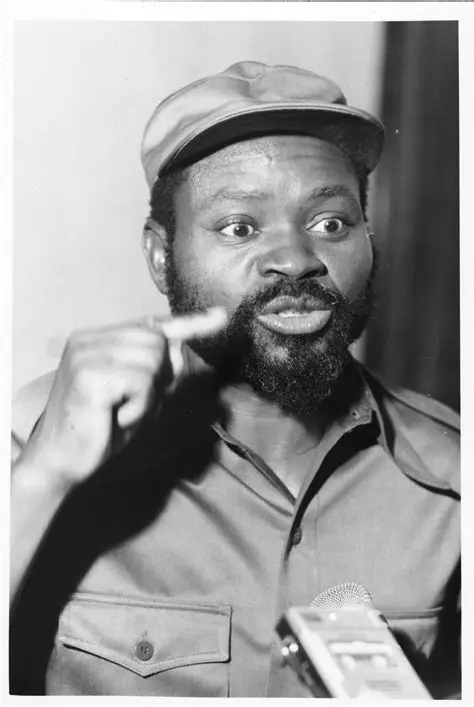
Samora Machel was a Mozambican revolutionary leader, anti-colonial fighter, and the first president of independent Mozambique. He led the struggle against Portuguese colonial rule, helped establish a new socialist state after independence in 1975, and became a prominent opponent of apartheid in southern Africa. His government pursued ambitious programmes in education, healthcare, and national development, although the country faced severe economic difficulties, civil war, and political repression during his presidency. Forty years after his death on October 19, 1986, Machel remains a defining figure in Mozambique’s history and the wider African liberation struggle.
Early Life and Family Background
Samora Moisés Machel was born on September 29, 1933, in Chilembene, in Gaza Province, then part of Portuguese-ruled Mozambique. He grew up in a farming family within a colonial system that imposed racial discrimination and economic restrictions on African communities. Portuguese authorities forced many African farmers to cultivate cotton for colonial markets, often at the expense of food production and family livelihoods.
These conditions exposed Machel to the inequalities embedded in colonial rule. African people faced restricted educational opportunities, unequal access to employment, and limited political rights. His family’s experiences helped shape his opposition to the colonial system and his belief that Mozambique needed political independence.
Machel attended a Catholic mission school, where educational opportunities for African children remained limited. He later moved to Lourenço Marques, now Maputo, in search of employment and further opportunities. In 1952, he began nursing training at the Miguel Bombarda Hospital, eventually working as a nurse.
His medical work brought him into contact with the daily hardships experienced by ordinary Mozambicans. The combination of colonial discrimination, limited opportunities, and his growing political awareness pushed him toward the independence movement.
Joining FRELIMO and the Independence Struggle
In 1962, Mozambican nationalists established the Mozambique Liberation Front, known as FRELIMO, to coordinate resistance against Portuguese colonial rule. Machel joined the movement in 1963 and travelled outside Mozambique for military training. He received training in Algeria before becoming involved in the development of FRELIMO’s armed forces.
FRELIMO launched its armed struggle against Portuguese rule in September 1964. Machel rose through the movement’s military ranks and became a leading commander. His organizational abilities and commitment to the liberation campaign helped him gain influence within the movement.
The struggle involved military operations, political mobilization, and efforts to establish support among rural communities. FRELIMO also developed structures in areas under its control, including education and healthcare services. These initiatives were intended to demonstrate that the movement could offer an alternative to colonial administration.
In 1969, FRELIMO’s founding president, Eduardo Mondlane, was assassinated by a parcel bomb. The killing created a leadership crisis, and internal disagreements followed. Machel emerged as the movement’s leading figure and became president of FRELIMO in 1970.
Under his leadership, the liberation campaign continued while Portugal faced mounting pressure over its colonial wars in Africa. The 1974 military coup in Portugal, which overthrew the country’s authoritarian regime, transformed the political situation. Negotiations between Portugal and FRELIMO led to the Lusaka Accord, establishing the path to Mozambican independence.
Mozambique’s First President
Mozambique achieved independence on June 25, 1975, and Machel became the country’s first president. His government inherited a country with widespread poverty, limited infrastructure, low literacy, and a shortage of trained professionals. Many Portuguese settlers and skilled workers left during the transition, creating additional challenges for public services and the economy.
Machel’s administration adopted a socialist development programme. FRELIMO increasingly embraced Marxism-Leninism and, in 1977, formally declared itself a Marxist-Leninist vanguard party. The government expanded state involvement in the economy and sought to reduce inequalities inherited from colonial rule.
Education and healthcare became major priorities. The administration promoted literacy campaigns, expanded access to schools, and worked to make medical services available to more communities. It also sought to train Mozambicans to replace colonial-era personnel and build national institutions.
However, the government’s approach also involved strict political control. FRELIMO established a one-party state, restricted political opposition, and treated dissent as a threat to national unity and the revolution. The government pursued policies that included relocating rural populations into communal villages, a programme that disrupted some established livelihoods and generated resentment.
Machel’s presidency therefore combined ambitious efforts to improve social conditions with authoritarian practices. His government sought rapid transformation, but its centralised political system limited open opposition and prevented competing parties from operating freely.
Opposition to Apartheid and Regional Liberation
Machel believed Mozambique’s independence would remain incomplete while white minority governments continued to dominate other parts of southern Africa. He supported liberation movements fighting minority rule in Rhodesia, which became Zimbabwe in 1980, and apartheid South Africa. His regional outlook helped make Mozambique an important part of the southern African liberation struggle.
Machel worked with leaders of neighbouring African countries to coordinate support for liberation movements. Mozambique became a member of the Frontline States, a group of countries that cooperated in opposing white minority rule. His government provided support to the African National Congress (ANC), which fought apartheid in South Africa.
This support carried serious risks. The Rhodesian government and later the apartheid regime in South Africa supported armed opposition to FRELIMO’s government. The Mozambique National Resistance, known as RENAMO, developed into a major rebel force and received assistance from external powers hostile to Machel’s government.
Mozambique’s decision to support regional liberation movements also contributed to tensions with South Africa. In 1984, Machel signed the Nkomati Accord with South African leader P. W. Botha. The agreement was intended to improve relations and restrict support for armed groups operating against either government. However, it failed to end the conflict, and Mozambique’s internal war continued.
Machel became widely associated with the phrase A luta continua, meaning “the struggle continues.” The expression captured his belief that independence was only one stage in a wider struggle against colonialism, racism, and political domination.
Civil War and Economic Challenges
Mozambique faced growing instability during Machel’s presidency. RENAMO carried out attacks on infrastructure, transport networks, schools, healthcare facilities, and rural communities. The conflict disrupted agricultural production, displaced civilians, and placed severe pressure on the new government’s limited resources.
The war had regional and international dimensions. External support for RENAMO, especially from Rhodesia and later apartheid South Africa, intensified the conflict. At the same time, some government policies created local grievances that RENAMO exploited to expand its influence.
Economic problems compounded the crisis. The departure of many Portuguese settlers, shortages of experienced personnel, limited investment, and disruption caused by the war weakened production and public services. The government struggled to deliver its ambitious development programme under increasingly difficult conditions.
Machel’s administration gradually reassessed some of its economic policies. In 1984, Mozambique joined the World Bank and the International Monetary Fund, signalling a move toward greater engagement with international financial institutions. This shift reflected the pressure on the government to find resources and stabilise the economy.
His record remains complex. Machel championed social development and African liberation, but the war, economic hardship, political repression, and limits on democratic participation marked his time in office. Understanding his legacy requires acknowledging both the scale of the challenges facing the new country and the consequences of his government’s decisions.
Death in the Mbuzini Plane Crash
On October 19, 1986, Samora Machel died when the presidential aircraft carrying him from a regional summit in Zambia crashed near Mbuzini, in South Africa’s Mpumalanga region. Machel and 34 other people died in the disaster, including Mozambican officials, members of the aircraft crew, and journalists. The crash occurred close to the borders of Mozambique and Eswatini.
The circumstances of the disaster became a major political controversy. A South African-led investigation attributed the crash to pilot error, but Mozambique and Soviet experts disputed aspects of the findings. Suspicions arose that a misleading navigation signal had contributed to the aircraft leaving its intended route.
Allegations that South African authorities had deliberately caused the crash persisted, but responsibility for the disaster has never been conclusively established. The circumstances of Machel’s death remain an important and sensitive issue in the history of relations between Mozambique and apartheid South Africa.
His death was a major loss for Mozambique and the wider liberation movement. Joaquim Chissano succeeded him as president, inheriting a country still struggling with civil war and economic crisis.
Legacy and the 40th Anniversary in 2026
Samora Machel’s influence extends beyond his role as Mozambique’s founding president. He helped lead the campaign that ended Portuguese colonial rule and supported movements challenging apartheid and white minority government across southern Africa. His presidency also placed education, healthcare, and national development at the centre of the new state’s ambitions.
His legacy is also debated because of FRELIMO’s one-party rule, restrictions on political opposition, and the consequences of government policies during the civil war. These aspects form an essential part of any balanced assessment of his leadership.
On October 19, 2026, Mozambique and South Africa are commemorating the 40th anniversary of the Mbuzini tragedy. The commemoration honours Machel and the other people who died in the crash, while recalling the shared history of liberation movements across southern Africa. The anniversary renews attention to his role in Mozambique’s independence and his opposition to apartheid.
Machel remains an important historical figure because his life linked the struggle for national independence with the broader fight against racial domination in Africa. His achievements, political choices, and unresolved death continue to shape discussions about the region’s past.
Conclusion
Samora Machel was a central leader in Mozambique’s liberation struggle and the country’s first president after independence in 1975. He pursued major social reforms and supported movements fighting apartheid, but his government also imposed strict political control and struggled to contain a devastating civil war. His death in the Mbuzini plane crash in 1986 left lasting questions and a powerful historical legacy. Forty years later, Machel remains a symbol of African independence, regional solidarity, and the unfinished debates surrounding revolutionary leadership.
Frequently Asked Questions
Who was Samora Machel?
Samora Machel was a Mozambican revolutionary and politician who led FRELIMO’s independence struggle and became the first president of independent Mozambique in 1975.
What did Samora Machel do for Mozambique?
His government expanded education and healthcare programmes and pursued social and economic transformation after independence. However, his presidency also involved one-party rule, political repression, and a prolonged civil war.
How did Samora Machel fight apartheid?
Machel supported liberation movements, including the African National Congress, and worked with other southern African leaders to oppose apartheid and white minority rule. This policy contributed to conflict with the South African apartheid government.
How did Samora Machel die?
He died on October 19, 1986, when his presidential aircraft crashed near Mbuzini in South Africa. The official investigation attributed the disaster to pilot error, but the findings were disputed and suspicions of deliberate interference have persisted.
Why is Samora Machel being remembered in October 2026?
October 19, 2026, marks 40 years since the plane crash that killed Machel and 34 other people. Mozambique and South Africa are commemorating the victims and reflecting on Machel’s contribution to southern Africa’s liberation history.