|
Getting your Trinity Audio player ready... |
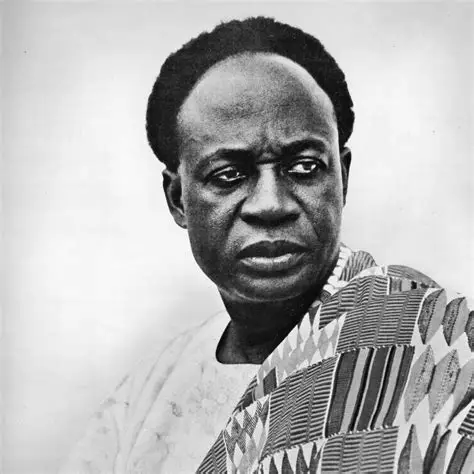
Kwame Nkrumah was a Ghanaian nationalist, Pan-Africanist, political thinker and statesman who led the Gold Coast to independence from British colonial rule in 1957 and became the first prime minister and later the first president of independent Ghana. His political career extended far beyond Ghana’s independence struggle. Nkrumah envisioned a politically united Africa and became one of the most influential voices of African nationalism and decolonization during the 20th century.
His legacy is both remarkable and complicated. Nkrumah helped make Ghana a symbol of African independence, promoted education and national development, supported liberation movements elsewhere on the continent and played an important role in the creation of the Organization of African Unity. At home, however, his government became increasingly centralized and authoritarian, opposition was restricted, and Ghana became a one-party state in 1964. He was overthrown by a military and police coup in 1966 while abroad and spent his final years in exile.
Early Life and Family Background
Kwame Nkrumah was born on September 21, 1909, in Nkroful, in the western part of the Gold Coast, the British colony that later became Ghana. He was born into the Nzima community, and his family lived in a society where traditional institutions existed alongside the expanding influence of Christianity and British colonial administration.
His father, Kofi Ngonloma, was a goldsmith, while his mother, Elizabeth Nyanibah, was a trader. Nkrumah’s upbringing was relatively modest, but his education eventually opened a path beyond his immediate community.
He attended school in the Gold Coast and developed an interest in teaching and intellectual life. His early experiences took place during a period when colonial rule was becoming increasingly contested by educated Africans who were demanding greater political representation and eventually self-government.
Education and Formative Years
Nkrumah attended the Catholic seminary at Amissano and later taught at Catholic schools. His training exposed him to religious studies, philosophy and the discipline associated with the Catholic educational system.
He eventually developed ambitions that went beyond teaching. In 1935, he travelled to the United States to continue his education at Lincoln University in Pennsylvania. His years in America proved crucial to his political development.
At Lincoln, he studied economics, sociology and theology and became increasingly interested in the political struggles of Africans and people of African descent. He earned a bachelor’s degree and later pursued further graduate studies at the University of Pennsylvania.
His American experience also introduced him to the ideas of Pan-Africanism and Black political activism. The writings of figures such as Marcus Garvey and W. E. B. Du Bois influenced his understanding of colonialism, racial inequality and African political independence.
Years in the United States
Nkrumah spent approximately a decade in the United States, from 1935 to 1945. During this period, he combined academic work with political organizing.
He became active in African student organizations and developed relationships with other activists interested in the future of Africa. He also worked on political and philosophical writings that would later inform his views on colonialism and African liberation.
The United States exposed Nkrumah to both racial discrimination and Black political activism. These experiences strengthened his belief that African peoples needed political and economic independence rather than limited reforms within colonial systems.
His time abroad therefore served as an important preparation for the political career that followed.
Political Development and Pan-Africanism
In 1945, Nkrumah moved to Britain, where he became increasingly involved in Pan-African political activity. He helped organize the Fifth Pan-African Congress in Manchester, held in October 1945.
The conference brought together activists and intellectuals from Africa and the African diaspora who demanded an end to colonial rule. Nkrumah worked alongside important figures in the Pan-African movement, including George Padmore and other anti-colonial activists.
The Manchester conference strengthened his conviction that political independence had to extend beyond individual colonies. He increasingly viewed African liberation as part of a larger continental struggle.
This vision would later become one of the defining features of his political career.
Return to the Gold Coast
Nkrumah returned to the Gold Coast in 1947 after receiving an invitation to serve as general secretary of the United Gold Coast Convention, or UGCC. The organization sought greater self-government but generally favored a more gradual political approach.
Nkrumah soon developed differences with the conservative leadership of the UGCC. He wanted a faster and more mass-based campaign for independence.
The political crisis intensified after disturbances in the Gold Coast in 1948. Nkrumah and other nationalist leaders were arrested by the colonial authorities, but his imprisonment increased his popularity among supporters.
The experience convinced him that a new political movement was necessary.
Founding the Convention People’s Party
In 1949, Nkrumah broke from the UGCC and established the Convention People’s Party, or CPP. The new organization adopted the powerful slogan “Self-Government Now.”
Unlike the more elite-oriented nationalist movements that preceded it, the CPP sought support from ordinary workers, farmers, veterans, young people and urban communities. Nkrumah understood the political power of mass mobilization and used rallies, newspapers, public meetings and organized campaigns to build support.
In January 1950, he launched a campaign of positive action involving strikes and civil disobedience against colonial rule. The British authorities responded by arresting Nkrumah.
His imprisonment did not destroy his political movement. Instead, the CPP won important electoral victories while he remained in detention, demonstrating the growing popularity of the independence campaign.
The Struggle for Independence
In the 1951 elections, the CPP won a major victory. Nkrumah was released from prison and became Leader of Government Business, later becoming prime minister in 1952.
His government operated within a constitutional system that still retained British authority, but Nkrumah used his position to accelerate the transition toward full independence.
The CPP won subsequent elections, strengthening Nkrumah’s mandate. Negotiations and constitutional reforms continued throughout the 1950s as the Gold Coast moved toward independence.
On March 6, 1957, the Gold Coast became independent and adopted the name Ghana. Nkrumah became prime minister of the new nation.
Ghana’s independence was historically significant because it became the first sub-Saharan African colony to achieve independence from European colonial rule in the postwar era. The event inspired nationalist movements across Africa and turned Nkrumah into an international symbol of decolonization.
Ghana’s Independence in 1957
Nkrumah regarded Ghanaian independence as only the beginning of a much larger struggle. He repeatedly argued that Ghana’s freedom would have limited meaning if the rest of Africa remained under colonial domination.
His government therefore supported liberation movements beyond Ghana’s borders. Accra became an important center for African nationalists, intellectuals and activists from other parts of the continent.
Nkrumah also used Ghana’s diplomatic influence to advocate African independence at international forums. His government supported the liberation of territories that remained under colonial rule and promoted closer political cooperation among newly independent African states.
In 1960, Ghana became a republic and Nkrumah became its first president.
Presidency and Nation Building
As president, Nkrumah pursued an ambitious program of economic and social transformation. His government invested in infrastructure, education, industrial development and public institutions.
Major development projects were undertaken as Ghana sought to reduce its dependence on the colonial economic structure. Among the most important projects associated with his government was the Volta River development scheme, which eventually provided hydroelectric power for industrial and national development.
Education was another major priority. Nkrumah’s government expanded access to schooling and promoted higher education as part of the effort to produce the skilled workforce required by an independent state.
His government also supported scholarships and training for Ghanaians studying abroad. The broader goal was to replace the colonial administrative structure with a national workforce capable of managing an independent country.
Nkrumah’s government promoted a form of African socialism and greater state involvement in economic development. His economic policies, however, became increasingly controversial as Ghana faced financial difficulties, rising debt and concerns about the efficiency of some state enterprises.
Pan-Africanism and African Unity
Pan-Africanism was arguably the central idea of Nkrumah’s political philosophy. He believed that individual African states would remain vulnerable if they faced colonial and economic pressures separately.
He therefore advocated closer political and economic integration across the continent. His vision was more ambitious than the cooperation between sovereign states that eventually became the dominant model of African diplomacy.
Nkrumah played an important role in the establishment of the Organization of African Unity in 1963. Thirty-two independent African states met in Addis Ababa in May that year to establish the organization, which sought to promote African unity, defend sovereignty and accelerate the elimination of colonialism. The African Union later described the OAU as a manifestation of the Pan-African vision of a united and independent Africa.
Nkrumah continued to argue for a stronger continental union even when other African leaders preferred to preserve the sovereignty of newly independent states.
His position did not prevail at the time, but the idea of greater African integration remained an important part of later continental political thought.
Major Achievements and Contributions
Leading Ghana to Independence
Nkrumah’s most important political achievement was his leadership of the movement that brought the Gold Coast to independence in 1957.
Ghana’s independence demonstrated that colonial rule could be successfully challenged through organized political mobilization and constitutional struggle. The achievement had an enormous psychological impact on other African nationalist movements.
Advancing Pan-Africanism
Nkrumah became one of the strongest advocates of African political unity during the independence era. His belief that colonialism could not be fully defeated without continental cooperation influenced generations of African political thinkers.
Expanding Education
His government placed education at the center of national development. The expansion of schools, higher education and overseas training reflected his belief that political independence required an educated population and skilled national institutions.
Supporting African Liberation
Ghana under Nkrumah provided political support and a base for African liberation movements. Accra became a gathering place for activists from territories still under colonial or minority rule.
Developing Ghanaian Infrastructure
Nkrumah’s administration invested heavily in infrastructure and industrialization. The Volta River Project became one of the most prominent examples of his development ambitions.
Writing on Colonialism and African Politics
Nkrumah was also a prolific political writer. His major works included The Autobiography of Kwame Nkrumah, I Speak of Freedom, Africa Must Unite, Consciencism and Neo-Colonialism: The Last Stage of Imperialism.
Through these writings, he developed arguments about African independence, socialism, imperialism, nationalism and the political future of the continent.
Historical Context
Nkrumah’s political rise occurred during one of the most important periods in modern African history. After the Second World War, European colonial powers faced increasing pressure from nationalist movements across Africa and Asia.
The Gold Coast had an educated African population, an established political class and growing demands for greater representation. Economic grievances and social changes also contributed to political mobilization.
The international environment was equally important. The Cold War created competing political and economic blocs, and newly independent African states had to navigate relationships with Western powers and the Soviet Union.
Nkrumah sought to maintain Ghana’s independence while pursuing socialist policies and building relationships with countries outside the Western bloc. His increasingly outspoken opposition to imperialism and neocolonialism made him a prominent critic of Western influence in Africa.
At the same time, the pressures of governing a newly independent state exposed the difficulties of translating nationalist ideals into economic and political realities.
Political Controversies and Decline
Nkrumah’s later rule became increasingly authoritarian. His government used the Preventive Detention Act to imprison political opponents without trial, while opposition groups faced increasing restrictions.
Political power became concentrated within the CPP, and constitutional changes strengthened the presidency. In 1964, Ghana formally became a one-party state.
These developments damaged Nkrumah’s democratic credentials and generated growing opposition. His supporters argued that strong political authority was necessary to protect the revolution and prevent destabilization. Critics saw the concentration of power as a departure from the democratic ideals associated with the independence struggle.
Economic difficulties also weakened his government. Large development ambitions placed pressure on public finances, while declining economic conditions contributed to growing dissatisfaction.
Nkrumah survived assassination attempts and became increasingly concerned about threats to his government. His foreign policy, socialist orientation and support for African liberation movements also created tensions during the Cold War.
Overthrow and Exile
On February 24, 1966, Nkrumah was overthrown in a military and police coup while he was travelling in Asia. The coup established the National Liberation Council and removed the CPP from power.
The precise international dimensions of the coup have remained a subject of historical debate. Declassified United States records show that American officials were aware of coup plotting and that some policymakers viewed Nkrumah’s removal favorably. However, the available records do not establish that the United States directly organized the coup.
Nkrumah did not return to power. He went into exile in Guinea, where President Ahmed Sékou Touré gave him refuge and appointed him co-president of Guinea.
From exile, Nkrumah continued writing and broadcasting about African politics, colonialism and what he called neocolonialism.
Later Years and Death
Nkrumah spent his final years in Conakry, Guinea, where he remained intellectually active despite his political exile.
He continued publishing political works and developing his arguments about African liberation. His later writings became more explicitly revolutionary and focused heavily on the economic and political structures that he believed continued to bind African countries to foreign interests after formal independence.
Nkrumah eventually became seriously ill with cancer. He travelled to Romania for medical treatment.
He died in Bucharest on April 27, 1972, at the age of 62.
His death ended the life of a man who had moved from a small town in the Gold Coast to the center of the African independence movement.
Legacy and Historical Significance
Kwame Nkrumah remains one of the most consequential African leaders of the 20th century. His greatest historical achievement was helping transform Ghana from a British colony into an independent nation and using that independence as a platform for a much wider campaign against colonialism.
His influence extended far beyond Ghana. African nationalists and liberation movements looked to Ghana as evidence that colonial rule could be defeated. His Pan-African ideas also helped establish the intellectual foundation for later debates about African integration.
The creation of the OAU in 1963 represented an important step toward the continental cooperation that Nkrumah had advocated. Although the organization did not adopt his preferred model of a politically unified Africa, the broader objective of African solidarity remained embedded in continental institutions.
His domestic legacy is more complicated. His investments in education, infrastructure and national development remain important aspects of his record, but his authoritarian policies, restrictions on political opposition and establishment of a one-party state cannot be separated from any serious assessment of his presidency.
His intellectual legacy has also endured. Concepts developed in his later writings, particularly his analysis of neocolonialism, continue to influence discussions about African sovereignty, international economics and the relationship between political independence and economic independence.
Nkrumah’s importance therefore lies not only in the fact that he became Ghana’s first president. He represented a generation of African leaders who believed political independence should lead to continental freedom, economic transformation and a new international position for African states.
His vision of Africa remains partly unrealized, but it continues to shape debates about African unity and sovereignty. For this reason, Kwame Nkrumah remains one of the defining figures in the history of African nationalism and decolonization.
Read More: Dani Beckstrom: Wikipedia, Bio, Net Worth, Age, Height, Measurements, Weight Loss, Husband, Career
Frequently Asked Questions
Who was Kwame Nkrumah?
Kwame Nkrumah was a Ghanaian nationalist, Pan-Africanist and statesman who led the Gold Coast to independence in 1957 and became Ghana’s first prime minister and first president.
When was Kwame Nkrumah born?
Kwame Nkrumah was born on September 21, 1909, in Nkroful in the Gold Coast, now Ghana.
What was Kwame Nkrumah famous for?
Nkrumah was best known for leading Ghana’s independence movement, promoting Pan-Africanism and supporting the liberation of other African countries from colonial rule.
What did Kwame Nkrumah achieve?
His major achievements included leading Ghana to independence, expanding education and infrastructure, supporting African liberation movements and helping establish the Organization of African Unity.
Where was Kwame Nkrumah educated?
Nkrumah received early education in the Gold Coast before studying at Lincoln University in Pennsylvania and pursuing further studies at the University of Pennsylvania.
What was Kwame Nkrumah’s political ideology?
Nkrumah developed a political philosophy combining African nationalism, Pan-Africanism and socialist ideas. His later writings focused strongly on colonialism, neocolonialism and African economic independence.
Was Kwame Nkrumah the first president of Ghana?
Yes. Ghana became a republic in 1960, and Nkrumah became its first president. He had previously served as prime minister from independence in 1957.
Why was Kwame Nkrumah overthrown?
Nkrumah was overthrown in a military and police coup in February 1966. His increasingly authoritarian rule, political repression, economic difficulties and tensions surrounding his foreign and economic policies contributed to the conditions that preceded the coup.
Where did Kwame Nkrumah die?
Kwame Nkrumah died in Bucharest, Romania, on April 27, 1972, while receiving medical treatment.
What is Kwame Nkrumah remembered for?
Nkrumah is remembered primarily for Ghana’s independence, his advocacy of Pan-African unity, his support for African liberation and his intellectual contribution to debates about colonialism and neocolonialism.
Conclusion
Kwame Nkrumah was one of the central figures of Africa’s struggle against colonial rule. His leadership brought Ghana to independence in 1957, while his Pan-African vision encouraged a generation of African nationalists to think beyond the boundaries created by colonialism.
His record as president contained both major achievements and serious failures. He expanded education, infrastructure and Ghana’s international role, yet his government increasingly restricted political freedoms and concentrated power in the presidency.
Despite these contradictions, Nkrumah’s historical influence remains substantial. His writings, his role in Ghana’s independence and his campaign for African unity ensured that his ideas would continue to shape discussions about decolonization, sovereignty, economic independence and the future of Africa long after his death.