|
Getting your Trinity Audio player ready... |
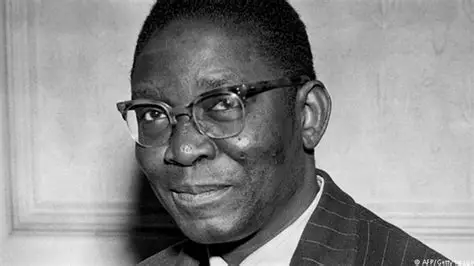
Nnamdi Azikiwe was a Nigerian nationalist, journalist, statesman and political leader who became the country’s first President during the First Republic. Widely known as “Zik of Africa,” he played a major role in the struggle for Nigerian independence and became one of the most influential political figures of the country’s colonial and early postcolonial era.
Azikiwe’s career stretched across journalism, education, regional government and national politics. He served as Governor-General when Nigeria gained independence in 1960 and became President when the country became a republic in 1963. His life reflected many of the major political changes that shaped modern Nigeria.
Early Life and Family Background
Nnamdi Benjamin Azikiwe was born on November 16, 1904, in Zungeru, in present-day Niger State. His parents, Obed-Edom Chukwuemeka Azikiwe and Rachel Chinwe Azikiwe, were from Onitsha in present-day Anambra State. His father worked as a clerk in the Nigerian Regiment during the colonial period.
Azikiwe’s childhood exposed him to different parts of Nigeria and several cultural environments. He received education in missionary schools and spent important periods of his youth in Onitsha and Lagos.
This exposure contributed to his broader understanding of Nigerian society. He encountered different languages and communities at a time when colonial Nigeria was governed as a collection of diverse regions rather than as the unified nation that would emerge at independence.
The experience later influenced his political emphasis on Nigerian nationalism and African unity.
Education in Nigeria and the United States
Azikiwe attended several schools in Nigeria, including institutions in Onitsha, Lagos and Calabar. Among them was Hope Waddell Training Institute in Calabar, where he continued his secondary education.
In 1925, he travelled to the United States for higher education. His years there became an important period in his intellectual and political development.
He studied at institutions including Lincoln University in Pennsylvania and the University of Pennsylvania. He earned degrees in political science and pursued postgraduate studies in areas including religion, philosophy, anthropology and political science.
While in America, Azikiwe encountered African American political thought and the wider Pan-African movement. He also met figures associated with Marcus Garvey’s movement and became increasingly interested in African self-determination.
His American experience strengthened his belief that Africans should have political control over their own affairs.
Journalism and the Rise of Nationalism
Azikiwe returned to West Africa in the 1930s and entered journalism. In 1934, he became editor of the African Morning Post in Accra, then part of the Gold Coast.
His journalism increasingly focused on African nationalism, political rights and opposition to colonial rule. In 1937, he returned to Nigeria and founded the West African Pilot.
The newspaper became an important platform for nationalist politics. Azikiwe used journalism to reach a growing African readership and encourage political consciousness.
He subsequently established or became associated with several other newspapers, including the Southern Nigeria Defender, Eastern Guardian and Nigerian Spokesman.
His newspapers were significant because they helped create a public space for political debate during the final decades of British colonial rule. Azikiwe’s writing and publishing activities also helped establish his reputation as one of the leading voices of Nigerian nationalism.
Political Career
Azikiwe entered formal politics during the period when Nigerian nationalism was becoming increasingly organized.
In 1944, he co-founded the National Council of Nigeria and the Cameroons, commonly known as the NCNC, alongside Herbert Macaulay. He eventually became one of the organization’s most prominent leaders.
He was elected to the Nigerian Legislative Council in 1947. His political career subsequently expanded through regional and national institutions.
Azikiwe became Premier of the Eastern Region in the 1950s. During his regional leadership, he supported economic development, education and institution-building.
One important achievement associated with this period was the establishment of the University of Nigeria at Nsukka, which opened in 1960. The institution became an important center of higher education in Nigeria.
Azikiwe’s political career also unfolded within an increasingly competitive environment. Nigeria’s major political organizations were strongly associated with different regions, and disagreements over power, representation and the future structure of the country became increasingly significant.
Despite these divisions, Azikiwe remained an important advocate of Nigerian nationalism and independence.
Governor-General and First President
Nigeria achieved independence from Britain on October 1, 1960. At independence, Azikiwe became Governor-General, while Abubakar Tafawa Balewa served as Prime Minister.
His position made him the first Nigerian Governor-General and the country’s head of state at independence. The State House records his later service as President of the First Republic from October 1, 1963, until January 16, 1966.
Nigeria became a republic in 1963, replacing the British monarch as its constitutional head of state. Azikiwe consequently became the first President of the Federal Republic of Nigeria.
His presidency was largely a constitutional head-of-state position, while executive government was led by Prime Minister Tafawa Balewa. Nevertheless, Azikiwe’s symbolic importance was enormous.
He represented the emergence of an independent Nigerian state after decades of British colonial administration. His position also reflected the significance of his long involvement in nationalist politics.
His years as Governor-General and President were therefore important not only for the powers attached to the office but also for what the office represented in Nigeria’s transition from colonial rule to independence.
Political Crisis and the 1966 Coup
The First Republic faced serious political challenges. Regional rivalries, electoral disputes, ethnic tensions and disagreements over political power contributed to growing instability.
On January 15, 1966, a group of military officers carried out a coup. The civilian government was overthrown, bringing an abrupt end to Azikiwe’s presidency.
Unlike several other prominent political leaders, Azikiwe survived the coup. Major General Johnson Aguiyi-Ironsi subsequently became head of state.
The coup marked the beginning of a long period of military involvement in Nigerian politics. It also represented a major turning point in the country’s political history.
Azikiwe’s political career would later intersect with another defining event, the Nigerian Civil War. He initially supported the Biafran cause and became an important voice associated with the secessionist side, although he later advocated reconciliation and an end to the conflict.
Later Life and Death
After the civil war, Azikiwe remained involved in public life and continued to be regarded as an elder statesman.
He served as Chancellor of the University of Lagos from 1972 to 1976. He later returned to active party politics during Nigeria’s Second Republic.
Azikiwe joined the Nigerian People’s Party and contested the presidential election in 1979. He also contested in 1983, although he did not win either election. His later political activities reflected his continuing interest in national leadership even after his earlier presidency had ended.
Azikiwe died on May 11, 1996, at the age of 91. He was buried in Onitsha, the city with which his family and political identity were closely associated.
Major Achievements
Championing Nigerian Nationalism
Azikiwe was one of the most prominent advocates of Nigerian nationalism during the final decades of British colonial rule. His political activities helped popularize the idea of an independent Nigerian nation.
Building a Nationalist Press
Through the West African Pilot and other newspapers, Azikiwe helped create a powerful platform for anti-colonial political discussion and public mobilization.
Leading the Eastern Region
As Premier of the Eastern Region, he supported education, commerce and institutional development during a critical period of Nigeria’s transition toward independence.
Becoming Nigeria’s First President
Azikiwe became the first President of Nigeria when the country became a republic in 1963. His presidency gave him a unique place in the history of the Nigerian state.
Promoting Education
His political career included support for higher education, most notably the development of the University of Nigeria at Nsukka.
Legacy and Historical Significance
Nnamdi Azikiwe occupies a central position in the history of modern Nigeria because his life connected journalism, nationalism, regional politics and the emergence of independent government.
His greatest historical contribution was his role in developing Nigerian political consciousness during the colonial period. Through newspapers and political organizations, he helped challenge colonial rule and promote the idea that Nigerians should determine their own political future.
His influence also extended beyond Nigeria. Azikiwe was part of a wider generation of African nationalists who connected independence movements across the continent with broader Pan-African ideas.
His legacy remains visible in Nigerian public life. His portrait appears on the ₦500 note, while institutions and public places have been named in his honor, including Nnamdi Azikiwe University and Nnamdi Azikiwe International Airport.
His legacy is also more complicated than a simple story of nationalist success. He operated in a period when regional, ethnic and political divisions were becoming increasingly difficult to manage. His association with Biafra during the civil war remains part of historical discussions about his political choices and Nigeria’s national crisis.
Nevertheless, Azikiwe’s importance is firmly established. He helped shape the political vocabulary of Nigerian nationalism, contributed to the country’s transition from colonial rule and became its first President.
His life represents one of the major chapters in Nigeria’s journey from British colonial administration to independent statehood.
Read Also: Plato Biography: Early Life, Philosophy, Major Works and Legacy
Frequently Asked Questions
Who was Nnamdi Azikiwe?
Nnamdi Azikiwe was a Nigerian nationalist, journalist, statesman and the first President of Nigeria.
When was Nnamdi Azikiwe born?
He was born on November 16, 1904, in Zungeru, in present-day Niger State.
What was Nnamdi Azikiwe famous for?
He was famous for his role in Nigerian nationalism, journalism and the struggle for independence, as well as becoming Nigeria’s first President.
What newspaper did Nnamdi Azikiwe found?
He founded the West African Pilot in 1937, which became an influential nationalist newspaper.
When did Nnamdi Azikiwe become President?
Azikiwe became Nigeria’s first President on October 1, 1963, when Nigeria became a republic.
What was Nnamdi Azikiwe’s nickname?
He was popularly known as Zik of Africa.
When did Nnamdi Azikiwe die?
Nnamdi Azikiwe died on May 11, 1996, at the age of 91.
Why is Nnamdi Azikiwe historically important?
He is historically important for his contribution to Nigerian nationalism, journalism, independence and the development of Nigeria’s early political institutions.
Conclusion
Nnamdi Azikiwe was one of the defining figures in Nigeria’s transition from colonial rule to independence. As a journalist, nationalist, regional leader, Governor-General and first President, he played several important roles in the emergence of modern Nigeria.
His political career unfolded during some of the country’s most consequential years, including independence, the creation of the First Republic and the political crisis that preceded military rule. His commitment to nationalism and public service left a lasting mark on Nigerian history.
Azikiwe’s documented legacy ultimately extends beyond his presidency. He helped shape Nigerian political consciousness and remains one of the central figures in the historical story of Nigeria’s independence and early nationhood.