|
Getting your Trinity Audio player ready... |
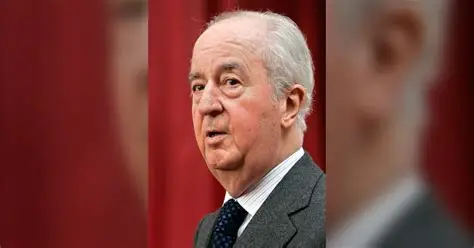
Édouard Balladur was a French statesman who served as Prime Minister from 1993 to 1995 under President François Mitterrand. He also served as Minister of Economy, Finance and Privatisation and became one of the most influential centre-right politicians of the Fifth Republic. Balladur died in Paris on August 31, 2026, at the age of 97.
His political career stretched across several decades. He worked closely with President Georges Pompidou before becoming a senior government official and later a cabinet minister. As prime minister, he governed during a period of political cohabitation between a Socialist president and a right-wing parliamentary majority.
Balladur later entered the 1995 presidential election but failed to reach the second round. His defeat damaged his long political partnership with Jacques Chirac. Years later, his name became associated with the Karachi affair, a controversial investigation into alleged illicit financing connected to arms contracts. A French court ultimately acquitted him in 2021.
Early Life and Family Background
Édouard Léon Raoul Balladur was born on May 2, 1929, in Smyrna, then part of Turkey and now known as İzmir. He came from a prosperous French family with Armenian roots. His father, Pierre Balladur, was a banker associated with the Ottoman Bank, while his mother was Émilie Latour.
Balladur was five years old when his family moved to Marseille in 1934. His childhood therefore involved a transition from the eastern Mediterranean to France. The move also placed him within the French educational and cultural system that later shaped his public career.
His family background gave him access to a privileged education. However, Balladur’s later career was built mainly through the French state administration rather than through an inherited political position.
Education and Formative Years
Balladur attended Lycée Thiers in Marseille before continuing his studies in law. He later studied at the Institut d’études politiques de Paris, commonly known as Sciences Po. After that, he then entered the École nationale d’administration, one of France’s most selective institutions for training senior public officials.
He belonged to the ENA’s France-Afrique promotion from 1955 to 1957. Before completing his training, he served in Algeria during his military service.
Balladur graduated highly ranked and chose the Conseil d’État rather than pursuing a career in the financial inspection service. He entered the Conseil d’État in 1957 and began developing the administrative expertise that would define much of his later political career.
Early Career and Rise in Government
Balladur’s major political breakthrough came through Georges Pompidou. In 1964, Pompidou, then Prime Minister under President Charles de Gaulle, brought Balladur into his government office as an adviser.
He worked mainly on social and legal matters and was involved in the difficult political environment surrounding the events of May 1968. His relationship with Pompidou became one of the most important partnerships of his career.
When Pompidou became president in 1969, Balladur followed him to the Élysée Palace. He eventually became Secretary-General of the Presidency in 1973. He held that position during the final period of Pompidou’s presidency and was one of the president’s closest officials.
Pompidou’s death in April 1974 changed Balladur’s political prospects. He subsequently spent years outside frontline electoral politics while remaining active in business and public affairs.
Minister of Economy and Finance
Balladur returned to government prominence in 1986 after the right won the legislative election. Jacques Chirac became prime minister under President François Mitterrand, creating France’s first period of political cohabitation.
Chirac appointed Balladur Minister of State for Economy, Finance and Privatisation. Balladur became responsible for a major programme of economic liberalisation.
His ministry oversaw the privatisation of several major French companies. These included Société Générale, Paribas and the television broadcaster TF1. He also promoted policies intended to reduce the state’s direct role in parts of the economy.
The experience strengthened Balladur’s reputation as a cautious but economically liberal conservative. It also deepened his political relationship with Chirac, although that relationship would later become one of the defining rivalries of his career.
Prime Minister of France
In March 1993, the right won a major victory in the legislative elections. President Mitterrand appointed Balladur Prime Minister on March 29, 1993.
The appointment created a second period of cohabitation. Mitterrand remained president while Balladur led a government dominated by the political right. Their working relationship became known for its relatively restrained tone compared with the tensions of the earlier cohabitation.
Balladur’s government pursued economic and social reforms. One of its most significant measures was a pension reform that extended the contribution period required from private-sector workers for full retirement benefits.
His government also dealt with unemployment, immigration and European economic policy. Balladur supported greater economic liberalisation while maintaining a cautious governing style.
For a period, he became highly popular. His calm public manner and reputation for competence helped create the impression that he could become a serious candidate for the presidency.
1995 Presidential Election
Balladur’s decision to seek the presidency transformed his relationship with Jacques Chirac.
For years, Chirac had been his political ally. Both men belonged to the Gaullist right, but they had different political strengths. Balladur had the advantage of holding the prime minister’s office and initially enjoyed strong public support.
When the 1995 presidential campaign began, however, Chirac also entered the race. The contest divided the French right.
Balladur performed strongly but failed to qualify for the second round. The Constitutional Council recorded 5,658,796 votes for him in the first round, equal to about 18.6 percent of the vote. Lionel Jospin finished first and Chirac second, leaving Balladur in third place.
Chirac went on to defeat Jospin in the second round and became president.
Balladur’s defeat marked a major turning point. His political partnership with Chirac was effectively broken, and he never reached the Élysée Palace.
Political Career After 1995
Balladur remained active in French public life after the presidential election. He returned to the National Assembly and continued representing Paris until 2007.
He also served in local politics and remained an influential voice within the centre-right. His experience as a senior administrator and former prime minister gave him continued influence even after he stopped occupying the highest government offices.
In 2007, Balladur chaired a commission examining the modernisation and rebalancing of France’s institutions. The commission’s work formed part of the wider debate that preceded constitutional reforms adopted in 2008.
He also wrote books reflecting on French political life and figures including Mitterrand and Pompidou.
The Karachi Affair
The Karachi affair became one of the most controversial episodes associated with Balladur’s later years.
The case concerned arms contracts negotiated during the 1990s, including a submarine deal with Pakistan. Investigators examined allegations that commissions connected with arms contracts had been diverted through intermediaries and that some money may have been used to support Balladur’s 1995 presidential campaign.
The investigation gained further attention after the 2002 bombing in Karachi killed 11 French engineers working on the submarine project. Investigators later examined whether the attack could have been connected to the suspension of payments related to the arms contracts. The precise circumstances surrounding the attack remained contested.
Balladur denied wrongdoing. He was charged in 2017 with complicity in the misuse of corporate assets and concealment.
In March 2021, the Court of Justice of the Republic acquitted Balladur. The court did not find sufficient evidence to establish his criminal responsibility in the case. His former defence minister, François Léotard, was convicted of complicity in misuse of assets and received a suspended prison sentence and a fine.
The affair nevertheless remained part of Balladur’s historical record because it connected his 1995 campaign with one of the most controversial political financing investigations in modern French history.
Personal Life and Family
Balladur married Marie-Josèphe Delacour on August 28, 1957. They remained married for almost seven decades and had four sons: Pierre, Jérôme, Henri and Romain.
Marie-Josèphe Balladur died in late 2025 after a long illness. She was 91. A funeral mass was held in Paris in January 2026.
Balladur generally kept his family life away from the centre of his political career. His public image was instead built around his administrative experience, intellectual interests and reserved approach to politics.
Later Years and Death
After leaving electoral politics in 2007, Balladur remained a respected figure within French conservative circles. He continued to comment on public affairs and wrote about politics and the history of the Fifth Republic.
His later reputation was shaped by both his achievements in government and the controversies surrounding the Karachi affair. His acquittal in 2021 ended the criminal proceedings against him in that case, although the affair continued to attract historical and political attention.
Édouard Balladur died in Paris on August 31, 2026. He was 97 years old. His death marked the passing of one of the senior figures associated with France’s political development from the Pompidou era through the early 21st century.
Legacy and Historical Significance
Balladur’s historical importance rests primarily on his role as a senior architect of France’s centre-right politics.
His career connected several major periods of the Fifth Republic. He worked beside Pompidou, served as a powerful economic minister during the first cohabitation, and later became prime minister during the second.
His economic record is especially significant. The privatisation programme of the 1980s helped advance a broader shift in French economic policy toward greater market competition and a reduced direct role for the state. His pension reform as prime minister also became part of the long-running debate over the sustainability of France’s social protection system.
His failed 1995 presidential campaign provides another important historical lesson. Balladur had strong institutional experience and initially high popularity, yet he could not convert that position into electoral victory. His rivalry with Chirac demonstrated the importance of political alliances, party organisation and electoral appeal in French presidential politics.
The Karachi affair added a difficult dimension to his historical record. Balladur was acquitted, but the case continued to influence assessments of political financing and the relationship between government, arms contracts and electoral campaigns.
Taken together, Balladur’s career reflects the tensions within modern French conservatism between administrative expertise, economic reform, political loyalty and electoral competition.
Read More: Okwui Enwezor Biography: Early Life, Career, Art Curation and Legacy
Conclusion
Édouard Balladur was a major figure in the political history of France’s Fifth Republic. His career moved from the senior civil service to the highest levels of government, with important roles under Georges Pompidou, Jacques Chirac and François Mitterrand.
His premiership, economic reforms and unsuccessful 1995 presidential campaign secured his place in French political history. The Karachi affair later complicated his public record, although he was acquitted in 2021. Balladur died in 2026 after a political career that spanned more than five decades.