|
Getting your Trinity Audio player ready... |
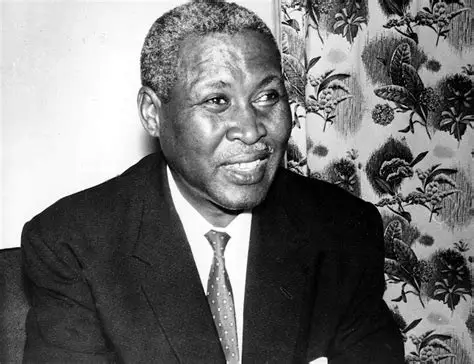
Albert Luthuli was a South African teacher, political leader and anti-apartheid activist who became one of the most respected figures in the struggle against racial segregation. Born around 1898 in Southern Rhodesia, he later led the African National Congress (ANC) during a decisive period of resistance to apartheid.
Luthuli believed that political freedom should rest on human dignity, equality and nonviolent action. His leadership of the ANC and his commitment to peaceful resistance earned him the 1960 Nobel Peace Prize. He became the first African to receive the award. His life connected Christian ethics, African leadership and the wider campaign against racial oppression.
Early Life and Family Background
Albert John Mvumbi Luthuli was born around 1898 at Solusi Mission in Southern Rhodesia, now Zimbabwe. His family belonged to the Zulu people of South Africa. His father, John Bunyan Luthuli, worked as a Christian missionary, while his mother, Mtonya Gumede, came from the Groutville community in Natal.
After his father’s death, Luthuli’s mother returned with him to Natal. He grew up in the Groutville area near Stanger, now KwaDukuza, where his family had strong connections with the local Christian community.
The social conditions around him shaped his understanding of racial inequality. South Africa increasingly imposed laws that restricted African land ownership, political rights, movement and economic opportunity. Luthuli later confronted these structures through community leadership and organized political resistance.
Education and Teaching Career
Luthuli attended the local mission school before continuing his education at Ohlange Institute. He later studied at Adams College near Amanzimtoti, where he completed teacher training.
Teaching became his first major profession. He worked at Blaauwbank in the Highveld before returning to Adams College, where he taught alongside other African educators.
His years in education strengthened his interest in community development. He viewed teaching as more than classroom work. Education offered African communities a means to develop leadership, confidence and social responsibility despite discriminatory colonial institutions.
Luthuli eventually left teaching to take on greater responsibilities in his community. His Christian faith also became increasingly important to his public philosophy.
Christian Faith and Community Leadership
Luthuli belonged to the Congregational Church and regarded Christianity as a central influence on his ideas about justice and human dignity. His political outlook combined religious conviction with African nationalism and opposition to racial discrimination.
In 1936, community members elected him chief of the Groutville reserve. The position gave him traditional responsibilities and placed him in direct contact with government officials.
His tenure as chief did not make him a supporter of the authorities. Instead, he increasingly challenged policies that harmed African communities. His opposition created tension between his traditional responsibilities and the government’s expectations.
The authorities eventually removed him from his chieftaincy after he refused to abandon his political activities. This episode demonstrated the growing seriousness of his resistance.
Rise in the African National Congress
Luthuli joined the African National Congress in the 1920s and became increasingly active in its organizational work. He served in the Natal provincial structure before becoming ANC president-general in 1952.
His election came as the ANC adopted more organized mass resistance to discriminatory laws. The 1952 Defiance Campaign encouraged volunteers to deliberately violate segregation laws through nonviolent protest.
Luthuli supported this approach because he believed disciplined resistance could expose the injustice of apartheid without reproducing the violence that oppressed communities faced.
His leadership also helped strengthen cooperation between different racial and political groups. The ANC worked with organizations representing Indian, coloured and white opponents of apartheid, especially during the Congress Alliance.
Defiance Against Apartheid
The 1950s became one of the most important periods of Luthuli’s political career. Apartheid authorities increasingly targeted activists who challenged segregation.
In 1952, the government ordered Luthuli to choose between his political leadership and his position as chief. He refused to surrender his ANC role. The government then deposed him as chief.
The decision strengthened his standing among anti-apartheid activists. Rather than retreat from public life, he continued to lead the ANC.
In 1955, the Congress of the People adopted the Freedom Charter at Kliptown. The document called for a democratic South Africa in which all citizens would enjoy equal political rights. Luthuli supported the broad principles of the Congress movement.
In 1956, authorities arrested Luthuli and more than 150 other activists in the Treason Trial. The prosecution accused them of conspiring to overthrow the state. The lengthy case eventually collapsed, and Luthuli remained an important figure in the anti-apartheid movement.
Nobel Peace Prize
In 1960, the Nobel Committee awarded Luthuli the Nobel Peace Prize for his nonviolent struggle against apartheid. The award recognized his leadership and gave international attention to South Africa’s racial system.
Luthuli accepted the honor as recognition of the wider struggle rather than as a personal achievement. His Nobel lecture emphasized the principles of human equality, peace and freedom.
The award also highlighted the international dimension of apartheid. South Africa’s racial policies had become an issue of global concern, and Luthuli’s peaceful approach provided a powerful moral challenge to the government’s system.
His Nobel recognition made him one of the most prominent African political leaders of his generation.
Banning, Restrictions and Later Years
The South African government placed increasingly severe restrictions on Luthuli. Authorities banned him from attending public gatherings and limited his movements.
The Sharpeville massacre in March 1960 marked a major turning point. Police killed 69 people during a protest against pass laws. The government declared a state of emergency and banned the ANC.
The violence intensified debate within the liberation movement about the effectiveness of nonviolent resistance. The ANC later created Umkhonto we Sizwe, which adopted armed resistance. Luthuli continued to represent the movement’s moral commitment to nonracial democracy and remained associated with nonviolent principles.
Despite government restrictions, his international reputation continued to grow. He received honorary degrees and remained a respected symbol of resistance.
Personal Life and Death
Luthuli married Nokukhanya Bhengu in 1927. They had several children and maintained their family life while political restrictions increasingly limited his freedom.
His health also declined during his later years. Despite government surveillance and restrictions, he continued writing and speaking when circumstances permitted.
Albert Luthuli died on July 21, 1967, near his home in Stanger, Natal. He was about 68 years old. He died after being struck by a train while crossing a railway bridge.
The circumstances of his death generated questions because of the political environment surrounding him, but no definitive evidence established that the South African government assassinated him. Historical accounts generally describe his death as an accident.
Legacy and Historical Significance
Albert Luthuli remains one of the central figures in South Africa’s history of resistance to apartheid. His leadership helped move the ANC toward mass political mobilization during the 1950s.
His historical importance also rests on his insistence that the struggle for freedom should uphold human dignity. He opposed racial domination while advocating a democratic society that would reject racial privilege rather than simply replace one form of domination with another.
Luthuli’s Nobel Peace Prize gave international visibility to the anti-apartheid cause. His example also influenced later generations of activists who continued the campaign for democratic government in South Africa.
The post-apartheid South African government has continued to commemorate his contribution. The country’s highest national order, the Order of Luthuli, bears his name and recognizes South Africans and others who have made significant contributions to the struggle for democracy and human rights.
His autobiography, Let My People Go, also preserved his account of his political beliefs and experiences. The work remains valuable for understanding the principles that shaped his public life.
Frequently Asked Questions
Who was Albert Luthuli?
Albert Luthuli was a South African teacher, traditional leader and anti-apartheid activist who served as president-general of the African National Congress.
What was Albert Luthuli famous for?
He was famous for leading the ANC’s nonviolent resistance to apartheid and becoming the first African recipient of the Nobel Peace Prize.
When did Albert Luthuli win the Nobel Peace Prize?
Albert Luthuli received the Nobel Peace Prize in 1960 for his nonviolent struggle against apartheid.
Why was Albert Luthuli removed as chief?
The South African government forced him to choose between his position as a traditional chief and his political leadership in the ANC. He refused to abandon the ANC and lost his chieftaincy.
How did Albert Luthuli die?
Luthuli died on July 21, 1967, after being struck by a train near Stanger in Natal. No conclusive evidence established that his death resulted from an assassination.
Conclusion
Albert Luthuli combined teaching, Christian conviction, traditional leadership and political activism in the struggle against apartheid. His leadership of the ANC during the 1950s and his commitment to nonviolent resistance brought international attention to South Africa’s racial system. The Nobel Peace Prize confirmed his international stature, while his principles of equality and democratic citizenship continue to define his historical legacy.