|
Getting your Trinity Audio player ready... |
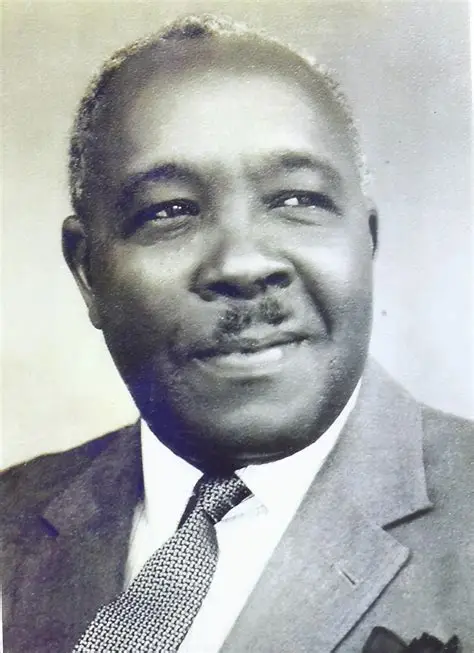
Sir Adetokunbo Adegboyega Ademola was a Nigerian jurist, statesman and judicial pioneer who became the first Nigerian to serve as Chief Justice of the Federation. Born into the royal family of Abeokuta in 1906, he entered the legal profession during colonial rule and rose through the magistracy and higher courts as Nigeria moved toward self-government and independence. His fourteen years as Chief Justice, from 1958 to 1972, covered some of the most difficult constitutional changes in the country’s early history.
His career extended beyond the courtroom. He contributed to the development of legal education, served in international legal and humanitarian organisations, and later became Chancellor of the University of Nigeria and Chairman of the Commonwealth Foundation. His judicial legacy is also associated with the Supreme Court’s landmark decision in the Lakanmi case during military rule.
Early Life and Family Background
Adetokunbo Adegboyega Ademola was born on February 1, 1906, in Abeokuta, in what was then Southern Nigeria. He belonged to the Egba royal family. His father, Sir Ladapo Ademola II, was the Alake of Egbaland, placing the young Ademola within one of the region’s prominent traditional families.
His upbringing connected traditional Yoruba authority with the expanding system of Western education and colonial administration. Rather than remaining within the traditional establishment, he entered the professions and developed a long career in law and public service.
Education and Legal Training
Ademola received his early education in Lagos, including studies at St Gregory’s Grammar School and King’s College. He later travelled to Britain to study law at Selwyn College, Cambridge. He was called to the Bar at the Middle Temple in London in 1934. The Smithsonian’s archival record also identifies St Gregory’s, King’s College, Cambridge and the Middle Temple among his educational institutions.
His legal training placed him within the British legal tradition that Nigeria inherited during colonial rule. His later career, however, coincided with the gradual emergence of Nigerian professionals into senior judicial positions.
Early Legal and Judicial Career
After returning to Nigeria in 1934, Ademola worked as Crown Counsel in the Office of the Attorney-General. He subsequently entered the administrative service and briefly practised privately before joining the judiciary.
In 1939, he became a magistrate of the Protectorate Court. His judicial postings included Warri and Lagos, giving him experience with the practical administration of law across different parts of colonial Nigeria. In 1949, he became a judge, placing him among the Nigerians who had reached the higher levels of the colonial judiciary.
Chief Justice of Western Nigeria
In 1955, Ademola became Chief Justice of Western Nigeria. The appointment was historically significant because he became the first Nigerian to head a regional judiciary.
The position placed him at the centre of a rapidly changing constitutional order. Western Nigeria was moving toward greater internal self-government while political competition was becoming increasingly intense. Ademola’s role required him to administer justice within institutions that were themselves changing from colonial structures toward Nigerian control.
Chief Justice of Nigeria
On April 1, 1958, Ademola became Chief Justice of the Federation of Nigeria, succeeding Sir Stafford Foster-Sutton. He remained in office until 1972. His appointment marked the emergence of a Nigerian jurist at the head of the country’s highest judiciary.
His tenure crossed several major stages in Nigerian history. Nigeria gained independence in 1960, became a republic in 1963, experienced the first military coup in 1966 and entered civil war in 1967. The Supreme Court consequently faced difficult questions involving constitutional authority, individual rights and the relationship between civilian institutions and military government.
Ademola was also associated with the development of professional legal education. The Legal Education Act of 1962 established the Nigerian Law School and Council of Legal Education, helping create a Nigerian system for professional legal training instead of relying primarily on qualification through British institutions. During Ademola’s tenure, the Law School developed as an important national institution.
The Lakanmi Case and Judicial Independence
One of the most important judicial episodes associated with Ademola was E. O. Lakanmi and Another v. Attorney-General of Western State and Others. The case concerned the seizure of property under legislation connected with investigations into public officers after the military takeover.
In 1970, the Supreme Court, with Ademola as Chief Justice, held that the measures used to confiscate the appellants’ property were invalid. The Court treated the legislation as an attempt to exercise judicial power through legislative action and maintained that the courts could examine the legality of government measures.
The judgment became an important reference point in Nigerian constitutional history. It asserted a judicial role in reviewing government action at a time when military rule had disrupted the ordinary constitutional order. The Federal Military Government responded with Decree No. 28 of 1970, which asserted the supremacy of military legislation.
Historical assessments of Ademola’s tenure are not entirely uniform. Scholars have examined his approach to military rule, executive authority and judicial independence, noting both the court’s resistance in cases such as Lakanmi and its recognition of the practical authority of the military government.
Later Public Service
After retiring as Chief Justice in 1972, Ademola remained active in public and international affairs. He served as Chancellor of the University of Nigeria from 1975 until his death. In 1978, he became Chairman of the Commonwealth Foundation, representing Nigeria in an organisation devoted to cooperation among Commonwealth countries.
His interests also extended into humanitarian and international organisations. He served as President of the Nigerian Red Cross Association and was involved with Nigeria Cheshire Homes. He participated in bodies including the International Commission of Jurists and the World Association of Jurists.
His public service received several honours. He was knighted in 1957, appointed a Knight Commander of the Order of the British Empire in 1963 and became a Privy Councillor that same year. He also served as an Honorary Bencher of the Middle Temple.
Personal Life and Death
Ademola married Kofoworola Moore in 1939. They had five children, three sons and two daughters. His family life continued alongside a career that kept him deeply involved in Nigeria’s legal, educational and public institutions.
Sir Adetokunbo Ademola died in Lagos on January 29, 1993, only three days before his 87th birthday. He was 86 years old.
Legacy and Historical Significance
Ademola occupies an important place in Nigerian judicial history because his career followed the transition from colonial administration to independence and military rule. His appointment as Chief Justice marked a major stage in the emergence of Nigerian leadership at the highest level of the judiciary.
His legacy also rests on institution building. He guided the courts through constitutional transformation, supported the development of professional legal education and remained active in national and international organisations after leaving the bench.
The Lakanmi judgment remains particularly important because it demonstrated the Supreme Court’s willingness, at a critical moment, to examine the legal limits of government action. The military government’s response also showed the limits facing the judiciary when political power operates outside an ordinary constitutional framework.
Ademola’s life therefore represents more than the career of one judge. It reflects the development of Nigeria’s legal profession, judiciary and constitutional institutions during one of the country’s most consequential historical periods.
Frequently Asked Questions
Who was Sir Adetokunbo Ademola?
Sir Adetokunbo Ademola was a Nigerian jurist who served as Chief Justice of Nigeria from 1958 to 1972. He was the first Nigerian to hold the country’s highest judicial office.
When was Adetokunbo Ademola born?
He was born on February 1, 1906, in Abeokuta, Nigeria.
Where did Adetokunbo Ademola study law?
He studied law at Selwyn College, Cambridge, and was called to the Bar at the Middle Temple in London in 1934.
What was the Lakanmi case?
The Lakanmi case was a major constitutional dispute involving the seizure of property under military-era legislation. The Supreme Court, led by Ademola, declared the relevant measures invalid.
When did Adetokunbo Ademola die?
He died in Lagos on January 29, 1993, aged 86.
Conclusion
Sir Adetokunbo Ademola helped shape Nigeria’s judiciary during the transition from colonial rule to independence and military government. Through his leadership of the Supreme Court, contribution to legal education and later public service, he became an important figure in Nigeria’s legal history. His career remains significant to the study of judicial independence, constitutional law and the development of professional legal institutions in Nigeria.