|
Getting your Trinity Audio player ready... |
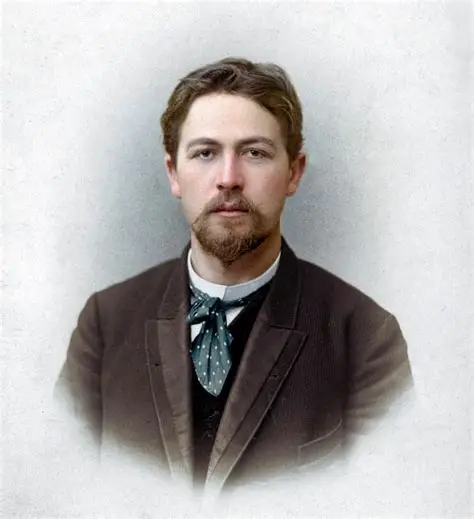
Anton Chekhov was a Russian physician, short story writer and dramatist whose work transformed modern literature and theatre. Born in 1860 in Taganrog, he combined medical knowledge with close observation of ordinary life, creating stories and plays marked by psychological detail, understatement and compassion. His major works include The Seagull, Uncle Vanya, Three Sisters and The Cherry Orchard, alongside influential stories such as Ward No. 6, The Lady with the Dog and The Black Monk. He died from tuberculosis in 1904 at only 44, but his influence continued across world literature and performance.
Early Life and Family Background
Anton Pavlovich Chekhov was born on January 29, 1860, in Taganrog, a port city on the Sea of Azov. He was the third son of Pavel Yegorovich Chekhov and Yevgeniya Chekhova. His father ran a small grocery business and maintained strict religious and family discipline.
Chekhov’s childhood was difficult. Financial problems eventually forced his family to move to Moscow, while Anton remained in Taganrog for a period to complete his education. His early experiences exposed him to poverty, family pressure and the struggles of ordinary people. These experiences later became important subjects in his fiction.
Education and Medical Career
Chekhov completed his schooling in Taganrog before moving to Moscow in 1879. He studied medicine at Imperial Moscow University and qualified as a physician in 1884. Medicine remained an important part of his identity even after literature became his principal occupation.
During his medical studies, Chekhov wrote humorous sketches and short pieces for newspapers and magazines to support his family. His early work was often comic, but his writing gradually developed greater emotional and artistic depth. His medical training also strengthened his attention to physical symptoms, human behavior and psychological suffering.
Rise as a Writer
Chekhov first became known for short humorous pieces published under pseudonyms. By the late 1880s, however, his writing had developed into more serious literary work. Stories such as The Steppe, The Duel and A Dreary Story demonstrated his growing interest in loneliness, moral uncertainty, social pressures and ordinary human disappointment.
Unlike writers who depended heavily on dramatic plots, Chekhov often built stories around character, mood and small changes in relationships. His characters frequently face problems without clear resolutions. This approach helped establish a form of realism in which ordinary conversations and apparently minor events could reveal deep emotional conflicts.
Major Literary Works
Chekhov produced hundreds of stories, sketches and plays. His fiction includes The Student, The Black Monk, Ward No. 6, The Lady with the Dog and The Bishop. His stories explore isolation, illness, love, disappointed hopes and the gap between people’s ambitions and their actual lives.
His major plays include Ivanov, The Seagull, Uncle Vanya, Three Sisters and The Cherry Orchard. The Seagull initially received a hostile reception in 1896, but its later production at the Moscow Art Theatre became a major success.
Chekhov’s dramatic method was distinctive. Rather than making characters explain everything directly, he allowed meaning to emerge through ordinary dialogue, pauses, gestures and tensions beneath the surface. This technique became highly influential in modern drama and acting.
Sakhalin Journey and Social Concerns
In 1890, Chekhov travelled thousands of kilometres to Sakhalin Island, a remote penal colony in the Russian Far East. He investigated the lives and conditions of prisoners and settlers, conducted a census and gathered extensive information about the colony.
His experience resulted in The Island of Sakhalin, published in 1895. The work documented harsh conditions and reflected Chekhov’s concern with institutional suffering and human dignity. His medical background and direct observation gave the study unusual detail. The Library of Congress records his research into prisoners and the island’s indigenous and settler populations.
Theatre and the Moscow Art Theatre
Chekhov’s plays became closely associated with Konstantin Stanislavsky and the Moscow Art Theatre. The theatre’s production of The Seagull in 1898 was a major success and helped establish Chekhov as a leading dramatist.
Stanislavsky’s approach emphasized psychological realism, ensemble acting and attention to motivations beneath dialogue. Chekhov’s plays suited this method because their conflicts often develop through subtle emotional tensions rather than conventional theatrical action.
The four major late plays became central works of modern theatre. Uncle Vanya examines wasted opportunities and frustrated ideals. Three Sisters follows a family longing for a more meaningful future, while The Cherry Orchard explores social change, memory and the loss of an inherited world.
Personal Life and Marriage
Chekhov maintained close relationships with his family and supported relatives financially when possible. He also developed friendships with writers, artists and theatre figures.
In 1901, he married Olga Knipper, an actress associated with the Moscow Art Theatre. Their marriage was affectionate but often separated by distance because Chekhov spent much of his later life in Yalta for health reasons while Knipper continued her theatrical career in Moscow.
Later Years and Death
Chekhov’s health deteriorated because of tuberculosis, which he had suffered from for years. In 1899, he moved to Yalta, where the warmer climate was considered beneficial. He continued writing there and produced important late works, including Three Sisters and The Cherry Orchard.
In 1904, Chekhov travelled with Olga Knipper to Badenweiler, Germany, seeking medical treatment. He died there on July 15, 1904, aged 44. His body was returned to Moscow, where he was buried at Novodevichy Cemetery.
Legacy and Historical Significance
Chekhov’s importance rests partly on the way he expanded what fiction and drama could accomplish. He demonstrated that a story did not need an elaborate plot to examine major questions about human existence. His characters often reveal themselves through ordinary behavior, incomplete conversations and private disappointments.
His influence extends across short fiction, drama, acting and literary realism. Writers and dramatists have repeatedly drawn on his techniques of characterization, atmosphere and indirect conflict. The concept known as “Chekhov’s gun” is also associated with his belief that significant details in a narrative should serve a purpose.
Chekhov occupies an unusual place in literary history because he remained a practicing physician while becoming one of the world’s major writers. His medical experience encouraged disciplined observation and deepened his understanding of illness, suffering and human behavior.
Frequently Asked Questions
What was Anton Chekhov famous for?
He was famous for his short stories and plays, particularly The Seagull, Uncle Vanya, Three Sisters and The Cherry Orchard.
Was Anton Chekhov a doctor?
Yes. He studied medicine at Imperial Moscow University and qualified as a physician in 1884. He continued medical work while pursuing literature.
What is Anton Chekhov’s most famous play?
The Seagull, Uncle Vanya, Three Sisters and The Cherry Orchard are regarded as his major plays.
Why did Chekhov visit Sakhalin?
He travelled to Sakhalin in 1890 to investigate the penal colony and document the conditions experienced by prisoners and other residents.
How did Anton Chekhov die?
Chekhov died from tuberculosis in Badenweiler, Germany, on July 15, 1904.
Conclusion
Anton Chekhov brought together medicine, literature and close observation of ordinary life in a body of work that remains central to modern writing. His stories found drama in everyday existence, while his plays transformed stage conflict through silence, suggestion and psychological detail. Although he died young, his approach to character and human experience continues to shape literature and theatre around the world.