|
Getting your Trinity Audio player ready... |
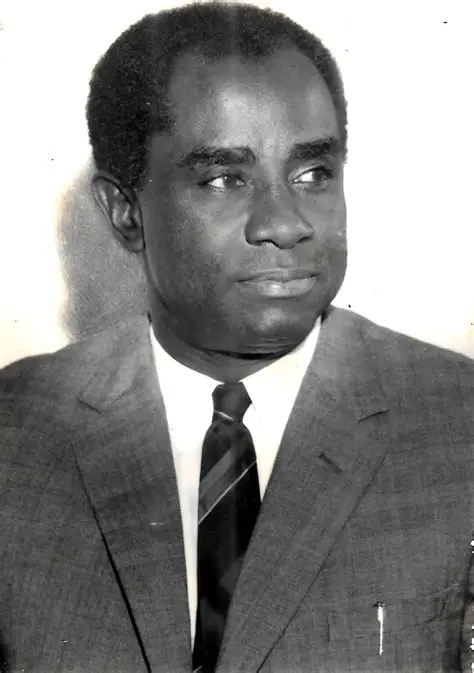
Kenneth Onwuka Dike (1917–1983) was a Nigerian historian, educator and pioneer of modern African historiography. He became the first Nigerian Vice-Chancellor of the University of Ibadan and helped establish history as a professional academic discipline in Nigeria. His scholarship placed African experiences and African sources closer to the centre of historical research.
Dike is particularly remembered for Trade and Politics in the Niger Delta, 1830–1885, his work with the National Archives of Nigeria, and his role in developing the Ibadan School of History. He also promoted oral evidence and interdisciplinary research at a time when much academic writing about Africa relied heavily on European records.
Early Life and Family Background
Kenneth Onwuka Dike was born on December 17, 1917, in Awka, in present-day Anambra State, Nigeria. He was born into an Igbo family and later became closely associated with the intellectual development of Nigeria during the transition from colonial rule to independence.
Available biographical records identify his parents as Nzekwe Dike and Felicia Anere Dike. Some accounts state that Dike was orphaned young and spent important formative years under the care of his paternal grandfather, Dike Nwanchoo. His early environment gave him an interest in community memory and the knowledge preserved through older generations.
His childhood unfolded during British colonial rule. That historical setting later became central to his scholarship because he wanted African history to be studied from African experiences rather than treated mainly as an extension of European colonial history.
Education and Academic Formation
Dike began his higher education at Achimota College in the Gold Coast before entering Fourah Bay College in Sierra Leone in 1939. Fourah Bay was then affiliated with Durham University, which awarded his degree in 1943. He studied English, Geography and Latin.
In 1944, Dike received a British Council scholarship to study history at the University of Aberdeen. He graduated with first-class honours in 1947 and was reported as the first Nigerian graduate from Aberdeen. His academic performance established him as one of the leading young Nigerian scholars of his generation.
Dike then moved to King’s College London for doctoral research under historian Vincent Harlow. His research examined economic and political relations in the Niger Delta during the nineteenth century. He completed his PhD in history in 1950.
Trade and Politics in the Niger Delta
Dike’s doctoral research became his best-known scholarly work, Trade and Politics in the Niger Delta, 1830–1885. Clarendon Press published the book in 1956 as an introduction to the economic and political history of Nigeria.
The study examined trade, political relationships and European involvement in the Niger Delta. Instead of presenting European activity as the main driver of events, Dike paid close attention to African political and economic interests.
This approach became important in African historiography. His work demonstrated that Nigerian societies had their own political structures, commercial interests and responses to European expansion. It therefore helped move historical writing beyond accounts that treated Africans mainly as passive subjects of colonial history.
Building Nigerian Historical Institutions
After completing his doctorate, Dike returned to Nigeria and worked with the West African Institute of Social and Economic Research. He became deeply involved in preserving historical records and creating institutions that could support professional historical research.
In 1954, he founded the Nigerian National Archives and later served as its director. The institution provided a permanent framework for preserving government records and other historical materials that researchers could use to study Nigeria’s past.
Dike also helped establish the Historical Society of Nigeria in the 1950s. The society became an important professional organization for Nigerian historians and supported the development of historical scholarship in the country.
These institutional contributions were closely connected to Dike’s larger vision. He believed that Nigerian history required trained Nigerian historians, preserved Nigerian records and research institutions capable of producing African scholarship.
Career at the University of Ibadan
Dike joined the History Department of University College Ibadan in 1955. In 1956, he became the first African appointed Professor of History and also became the first African head of the department.
He became the first African Principal of University College Ibadan in 1958. When the institution became an independent University of Ibadan, Dike served as its first Nigerian Vice-Chancellor. University records place his service as Principal and Vice-Chancellor between 1960 and 1967.
As an academic leader, Dike worked to strengthen African content within the curriculum. He encouraged students and younger scholars to investigate Nigeria’s past using written records, oral traditions, archaeology and other forms of evidence.
In 1962, he founded the Institute of African Studies at the University of Ibadan. The institute encouraged multidisciplinary research into African societies and helped create an intellectual environment in which historians, archaeologists and scholars from other fields could study Africa’s past together.
The Ibadan School of History and Oral Evidence
Dike became closely associated with what later became known as the Ibadan School of History. The school emerged around the University of Ibadan in the 1950s and became a major intellectual tradition in Nigerian historical scholarship.
Its historians emphasized African political, economic and social experiences while using a broad range of sources. Oral traditions were especially important because many aspects of African history had not been recorded in European archives.
Dike encouraged historians to treat oral evidence as a serious historical source rather than dismissing it as unreliable tradition. He also supported multidisciplinary research, including archaeology and written documentation. The University of Ibadan’s own history records Dike’s early recognition of archaeology as a way to provide deeper historical evidence for Nigeria’s past.
The approach influenced a generation of historians associated with Ibadan. Scholars including Jacob Ade Ajayi and other members of the department developed African historical research through books, journals, teaching and postgraduate training.
Nigerian Civil War and Later Career
Dike’s academic career was interrupted by the Nigerian Civil War from 1967 to 1970. He became an ambassador for Biafra and sought international support for the secessionist government. His diplomatic activities took him to countries including the United States and France.
After the war, Dike moved to Harvard University in the United States. He served as Chair of the Committee on African Studies from 1971 to 1973 and became the first Mellon Professor of African Studies in 1973. He remained at Harvard until 1980.
Dike returned to Nigeria in 1980 and became the first president of Anambra State University of Technology, now known as Chukwuemeka Odumegwu Ojukwu University. He remained in that position until his death.
Personal Life and Family
Dike married Ona Patricia Olisa in 1953. Biographical records state that they had five children. His family remained part of his private life while his academic career took him between Nigeria, Britain and the United States.
Dike received numerous academic honours during his career. The University of Aberdeen awarded him an honorary doctorate in 1961, while he was later elected a Fellow of the American Academy of Arts and Sciences in 1972. He also served as Chairman of the Association of Commonwealth Universities in the mid-1960s.
Death
Kenneth Onwuka Dike died on October 26, 1983, in Enugu after a brief illness. He was 65 years old. He was survived by his wife, Ona, and their five children.
His death ended the career of a historian whose influence extended well beyond his published research. By then, the institutions and academic traditions he helped establish had already become important parts of Nigerian intellectual life.
Legacy and Historical Significance
Kenneth Dike’s legacy rests on both scholarship and institution building. His research demonstrated that Nigerian history could be investigated through African political and economic experiences rather than relying primarily on colonial interpretations.
His work also helped professionalize historical scholarship in Nigeria. The National Archives, Historical Society of Nigeria and Institute of African Studies provided structures through which records could be preserved, research could develop and younger scholars could receive training.
The Ibadan School became particularly influential in Nigerian historiography during the decades after independence. Its scholars produced research on political, economic, social and cultural history while giving greater attention to oral traditions and African perspectives.
Dike’s influence therefore goes beyond Trade and Politics in the Niger Delta. His lasting contribution was the creation of an intellectual and institutional foundation for Nigerians to research, preserve and interpret their own history.
Frequently Asked Questions
Who was Kenneth Onwuka Dike?
Kenneth Onwuka Dike was a Nigerian historian, educator and university administrator who became the first Nigerian Vice-Chancellor of the University of Ibadan.
When was Kenneth Dike born?
Kenneth Onwuka Dike was born on December 17, 1917, in Awka, present-day Anambra State.
What was Kenneth Dike famous for?
He was known for African historiography, Trade and Politics in the Niger Delta, the National Archives of Nigeria, the Historical Society of Nigeria and the Ibadan School of History.
What did Kenneth Dike write?
His major works included Trade and Politics in the Niger Delta, 1830–1885, A Hundred Years of British Rule in Nigeria and The Origins of the Niger Mission.
Was Kenneth Dike the first Nigerian Vice-Chancellor of the University of Ibadan?
Yes. He was the first Nigerian to serve as Vice-Chancellor of the University of Ibadan. University records identify him as the institution’s first Nigerian Principal and Vice-Chancellor.
When did Kenneth Dike die?
Kenneth Onwuka Dike died on October 26, 1983, in Enugu at the age of 65.
Conclusion
Kenneth Onwuka Dike occupies an important place in the history of Nigerian education and African historiography. Through his scholarship, institutional work and leadership at the University of Ibadan, he helped create a stronger foundation for African-centred historical research. His use of oral evidence, attention to African agency and commitment to professional historical institutions influenced generations of Nigerian scholars.