|
Getting your Trinity Audio player ready... |
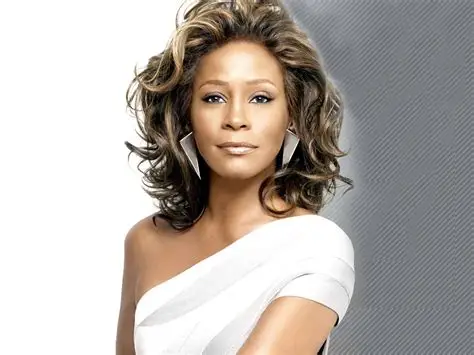
Whitney Houston was an American singer and actress whose extraordinary voice made her one of the most influential recording artists of her generation. Born in Newark, New Jersey, in 1963, she grew up in a musical family and developed from a gospel singer into an international pop and R&B superstar.
Houston’s career changed the sound and reach of mainstream popular music. Her powerful vocals, controlled technique and ability to move between gospel, R&B and pop helped her achieve success across racial and musical boundaries.
She became one of the biggest recording artists of the 1980s and 1990s. Her seven consecutive No. 1 singles on the Billboard Hot 100 remain a major career record. She also won six Grammy Awards and became a successful actress, particularly through The Bodyguard.
Behind the success, however, Houston faced serious personal difficulties, including substance abuse and the pressures of extraordinary fame. Her death at 48 in 2012 ended a career that had already left a lasting mark on music.
Early Life and Family Background
Whitney Elizabeth Houston was born on August 9, 1963, in Newark, New Jersey.
She grew up in a family with deep connections to gospel, R&B and popular music. Her mother was Cissy Houston, a respected gospel and R&B singer who performed with the Sweet Inspirations and later built a successful solo career.
Houston’s extended family also included singers Dionne Warwick and Dee Dee Warwick. Music was therefore part of her environment from childhood.
Her religious upbringing was also important. Houston sang in church and developed a strong foundation in gospel music. That background later became one of the defining elements of her vocal style.
Her voice combined gospel power with the precision required for pop and R&B. This combination eventually became one of the characteristics that separated her from many contemporary singers.
Education and Musical Beginnings
Houston attended Mount Saint Dominic Academy, a Catholic girls’ school in Caldwell, New Jersey.
Music became increasingly important during her teenage years. She began singing professionally while still young and performed background vocals for established musicians.
As a teenager, Houston worked with artists including Chaka Khan. She also appeared on recordings before beginning her own recording career.
Her early experience taught her how to work in professional studios and perform alongside established musicians. It also allowed industry figures to recognize her exceptional vocal ability.
Houston’s early development was different from the traditional overnight-success story. She had already spent years singing in church and working professionally before the wider public knew her name.
Early Career and Discovery
In the early 1980s, Houston began attracting attention from record executives and producers. Music executive Clive Davis became one of the most important figures in her career. He recognized that Houston could appeal to both R&B and mainstream pop audiences.
Houston signed with Arista Records, where Davis played a major role in developing her career. The strategy was significant. Rather than restricting her to one musical audience, the label positioned her as a vocalist capable of crossing genres.
Her self-titled debut album was released in 1985. It introduced a singer whose vocal range, emotional control and polished presentation were unusual for a young mainstream artist.
The album eventually reached No. 1 on the Billboard 200 and produced major hits including “Saving All My Love for You,” “How Will I Know” and “Greatest Love of All.”
Rise to International Stardom
The success of Whitney Houston established her as a major American recording artist.
Her first Grammy Award came for “Saving All My Love for You” at the 1986 Grammy Awards. She followed that achievement with further awards and international recognition.
Her second album, Whitney, was released in 1987. It became another major commercial success. The album produced four No. 1 singles, including “I Wanna Dance with Somebody (Who Loves Me),” “Didn’t We Almost Have It All,” “So Emotional” and “Where Do Broken Hearts Go.”
Houston became the first female artist to enter the Billboard 200 album chart at No. 1 with Whitney. More significantly, the album extended a remarkable sequence of seven consecutive No. 1 Billboard Hot 100 singles.
The achievement established Houston as one of the defining voices of late-1980s popular music.
Her success also carried broader cultural significance. At a time when the American music industry still operated across strong racial and genre divisions, Houston became a Black female artist with extraordinary mainstream reach.
She brought gospel-rooted vocal traditions into the center of international pop music.
Whitney Houston and Her Record-Breaking Success
Houston continued her success with albums such as I’m Your Baby Tonight, released in 1990. The album showed a somewhat stronger R&B direction while maintaining the polished sound associated with her earlier work.
Her career reached another important moment in 1991, when she performed “The Star-Spangled Banner” at Super Bowl XXV.
The performance became one of the most celebrated versions of the American national anthem in modern popular culture. Its recording became a commercial success and later returned to the charts after its 2001 re-release.
Houston’s international stature continued to grow. By the early 1990s, she was no longer simply a successful singer. She had become one of the world’s most recognizable entertainers.
Her six Grammy Awards and 25 Grammy nominations reflected the industry’s recognition of her work.
The Bodyguard and Acting Career
Houston expanded into acting with The Bodyguard, released in 1992. She starred opposite Kevin Costner as Rachel Marron, a successful singer whose life is threatened by a stalker.
The film introduced Houston to an even wider audience, but its soundtrack became the greater cultural phenomenon. Houston recorded several songs for the soundtrack, most famously her version of Dolly Parton’s “I Will Always Love You.”
The recording became one of the defining songs of her career. It won the Grammy Awards for Record of the Year and Best Pop Vocal Performance, Female, while The Bodyguard soundtrack won Album of the Year.
The soundtrack became one of the best-selling albums in music history. Houston’s performance also demonstrated her ability to take a song written and previously recorded by another artist and transform it into a defining interpretation of her own.
She later appeared in Waiting to Exhale in 1995 and The Preacher’s Wife in 1996. The latter film allowed her to draw more heavily on her gospel background. Its soundtrack became another major part of her recording legacy.
Music, Gospel and Cultural Influence
Houston’s importance cannot be measured only by record sales. Her greatest musical contribution was the way she brought together several traditions.
She possessed the emotional intensity of gospel singing, the rhythmic instincts of R&B and the technical control required for mainstream pop. That combination became influential among later generations of singers.
Artists across different genres have cited Houston as an influence. Her vocal approach helped establish a model for the technically demanding style associated with many contemporary female pop and R&B singers.
Her influence was also visible in the way record companies marketed Black female artists. Houston demonstrated that a Black singer could achieve enormous international success without abandoning the vocal traditions from which she emerged.
Her career therefore formed part of a broader transformation in American popular music. She also became known as “The Voice,” a nickname that reflected the unusual strength and consistency of her singing.
Personal Life and Family
Houston married singer Bobby Brown in 1992. Their daughter, Bobbi Kristina Brown, was born in March 1993. The marriage attracted intense media attention. Houston’s relationship with Brown became a frequent subject of tabloid coverage, particularly as both faced personal difficulties.
Houston’s private struggles increasingly became public during the 1990s and 2000s. She acknowledged problems involving substance use and spoke publicly about some of the difficulties in her personal life.
These struggles affected periods of her career, but they should not be allowed to overshadow the artistic achievements that established her historical importance.
Houston and Brown divorced in 2007. Her daughter remained an important part of her life. Bobbi Kristina later pursued interests in entertainment and became a subject of significant public attention herself.
Later Career and Challenges
Houston’s career became less consistent during the 2000s. The pressures of fame, personal difficulties and substance abuse affected her public image and professional work.
Nevertheless, she continued recording and performing. In 2009, Houston released I Look to You, her final studio album. The album debuted at No. 1 on the Billboard 200 and represented a major return to the center of the music industry.
She also embarked on the Nothing but Love World Tour.
The comeback period was not without difficulties. Some performances received criticism, and her vocal condition became a subject of public discussion.
Even so, her return demonstrated the continuing strength of her international audience. In 2011, Houston began filming Sparkle, a musical drama in which she played Emma, the mother of three aspiring singers. She also served as an executive producer.
The film was released in August 2012, several months after her death.
Death
Whitney Houston died on February 11, 2012, in Beverly Hills, California. She was 48 years old. She was found submerged in the bathtub of her room at the Beverly Hilton Hotel shortly before the Grammy Awards.
The Los Angeles County Coroner later determined that the cause of death was drowning, with the effects of atherosclerotic heart disease and cocaine use contributing to the death. The manner of death was ruled an accident. No foul play was suspected.
The circumstances of her death brought renewed attention to her long struggle with substance abuse. However, Houston’s death should be understood within the broader context of her life rather than reduced to the circumstances of her final day.
She had spent nearly three decades at the highest levels of the music industry and had already established a lasting artistic legacy.
Her funeral took place at New Hope Baptist Church in Newark, the church where she had sung as a young girl. She was later buried at Fairview Cemetery in Westfield, New Jersey, beside her father.
Legacy and Historical Significance
Whitney Houston’s historical importance rests first on the extraordinary scale of her musical achievement.
She became one of the most successful female recording artists in history. The Recording Academy credits her with more than 200 million records sold worldwide and six Grammy Awards, while her official estate biography highlights her seven consecutive No. 1 Billboard Hot 100 singles.
Her influence, however, extends beyond commercial success.
Houston helped define the sound of mainstream pop and R&B during the 1980s and 1990s. Her gospel-based technique became a model for singers who followed her.
Her version of “I Will Always Love You” also became an example of how a vocalist could transform an existing composition into a new cultural landmark.
Houston’s career broke important barriers for Black women in mainstream entertainment. She reached audiences across racial and national boundaries without separating herself from her gospel and R&B roots.
Her influence can be heard in singers who emerged after her, including performers who adopted her emphasis on vocal power, range, melisma and emotional delivery.
Houston was inducted into the Rock & Roll Hall of Fame in 2020, confirming her place in the broader history of popular music.
She was also posthumously inducted into the Grammy Hall of Fame, and her recording of “I Will Always Love You” received the same recognition.
Her cultural legacy has continued through documentaries, tribute performances, archival releases and renewed interest in her music.
The 2018 documentary Whitney explored her life and career, while the 2022 biographical film I Wanna Dance with Somebody introduced her story to another generation.
Houston’s legacy is therefore both artistic and cultural. She demonstrated the extraordinary possibilities of a voice shaped by gospel and developed within mainstream popular music.
Her life also illustrates the difficult relationship between extraordinary fame and personal vulnerability.
For all the tragedy surrounding her final years, the central historical fact remains her contribution to music. Whitney Houston changed expectations of what a popular vocalist could achieve and left recordings that continue to define the era in which she worked.
Read More: Olaudah Equiano Biography: Life, Slavery, Abolition and Legacy
Conclusion
Whitney Houston’s life combined extraordinary musical achievement with the difficult realities of international fame.
She rose from a Newark church choir to become one of the world’s most successful singers. Her seven consecutive No. 1 singles, six Grammy Awards, major film roles and record-setting performances established her as a defining figure in modern popular music.
Her influence reached far beyond her own recordings. Houston helped bring gospel-based vocal technique into mainstream pop and created a model that influenced generations of singers.
Her death in 2012 ended her life at only 48, but it did not end her cultural influence. Her recordings remain central to popular music, while her career continues to shape how audiences understand the possibilities of the modern vocalist.