|
Getting your Trinity Audio player ready... |
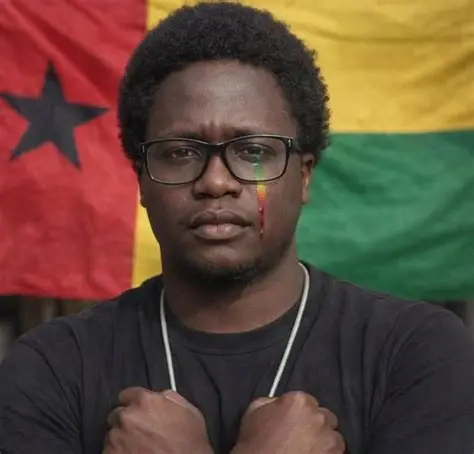
Vigário Luís Balanta was a Guinean activist, rapper, teacher and political organiser who became one of the most visible young voices of dissent in Guinea-Bissau during the country’s political crisis of 2025 and 2026. He founded the youth-led Pó di Terra movement in 2023 and used both political activism and music to speak about poverty, inequality, political instability and the limited opportunities facing young people. His killing on March 31, 2026, transformed him from a prominent activist into a symbol of civic resistance in Guinea-Bissau.
Early Life and Education
Vigário Luís Balanta was born in Guinea-Bissau, although detailed records of his exact birth date and birthplace are not widely available in reliable public sources. Reports published after his death gave conflicting ages. Some contemporary reports described him as 35, while a later Reuters profile identified him as 32 at the time of his death. Because no reliable public record establishes his exact date of birth, his precise birth date should be treated as undocumented.
Balanta received his secondary education at the Tchico Té School in Guinea-Bissau. Accounts of his life describe him as intellectually active and professionally versatile. He later studied law at university but interrupted his studies when he entered professional employment at the National Institute of Statistics of Guinea-Bissau.
His educational background also included training that enabled him to work as a teacher. He taught mathematics and physics, giving him a connection to young people that later became important to his activism and political organising.
Teaching and Professional Life
Before becoming widely known as a political activist, Balanta worked in education and public service. His experience as a mathematics and physics teacher placed him in direct contact with young Guineans navigating an environment marked by limited economic opportunities and recurring political instability.
He also worked as a staff member of the National Institute of Statistics. His decision to interrupt his university law studies for professional work suggests that his career developed across several fields rather than following a conventional political path. His later public role combined elements of education, civic organisation, music and political communication.
Music and Social Commentary
Music was central to Balanta’s public identity. He became known as a rapper whose songs addressed social problems affecting ordinary people in Guinea-Bissau.
His music focused on themes such as poverty, inequality, difficult childhood experiences and the absence of opportunities for young people. A collaboration with Dasmágoas Djenga on the song “Bitter Childhood,” released in 2022, reflected this approach before Balanta became a nationally prominent political organiser.
For Balanta, music was more than entertainment. It became a means of explaining social conditions and expressing frustrations that were also present in his political activism. His transition from socially conscious musician to political organiser therefore developed naturally from concerns already visible in his artistic work.
Founding Pó di Terra
In 2023, Balanta founded the Pó di Terra movement, a youth-oriented civic and political organisation. The name is generally understood as referring to “natives of the land” in Guinean Portuguese.
The movement sought to mobilise young people around political reform, social justice and greater civic participation. Balanta became one of its most visible organisers and public voices. He combined street mobilisation, public speaking and media appearances with the communication style he had developed through music.
Pó di Terra became particularly important after Guinea-Bissau entered another period of political upheaval. Balanta’s willingness to speak publicly made him an increasingly recognisable figure among young people dissatisfied with the country’s political direction.
Political Activism
Balanta’s activism intensified as Guinea-Bissau’s political tensions grew. He criticised political authoritarianism and advocated for greater respect for constitutional government and democratic rights.
According to accounts from people familiar with his activities, he had previously been detained at the Fortaleza da Amura because of his political activism. After his release, he continued organising and participating in public demonstrations. He also became a prominent spokesperson during protests and civic actions.
His activism carried significant personal risks. Friends and associates described him as unusually willing to speak openly about political and social issues, even as pressure on activists increased.
The 2025 Political Crisis
The most consequential period of Balanta’s activism followed the military takeover of November 26, 2025. Soldiers removed President Umaro Sissoco Embaló from power shortly before the expected announcement of election results, creating another major political crisis in a country that had experienced repeated instability since independence from Portugal in 1974.
Pó di Terra opposed the military takeover and demanded a return to constitutional order. Balanta participated in efforts to organise public resistance and became one of the movement’s most recognisable voices.
The political environment subsequently became more restrictive. Authorities arrested opposition figures, restricted demonstrations and increased pressure on independent media. Balanta continued speaking publicly despite the risks.
Death of Vigário Luís Balanta
On March 31, 2026, Balanta’s body was found in the Ndam area, roughly 30 kilometres from Bissau. Reports described serious injuries and signs of violent assault. Human rights observers and other sources reported that he appeared to have been subjected to severe physical violence, while details surrounding the killing remained under investigation.
The circumstances of his death immediately generated national and international concern. Guinea-Bissau’s transitional government condemned the killing and said that judicial and security authorities had been instructed to investigate and identify those responsible. As of the latest available reporting, responsibility for the killing had not been legally established.
The distinction is important because Balanta’s political opponents and supporters made serious allegations concerning the circumstances of his death, but those allegations should not be presented as established facts without a completed investigation or judicial finding.
Personal Life and Family
Balanta was married to Dulce, with whom he had two children. Reuters reported that their children were aged eight and eleven in 2026.
His wife later described her fears about his safety and said she had repeatedly urged him to reduce his public profile because of the threats surrounding his activism. Her account illustrated the personal risks that accompanied Balanta’s public political role.
His family life therefore existed alongside an increasingly dangerous public career. He continued his activism despite concerns from those closest to him.
Legacy and Historical Significance
Vigário Luís Balanta’s historical significance lies in the intersection of youth activism, political resistance and popular culture. He represented a generation of Guineans who used music, social mobilisation and public protest to challenge persistent political instability.
His importance also comes from the way he communicated with younger citizens. Rather than separating his artistic identity from his political work, he used both to discuss the same problems. Poverty, inequality, limited opportunities and political uncertainty appeared in his music as well as his activism.
His death further expanded his symbolic importance. The leaders of Pó di Terra subsequently reduced their public visibility and operated more cautiously because of concerns about repression. Reuters reported in August 2026 that the movement’s leaders had gone underground while continuing efforts to oppose military rule and advocate political reform.
Balanta’s legacy is therefore still developing. He did not live long enough to see the political changes he demanded, but his combination of music and civic activism gave him a distinctive place in Guinea-Bissau’s contemporary history.
His life also demonstrates the risks faced by young civic actors in countries experiencing prolonged political instability. His story has become part of the wider discussion about freedom of expression, democratic participation and the protection of civil society in Guinea-Bissau.
Read More: Alfred Kasunmu Biography: Early Life, Legal Career, Achievements and Legacy
Frequently Asked Questions
Who was Vigário Luís Balanta?
Vigário Luís Balanta was a Guinean rapper, teacher, political activist and organiser who founded the Pó di Terra movement in 2023.
What was Vigário Luís Balanta famous for?
He was known for socially conscious rap music and outspoken political activism, particularly his opposition to military rule and his advocacy for political reform in Guinea-Bissau.
When was Vigário Luís Balanta born?
His exact date of birth has not been reliably established in publicly available sources. Reports also disagree about his age at death, giving figures of 32 and 35.
What was Pó di Terra?
Pó di Terra was a youth-oriented civic and political movement founded by Balanta in 2023. It promoted political reform, civic participation and social justice.
Was Vigário Luís Balanta married?
Yes. He was married to Dulce, and they had two children.
When did Vigário Luís Balanta die?
He died on March 31, 2026. His body was found in the Ndam area outside Bissau.
How did Vigário Luís Balanta die?
He died in a violent killing. Reports described severe injuries and signs of beating and possible torture. The full circumstances and legal responsibility remained under investigation in available reports.
What is Vigário Luís Balanta remembered for?
He is remembered for combining music and political activism, mobilising young people through Pó di Terra and speaking publicly about social and political problems in Guinea-Bissau.
Conclusion
Vigário Luís Balanta’s life was short but significant. As a teacher, rapper, organiser and political activist, he used different forms of public expression to address the social and political challenges facing Guinea-Bissau. His creation of Pó di Terra and his opposition to military rule placed him at the centre of a critical period in the country’s modern history. His death in 2026 transformed his story into one of the most powerful recent examples of the risks faced by civic activists and the enduring struggle for democratic rights in Guinea-Bissau.