|
Getting your Trinity Audio player ready... |
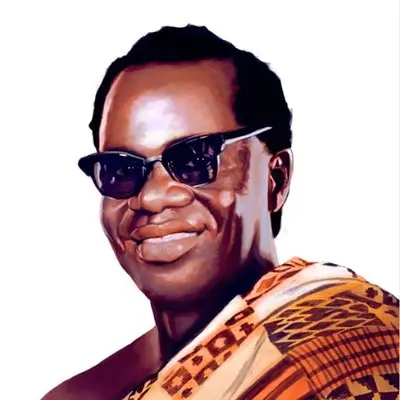
Kofi Abrefa Busia was a Ghanaian scholar, sociologist, politician and statesman who became Prime Minister of Ghana from 1969 to 1972. He was one of the most influential intellectuals and political figures of Ghana’s early post-independence era, combining an international academic career with a sustained commitment to parliamentary democracy. He opposed Kwame Nkrumah’s increasingly centralised political system, spent years in exile, returned after Nkrumah’s overthrow, and eventually led Ghana’s Second Republic as head of the Progress Party. Busia died in Oxford on August 28, 1978, aged 65, exactly 48 years ago today.
His historical importance extends beyond the three years he spent as prime minister. Busia was also a pioneering African scholar who helped establish sociology and African studies at the University of Ghana and later taught in Europe and at Oxford. His books on African society, education, nationalism and democracy continue to provide an important record of the intellectual debates surrounding Africa’s transition from colonial rule to independence.
Early Life and Family Background
Kofi Abrefa Busia was born on July 11, 1913, in Wenchi in the Gold Coast, the British colony that later became Ghana. He was born into the royal family of Wenchi and grew up in a strongly Methodist environment that influenced both his education and his personal outlook. His lifelong connection with Christianity and Methodism became an important part of his identity as a scholar and politician.
His early years coincided with a period when formal education was becoming an important route into the emerging African professional class. Busia benefited from Methodist educational institutions and scholarships, eventually becoming one of the best educated Ghanaian intellectuals of his generation.
His family background also gave him an early connection to traditional authority. That experience later informed his academic interest in the relationship between traditional African institutions and modern political systems.
Education and Formative Years
Busia attended Methodist School in Wenchi before entering Mfantsipim School in Cape Coast in 1927 as a Methodist Synod Scholar. He later attended Wesley College in Kumasi, where he trained as a teacher and became involved in Methodist education. He subsequently taught at Wesley College and Achimota College.
While working as a teacher, Busia pursued higher education through the University of London and obtained an honours degree in Medieval and Modern History. He then proceeded to Oxford, where he became the first African student at University College, Oxford. He studied Philosophy, Politics and Economics and later completed doctoral research in social anthropology.
His doctoral research examined the position of the chief in the modern political system of Ashanti. This subject became central to his scholarly interest in the relationship between traditional African institutions and modern government.
His education was therefore not simply an accumulation of academic qualifications. It gave Busia a framework for examining the political and social transformation taking place across Africa as colonial rule gave way to nationalism and independence.
Academic Career and Scholarship
Busia returned to the Gold Coast in the 1940s and became one of the pioneers of higher education in what would become the University of Ghana. A recent academic history of African studies records that he was appointed the first lecturer in African Studies when the University College of the Gold Coast was being established.
The University of Ghana later recognised his role as a foundation member of its academic staff and credited him with helping establish the Department of Sociology. University records describe him as the first Ghanaian professor of the institution, while historical accounts also identify him as the first African to hold a chair there.
His scholarship examined African political institutions, culture, education and social change. His doctoral research became the basis for The Position of the Chief in the Modern Political System of Ashanti, published in 1951. The work examined how traditional authority adapted to changing political conditions and became an important contribution to African social and political studies.
Busia later taught outside Ghana, including at the University of Leiden in the Netherlands. He also became a Fellow of St Antony’s College, Oxford, where his academic career continued during his years away from Ghana.
Entry into Politics
Busia entered politics during the final years of British colonial rule. In 1951, he was elected to the Legislative Council by the Ashanti Confederacy. He subsequently became leader of the Ghana Congress Party and later became one of the leading figures in the United Party opposition to Kwame Nkrumah’s Convention People’s Party.
His political position was shaped by his belief in constitutional government, individual freedoms and parliamentary democracy. This brought him into direct conflict with Nkrumah, whose government increasingly concentrated political power in the Convention People’s Party.
Busia became one of the principal leaders of the opposition. His political significance grew alongside the transformation of Ghana from a newly independent parliamentary state into a one-party system.
Opposition to Kwame Nkrumah
Busia’s opposition to Nkrumah was one of the defining features of his political life. Following the passage of the Preventive Detention Act and increasing political repression, Busia left Ghana in 1959 after concluding that his safety was at risk. He entered a period of exile that would last until Nkrumah’s overthrow in 1966.
Exile did not end Busia’s political activity. Instead, it gave him an opportunity to develop his ideas about African democracy, education and political development.
During this period he produced some of his most important books. The Challenge of Africa, published in 1962, examined the cultural, political and moral challenges facing African societies emerging from colonialism. Purposeful Education for Africa followed in 1964, while Africa in Search of Democracy appeared in 1967.
These works reveal an important aspect of Busia’s legacy. He was not merely opposing Nkrumah politically. He was attempting to articulate an alternative vision of how African states could combine modern government with their own cultural traditions and social institutions.
Return to Ghana and the Progress Party
Nkrumah was overthrown by a military coup in February 1966. Busia returned to Ghana and became involved in the political reconstruction that followed.
He served in the National Liberation Council’s advisory structures and participated in the constitutional process that prepared Ghana for a return to civilian government. When political parties were permitted again, Busia and his allies established the Progress Party.
The Progress Party won the 1969 parliamentary election by a decisive margin, securing 104 of the 105 seats contested according to contemporary historical accounts. Busia consequently became Prime Minister when civilian government was restored.
His rise demonstrated the unusual path his career had taken. The former academic who had opposed Nkrumah from exile was now responsible for governing a country that was still struggling with the political and economic consequences of its first decade of independence.
Prime Minister of Ghana
Busia served as Prime Minister from October 1969 until January 1972. His government represented Ghana’s return to parliamentary civilian rule after the military government that had followed Nkrumah’s overthrow.
His administration promoted a liberal democratic and broadly pro-Western political outlook. It emphasised constitutional government, private enterprise and economic reform. Rural development was also presented as an important part of the government’s programme.
The government nevertheless faced serious economic difficulties. Measures such as currency devaluation and the implementation of austerity policies generated public dissatisfaction. His administration also became controversial for its treatment of foreign nationals, including the expulsion of large numbers of Nigerians under Ghana’s immigration policies.
Busia’s government therefore occupies a complicated place in Ghanaian history. Supporters remember his commitment to constitutional government, individual rights and democratic institutions, while critics point to the economic hardship and controversial policies that weakened his administration’s popularity.
The 1972 Coup and Second Exile
On January 13, 1972, Busia’s government was overthrown by a military coup led by Colonel Ignatius Kutu Acheampong. The coup ended Ghana’s Second Republic and brought another period of military rule.
Busia was outside Ghana at the time, having travelled to Britain for medical reasons. He did not return to political office after the coup and remained in the United Kingdom.
He resumed his academic life and remained associated with Oxford. His final years were therefore spent in a second period of exile, much as his earlier academic career had developed during his opposition to Nkrumah.
Personal Life and Family
Busia married Naa Morkor Bruce, a Ghanaian midwife, in Oxford on August 14, 1950. Their marriage brought together two people whose professional lives were shaped by education and public service. Naa Morkor remained an important figure in Busia’s personal life throughout his political career and years of exile.
The couple had eight children. Among them were Abena Busia, who later became a scholar and diplomat, and Akosua Busia, who became an actress, writer and filmmaker.
Busia’s personal correspondence also reveals the strain that political exile placed on his family. In letters to his wife, he acknowledged the sacrifices and burdens she endured during his political struggles and periods away from Ghana.
Death and Funeral
Kofi Abrefa Busia died in Oxford on August 28, 1978, following a heart attack. He was 65 years old. His death came while he was still living in Britain after the overthrow of his government six years earlier.
His death marked the end of the life of a man who had occupied two demanding worlds. He had been both a major African intellectual and the head of government of Ghana.
Busia was later given a state funeral in Ghana and was buried in his hometown of Wenchi in October 1978.
Legacy and Historical Significance
Kofi Abrefa Busia remains significant because his career connected scholarship, democratic politics and the difficult process of African nation-building.
As a scholar, he was a pioneer. His role in establishing sociology and African studies at the University of Ghana helped lay foundations for the development of African social science within an African university. His academic work also challenged the assumption that African political institutions could only be understood through European models.
As a political leader, Busia became one of Ghana’s most important opponents of Nkrumah. Their disagreement was not simply a personal political rivalry. It reflected a larger debate about the direction of post-independence Africa: whether political stability and development should be pursued through concentrated state power or through constitutional democracy and political pluralism.
His own government demonstrated the difficulty of translating those ideals into practice. Busia came to power promising constitutional government and economic reform, but his administration struggled with severe economic pressures and controversial policies before being removed by the military.
Historical Significance
His intellectual legacy has nevertheless endured. His major works continue to be republished and studied, particularly The Challenge of Africa, Purposeful Education for Africa and Africa in Search of Democracy. Modern editions of these works continue to present Busia’s ideas on African identity, education, political development and democracy to new readers.
His influence also survived through the political tradition associated with the Danquah-Busia-Dombo political heritage in Ghana. Later political movements, including the New Patriotic Party, drew upon this tradition and presented themselves as heirs to its emphasis on constitutional democracy and liberal political thought.
Forty-eight years after his death, Busia’s importance is therefore not limited to his short tenure as prime minister. His life illustrates the complex relationship between intellectual thought and political action in postcolonial Africa. He was a scholar who entered politics, an opposition leader who became head of government, and an African intellectual whose ideas continued to circulate long after his political career had ended.
Read More: Vigário Luís Balanta Biography: Early Life, Activism, Music and Legacy
Conclusion
Kofi Abrefa Busia was one of Ghana’s most consequential scholars and political leaders of the twentieth century. His career stretched from Methodist education and pioneering African scholarship to parliamentary opposition, exile and the leadership of Ghana’s Second Republic. His government was short-lived and controversial, but his larger contribution went beyond the office of prime minister. Through his scholarship, political thought and defence of constitutional government, Busia left a lasting intellectual and political legacy that remains part of Ghana’s history nearly five decades after his death.