|
Getting your Trinity Audio player ready... |
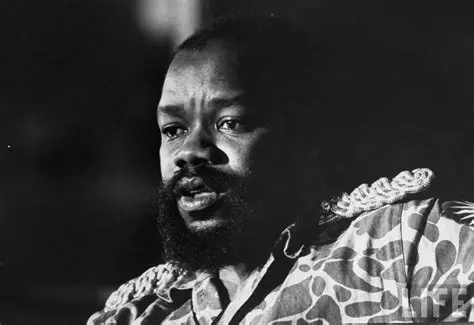
Odumegwu Ojukwu was a Nigerian military officer, politician and former governor who became the leader of the breakaway Republic of Biafra during the Nigerian Civil War. Born into one of Nigeria’s prominent families, Ojukwu received an international education before joining the Nigerian Army and rising through the military ranks.
His life became closely connected with one of the most consequential crises in Nigerian history. As military and political tensions intensified in the 1960s, Ojukwu emerged as the principal leader of Nigeria’s Eastern Region and later declared its independence as Biafra in 1967. The resulting civil war lasted until 1970 and caused immense human suffering.
Ojukwu’s historical significance remains closely tied to questions of Nigerian unity, ethnic politics, military rule, Biafran nationalism and the challenges of postcolonial nation-building.
Early Life and Family Background
Chukwuemeka Odumegwu Ojukwu was born on November 4, 1933, in Zungeru, in present-day Niger State. His father, Sir Louis Odumegwu Ojukwu, was a successful businessman who became one of Nigeria’s prominent entrepreneurs during the colonial period.
Ojukwu grew up in an affluent environment that provided opportunities unavailable to many Nigerians of his generation. His family’s wealth enabled him to receive an extensive education in Nigeria and abroad.
His privileged background later became an important part of his public image. Despite his elite upbringing, Ojukwu entered the military and eventually became one of the country’s most prominent political and military figures.
Education and Military Career
Ojukwu attended King’s College, Lagos, before travelling to Britain for further education. He studied at Lincoln College, Oxford, where he earned a degree in modern history.
He returned to Nigeria in the 1950s and joined the Nigerian Army in 1957. At a time when Nigeria was approaching independence, African officers were gradually taking greater responsibility within the armed forces.
Ojukwu received military training in Nigeria and abroad and rose through the ranks. He became one of the senior Nigerian officers serving during the country’s early years of independence.
His military career placed him directly inside the political tensions that would later threaten Nigeria’s unity.
Rise to Political Leadership
Following Nigeria’s independence in 1960, the country experienced growing political competition, regional tensions and disagreements over the distribution of power.
The situation deteriorated after the military coups of 1966. The first coup in January overthrew the civilian government, while the counter-coup in July led to widespread violence against people of Eastern Nigerian origin living in other parts of the country.
Ojukwu had become military governor of the Eastern Region after the January coup. He opposed the centralization of power under the new military government and argued for a political settlement that would protect the interests of the region.
As violence intensified, large numbers of Easterners returned to the region. The crisis created an atmosphere of fear and deep mistrust between Ojukwu and the federal government.
The Crisis Before Biafra
Attempts were made to resolve the political crisis through negotiations. The most notable was the Aburi meeting in Ghana in January 1967, where Nigerian leaders discussed a possible restructuring of the federation.
The agreement was interpreted differently by the federal government and Ojukwu’s Eastern administration. The disagreement deepened rather than resolved the political crisis.
The federal government subsequently reorganized the country into twelve states, dividing the former Eastern Region into several smaller units. Ojukwu viewed the move as a threat to the region’s political and economic position.
Meanwhile, violence, displacement and political mistrust continued.
The situation eventually moved beyond negotiation. Ojukwu and his supporters concluded that the Eastern Region could no longer safely remain within the Nigerian federation.
Declaration of Biafra
On May 30, 1967, Ojukwu declared the independence of the Republic of Biafra.
The new state covered much of southeastern Nigeria and was predominantly inhabited by Igbo people, although other ethnic communities also lived within its territory.
The federal government rejected the declaration and regarded it as an attempt to break up Nigeria. Military conflict soon followed.
The Nigerian Civil War officially began in July 1967.
Ojukwu became the political and military leader of Biafra, directing the new state’s government and armed forces during the conflict.
Leadership During the Nigerian Civil War
The war lasted nearly three years and became one of the most devastating conflicts in African history.
Biafra initially achieved military successes, including an advance into parts of Western Nigeria. Federal forces eventually regained territory and established a blockade around Biafra.
The blockade contributed to severe shortages of food and medicine. Images of starving Biafran children attracted international attention and generated humanitarian campaigns around the world.
Ojukwu continued to argue that Biafra’s struggle was necessary for the survival and security of its people. His government sought international diplomatic recognition, although only a small number of countries formally recognized Biafra.
By late 1969, Biafra’s military position had deteriorated severely. Federal forces captured additional territory, while shortages and exhaustion weakened the separatist government.
In January 1970, Ojukwu left Biafra and travelled to Côte d’Ivoire. His departure came shortly before the formal surrender of Biafran forces.
Philip Effiong, who had served as Ojukwu’s deputy, assumed leadership and announced Biafra’s surrender on January 15, 1970.
Exile and Return to Nigeria
Ojukwu remained in exile in Côte d’Ivoire for several years. President Félix Houphouët-Boigny’s government granted him political asylum.
During this period, Ojukwu continued to defend the Biafran cause and remained an important symbol for many of his supporters.
In 1982, President Shehu Shagari granted Ojukwu a pardon, allowing him to return to Nigeria.
His return marked an important moment in the country’s post-war history. Rather than remaining permanently outside Nigeria, Ojukwu re-entered the political life of the country whose unity he had once challenged.
Later Political Career
After returning from exile, Ojukwu became involved in Nigerian politics.
He joined the National Party of Nigeria during the Second Republic and later participated in opposition politics. He subsequently became associated with the All Progressives Grand Alliance, or APGA.
In 2003, Ojukwu contested the Nigerian presidential election as the presidential candidate of APGA. He did not win, but his candidacy demonstrated his continued national political influence decades after the civil war.
He remained a respected figure among many Igbo people and an important historical personality in discussions about Biafra and Nigerian federalism.
Death and Legacy
Odumegwu Ojukwu died on November 26, 2011, in London at the age of 78 after a period of illness. His body was later returned to Nigeria, where he received a state funeral.
Ojukwu’s legacy remains complex.
To many of his supporters, he represents resistance, political self-determination and the struggle to protect Eastern Nigerians during a period of extreme violence. To others, his declaration of Biafra remains associated with the fragmentation of Nigeria and the devastating consequences of the civil war.
Historically, both perspectives form part of the broader debate surrounding his life.
Ojukwu remains one of the central figures in Nigerian history because his actions profoundly affected the country’s political development. The civil war influenced Nigeria’s military, federal structure, national identity and approach to regional politics for generations.
His life also illustrates the difficulties faced by African states emerging from colonial rule. Ethnic diversity, competing political interests, military intervention and questions about national identity created tensions that could not easily be resolved.
Ojukwu’s documented legacy therefore extends beyond Biafra itself. He remains an essential figure for understanding the origins, course and consequences of the Nigerian Civil War.
Read More: David Dacko Biography: Early Life, First Presidency, Political Career, Death and Legacy
Frequently Asked Questions
Who was Odumegwu Ojukwu?
Odumegwu Ojukwu was a Nigerian military officer and politician who became the leader of Biafra during the Nigerian Civil War.
When was Ojukwu born?
He was born on November 4, 1933, in Zungeru, present-day Niger State, Nigeria.
What was Ojukwu famous for?
He was famous for leading Biafra and declaring its independence from Nigeria in 1967.
What happened to Ojukwu after the civil war?
Ojukwu went into exile in Côte d’Ivoire and returned to Nigeria in 1982 after receiving a presidential pardon.
Did Ojukwu contest a presidential election?
Yes. He contested Nigeria’s 2003 presidential election as the candidate of the All Progressives Grand Alliance.
When did Odumegwu Ojukwu die?
Ojukwu died on November 26, 2011, in London at the age of 78.
Why is Ojukwu historically important?
Ojukwu is historically important because his leadership of Biafra made him a central figure in the Nigerian Civil War and the country’s post-independence political history.
Conclusion
Odumegwu Ojukwu was a major figure in Nigeria’s turbulent transition from independence to civil war. His military career, leadership of the Eastern Region and declaration of Biafra placed him at the center of one of Africa’s most consequential postcolonial conflicts.
Although opinions about his decisions remain divided, his historical importance is unquestionable. Ojukwu’s life provides a vital perspective on Nigerian nationalism, Biafran identity, military politics and the continuing challenges of building unity within a diverse nation.