|
Getting your Trinity Audio player ready... |
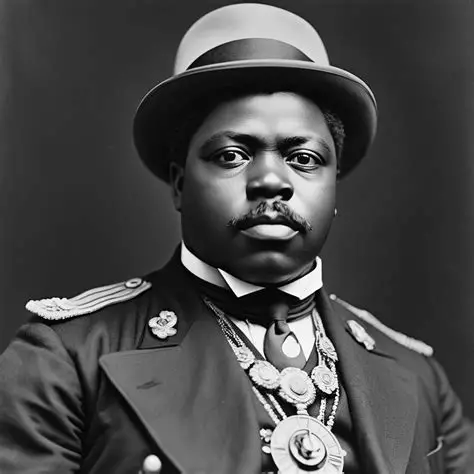
Marcus Garvey was a Jamaican political leader, publisher and Pan-African activist whose movement became one of the most influential expressions of Black nationalism in the early twentieth century. Born in 1887, Garvey promoted Black political consciousness, economic independence, African unity and self-determination.
He founded the Universal Negro Improvement Association and African Communities League, known as the UNIA, and built an international movement with supporters across the Caribbean, the United States, Africa and elsewhere. Through newspapers, speeches and businesses, Garvey encouraged Black people to develop their own institutions and take pride in African history and identity.
Early Life and Family Background
Marcus Mosiah Garvey was born on August 17, 1887, in St. Ann’s Bay, Jamaica, then a British colony. Garvey grew up in a working-class environment and experienced the racial and economic inequalities of colonial Jamaica. His father owned books and encouraged intellectual curiosity, helping develop Garvey’s early interest in reading and public affairs.
As a young man, Garvey worked in printing and became involved in trade union activities. He later travelled through Central America and spent time in Britain, where he encountered political discussions about Africa, colonialism and the condition of people of African descent. These experiences convinced him that racial inequality was international.
Education and Political Development
In 1914, he returned to Jamaica and founded the UNIA. The organization promoted racial pride, self-reliance, education and economic cooperation. Garvey soon recognized that his message could reach a much larger audience abroad.
In 1916, he moved to the United States and began organizing in Harlem, New York. Harlem was becoming an important center of Black intellectual and cultural life, giving Garvey an audience receptive to his message.
Rise of the UNIA
The UNIA expanded rapidly during the 1920s. Garvey’s message centered on Black pride, economic independence and political self-determination.
He argued that Black communities should build their own businesses, newspapers, schools and organizations rather than depend entirely on institutions controlled by others. He also promoted Africa as the political and cultural center of global Black identity.
Garvey’s greatest achievement was his ability to turn ideas about racial pride and African identity into a mass movement. His organization gave many Black people a language of dignity, self-reliance and collective power.
The Black Star Line
One of Garvey’s most ambitious projects was the Black Star Line, a shipping company established in 1919.
The company was intended to support trade between Black communities and Africa while providing an economic foundation for the wider movement. Garvey believed commercial independence was essential to political independence.
Marcus Garvey’s Political Ideas
Garvey’s philosophy centered on Black nationalism, racial pride, economic self-determination and African unity.
He believed people of African descent should develop the confidence and institutions necessary to govern themselves. He supported education and enterprise while criticizing systems that maintained political and economic dependence.
Garvey also promoted the idea of a strong, independent African nation that could serve as a center of global Black identity. His views became an important part of the wider Pan-African tradition.
His ideas were controversial. He disagreed with other Black political leaders, including W. E. B. Du Bois, over questions of strategy, integration, economic development and African nationalism.
Legal Troubles and Imprisonment
Garvey’s growing influence attracted political opposition and scrutiny. His financial activities, particularly those connected to the Black Star Line, came under investigation.
In 1923, he was convicted in the United States of mail fraud relating to the promotion of the company’s stock. He was sentenced to prison and deported to Jamaica in 1927.
Garvey maintained that his prosecution was politically motivated, while critics argued that the Black Star Line’s financial problems reflected serious management failures.
His imprisonment and deportation weakened the UNIA’s American organization, but they did not erase the ideas he had promoted.
Later Life and Death
After returning to Jamaica, Garvey remained politically active. He continued writing, speaking and organizing before later moving to London, where he continued publishing and advocating his political ideas.
He died in London on June 10, 1940, at the age of 52.
Garvey did not live to see the major wave of African independence movements that followed the Second World War. However, later African nationalist movements reflected themes associated with his work.
Major Achievements
Founding the UNIA
Garvey established the Universal Negro Improvement Association, one of the largest international Black organizations of its era.
Promoting Black Economic Independence
Through the Black Star Line and other enterprises, he promoted the belief that economic strength was essential to political freedom.
Advancing Pan-African Consciousness
Garvey placed Africa at the center of a global movement for Black dignity, unity and self-determination.
Building International Black Media
Through the Negro World and other publications, he created platforms for communicating political ideas across national borders.
Legacy and Historical Significance
Marcus Garvey’s legacy extends beyond the success or failure of the organizations he created. His most enduring contribution was transforming ideas about Black pride, African identity and self-determination into a mass political movement.
His influence reached later generations of African and Caribbean nationalists, civil rights activists and Pan-African thinkers. Although later leaders did not always agree with his methods, many engaged with questions Garvey had placed at the center of political debate.
His emphasis on African heritage also challenged colonial ideas that portrayed Africa and Black identity as inferior. He encouraged people of African descent to view their history as a source of strength.
Garvey’s legacy remains complex. His political positions were controversial, his disputes with other Black leaders revealed major disagreements within early twentieth-century Black political thought, and his business ventures experienced serious failures.
Nevertheless, Garvey remains historically important because he gave international Black nationalism a powerful organizational structure and a language of collective self-determination.
In Jamaica, Africa, the United States and the wider Caribbean, his name became associated with political consciousness, economic independence and African unity. His ideas helped prepare intellectual ground for later movements challenging colonial rule and racial domination.
Read More: David Dacko Biography: Early Life, First Presidency, Political Career, Death and Legacy
Frequently Asked Questions
Who was Marcus Garvey?
Marcus Garvey was a Jamaican political leader, publisher and Pan-African activist who promoted Black nationalism, economic independence and African unity.
When was Marcus Garvey born?
Marcus Garvey was born on August 17, 1887, in St. Ann’s Bay, Jamaica.
What was Marcus Garvey famous for?
He was famous for founding the UNIA, promoting Black nationalism and creating the Black Star Line.
What was the UNIA?
The Universal Negro Improvement Association was an international organization founded by Garvey to promote Black unity, self-reliance, education and economic development.
When did Marcus Garvey die?
Marcus Garvey died on June 10, 1940, in London, England.
Why is Marcus Garvey historically important?
Garvey helped popularize Black nationalism and Pan-African consciousness and influenced later movements for racial equality, African independence and self-determination.
Conclusion
Marcus Garvey was one of the most influential Black nationalist leaders of the twentieth century. Through the UNIA, newspapers, speeches and economic projects, he promoted racial pride, African unity and self-determination.
His career included remarkable achievements, controversies and failures, but his ideas survived him. Garvey’s documented legacy remains an important part of the history of Pan-Africanism, Black political thought and the global struggle for freedom.