|
Getting your Trinity Audio player ready... |
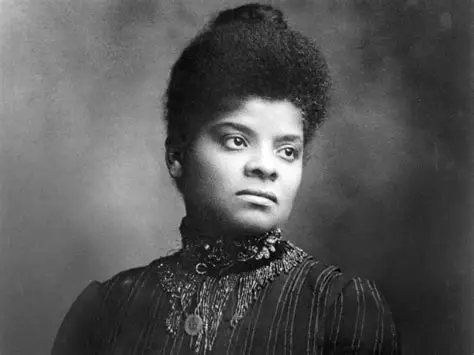
Ida B. Wells was an African American journalist, educator, civil rights activist and women’s suffrage campaigner who dedicated her life to exposing racial violence in the United States. Through investigative reporting, public speeches and political organizing, she challenged the widespread practice of lynching and confronted the racial discrimination that restricted Black Americans’ freedom. Her work helped establish investigative journalism as an important instrument in the struggle for civil rights.
Born into slavery in Mississippi in 1862, Wells became one of the most influential Black women reformers of the late nineteenth and early twentieth centuries. She risked her safety to document violence against African Americans, challenged discrimination within the women’s suffrage movement and helped establish organizations that advanced racial equality. Her legacy continues to influence journalism, civil rights advocacy and the history of women’s political participation.
Early Life and Education
Ida Bell Wells was born on July 16, 1862, in Holly Springs, Mississippi, during the American Civil War. Her parents, James and Elizabeth “Lizzie” Wells, were enslaved before emancipation brought freedom to their family. Her father became involved in Republican politics and supported educational opportunities for African Americans during the Reconstruction era.
Wells attended Rust College, an institution established to educate formerly enslaved people and their descendants. Her education was interrupted in 1878 when a yellow fever epidemic killed both her parents and one of her siblings. At just 16, she assumed responsibility for helping care for her surviving brothers and sisters.
To support the family, Wells obtained work as a teacher by presenting herself as older than she was. She later moved to Memphis, Tennessee, where she continued teaching and pursued further education at Fisk University in Nashville. These experiences gave her firsthand knowledge of the opportunities and barriers facing Black Americans after slavery.
The Train Incident That Shaped Her Activism
In 1884, Wells challenged racial segregation on a train traveling between Memphis and Nashville. Although she had purchased a first-class ticket, a train employee ordered her to leave the first-class section and move to a car designated for African American passengers. She refused, and railway staff forcibly removed her.
Wells sued the railroad company and initially won her case in a Tennessee court. However, the Tennessee Supreme Court overturned the decision in 1887. The reversal exposed the limits of legal protection against racial discrimination and strengthened her determination to challenge injustice through public argument and journalism.
She began writing newspaper articles about race, education and civil rights, initially using the pen name Iola. Her reporting became increasingly critical of segregated schools and discriminatory treatment of Black communities. In 1891, authorities dismissed her from her teaching position after she publicly criticized the poor conditions in Memphis’s segregated schools.
Wells increasingly turned to journalism as her primary means of confronting inequality. She became a co-owner and editor of the Memphis Free Speech and Headlight, using the newspaper to challenge racial prejudice and expose abuses of power.
Ida B. Wells and the Anti-Lynching Campaign
The lynching of three Black businessmen in Memphis in 1892 transformed Wells’s journalism into a determined national campaign against racial terror. Thomas Moss, Calvin McDowell and Will Stewart were associated with People’s Grocery, a Black-owned business that competed with a nearby white-owned store. After racial tensions escalated into violence, a white mob seized the three men from jail and murdered them.
Moss was Wells’s friend and godchild. Their deaths convinced her to investigate lynching more systematically and challenge the excuses used to justify it. She examined individual cases, gathered evidence and questioned claims that mob violence was simply punishment for criminal conduct. Her findings showed that lynching could also serve to intimidate Black communities and suppress their economic independence and political participation.
Her newspaper articles provoked hostility among white residents in Memphis. In 1892, a white mob destroyed the newspaper’s office and printing equipment while Wells was away. Threats against her life made returning to Memphis dangerous, forcing her to continue her work from outside the city.
Rather than abandon the campaign, Wells expanded it. She traveled, delivered speeches and published pamphlets that exposed the brutality of lynching to audiences in the United States and abroad. In Southern Horrors: Lynch Law in All Its Phases (1892), she challenged common justifications for mob killings. Her 1895 publication, A Red Record, presented detailed information and statistics on lynching, turning documented evidence into a powerful argument for reform.
Wells also traveled to Britain to speak against racial violence in the American South. Her international campaign helped bring greater attention to a problem that many influential Americans preferred to ignore. Although her activism did not secure a federal anti-lynching law during her lifetime, she helped shape public debate and laid important groundwork for later civil rights campaigns.
Women’s Suffrage and Civil Rights Organizing
Wells understood that racial equality required more than exposing violence. She also worked to expand Black Americans’ political influence and promote women’s participation in public life. In 1896, she helped establish the National Association of Colored Women, an organization that brought Black women’s clubs together to pursue social reform and civil rights.
In 1895, she married Ferdinand Lee Barnett, a Chicago lawyer, newspaper editor and civil rights advocate. The couple had four children, and Wells continued her activism while raising her family. She also worked through journalism and community organizations to address racial inequality in Chicago.
Wells participated in the early organizing that led to the creation of the National Association for the Advancement of Colored People (NAACP) in 1909. However, she later distanced herself from the organization because she disagreed with aspects of its approach and wanted more direct action against racial injustice.
Her commitment to women’s suffrage was equally significant. In 1913, she founded the Alpha Suffrage Club in Chicago to organize Black women politically and encourage their participation in elections. The club also helped advance the interests of African American communities in local government.
During the 1913 women’s suffrage parade in Washington, D.C., organizers expected Black women to march separately at the rear to avoid upsetting white participants. Wells refused to accept this exclusion. She waited until the Illinois delegation approached and then joined her fellow state representatives, challenging segregation within a movement that claimed to represent women’s equality.
Her actions highlighted an important contradiction: the struggle for women’s rights could reproduce racial discrimination unless Black women’s experiences received equal recognition.
Later Life, Death and Lasting Legacy
Wells continued campaigning for racial justice, political participation and social reform throughout her later years. She helped establish the Negro Fellowship League in Chicago, which supported Black men facing homelessness and unemployment. She also remained active in local politics and community organizing, believing that voting rights and civic participation were essential tools for protecting African American communities.
Ida B. Wells died in Chicago, Illinois, on March 25, 1931, at the age of 68. Her influence extended beyond her own lifetime through her investigative methods, published works and efforts to organize campaigns against racial violence.
In 2020, she received a posthumous Pulitzer Prize special citation recognizing her courageous reporting on violence against African Americans during the era of lynching. The recognition brought renewed attention to a journalist whose work had confronted powerful institutions and challenged deeply entrenched racial prejudice.
Wells’s lasting contribution lies in her insistence that public arguments about injustice must be tested against facts. She documented individual cases, examined broader patterns and used evidence to challenge misleading narratives. Her career also demonstrated that journalism could connect investigation with civic action, particularly when institutions failed to protect vulnerable communities.
Conclusion
Ida B. Wells transformed personal courage and investigative reporting into a sustained campaign for racial and gender equality. From challenging segregation on a train to documenting lynching and organizing Black women voters, she confronted injustice through evidence, public advocacy and political action. Her work remains a defining part of American civil rights history and an enduring example of journalism used in the pursuit of social change.
Frequently Asked Questions
Who was Ida B. Wells?
Ida B. Wells was an African American journalist, civil rights activist and women’s suffrage campaigner known for investigating lynching and exposing racial violence in the United States.
When was Ida B. Wells born?
She was born on July 16, 1862, in Holly Springs, Mississippi, while slavery was still legal in the United States.
What was Ida B. Wells famous for?
She was best known for her anti-lynching campaign, investigative journalism and efforts to secure civil rights and voting rights for African Americans and women.
What books did Ida B. Wells write?
Her notable works include Southern Horrors: Lynch Law in All Its Phases and A Red Record, which documented lynching and challenged the arguments used to justify it.
When did Ida B. Wells die?
She died on March 25, 1931, in Chicago, Illinois.
Did Ida B. Wells receive a Pulitzer Prize?
Yes. In 2020, she received a posthumous Pulitzer Prize special citation for her courageous reporting on violence against African Americans during the lynching era.