|
Getting your Trinity Audio player ready... |
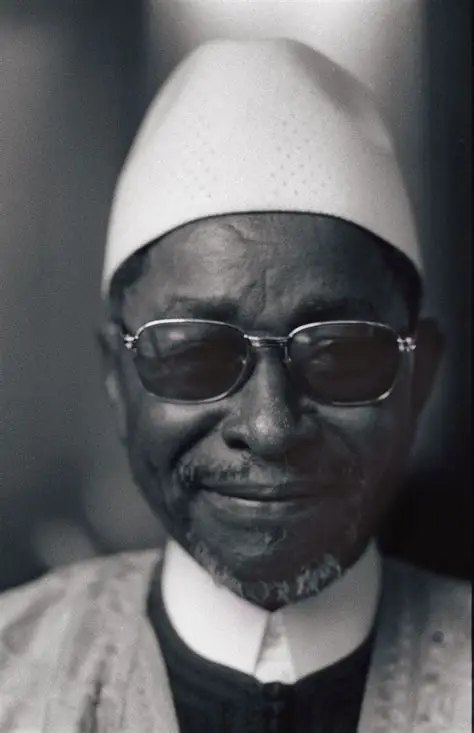
Amadou Hampâté Bâ was a renowned Malian writer, historian and ethnologist whose life’s work helped preserve the oral traditions, cultural memory and indigenous knowledge of West Africa. Through his books, research and international advocacy, he challenged the idea that history must depend primarily on written documents. He demonstrated that stories, proverbs, spiritual teachings and the memories of elders could provide essential evidence about African societies and their past.
Born around 1900 or 1901 in Bandiagara, in present-day Mali, Hampâté Bâ grew into one of the most influential intellectuals in the study of African oral heritage. His work connected traditional knowledge with modern scholarship, making him an important figure in African intellectual history. He died in 1991, but his writings and preserved archives continue to support research into the continent’s cultural and historical traditions.
Early Life and Education
Amadou Hampâté Bâ was born into a prominent Fulani, also known as Fula or Peul, family in Bandiagara, a historic town in the region of present-day Mali. He grew up during French colonial rule, when European administrative and educational systems increasingly shaped public life across West Africa. His childhood exposed him to both the cultural traditions of his community and the changing political environment surrounding it.
His early education combined Islamic learning with exposure to French-language schooling. He studied the Quran and received spiritual instruction from Tierno Bokar, a respected Sufi Muslim teacher whose teachings emphasized religious understanding and tolerance. This relationship became central to Hampâté Bâ’s intellectual development and later inspired one of his important books.
His experiences with different educational traditions helped him understand how knowledge could be transmitted through books, formal teaching, storytelling and personal relationships. Rather than treating these approaches as mutually exclusive, he developed an appreciation for the intellectual value of oral learning. That perspective would shape his career as a researcher and writer.
Career During French Colonial Rule
Hampâté Bâ began his professional life in the colonial administration, serving in clerical and interpretive roles in French West Africa. His work brought him into contact with administrative institutions and the people whose lives they governed. At the same time, he maintained close relationships with traditional teachers and community elders.
These connections strengthened his interest in collecting historical accounts, folktales, religious teachings and cultural practices. He recognized that much of the region’s knowledge existed in the memories of individuals rather than in formal written archives. If researchers failed to record that knowledge, important details about African history and society could disappear with the people who carried them.
In 1942, he joined the French Institute of Black Africa, known by its French acronym IFAN, in Dakar, Senegal. The institution provided a setting for his ethnological research and the systematic collection of oral traditions. He spent years studying the history, customs and intellectual traditions of West African communities, particularly the Fulani.
His research helped demonstrate that oral accounts could contribute meaningfully to historical investigation when researchers examined their context, compared narratives and understood the traditions through which communities preserved their memories.
His Work at UNESCO and the Preservation of African Heritage
Following Mali’s independence in 1960, Hampâté Bâ became involved in the country’s emerging cultural and intellectual institutions. He helped establish the Institute of Human Sciences in Bamako and represented Mali in international cultural discussions. His experience as a scholar and advocate made him an important voice in debates about the recognition and preservation of African heritage.
In 1962, he joined UNESCO’s Executive Board, serving until 1970. During this period, he advocated for the preservation of oral traditions and greater recognition of the knowledge held by African elders. He also contributed to efforts to develop a more unified system for transcribing African languages, supporting the documentation and study of linguistic traditions.
One of his most widely remembered statements expresses the urgency of this work: when an elder dies, a library can be lost. The familiar formulation, “In Africa, when an old man dies, a library burns,” captures his concern about the disappearance of cultural knowledge that has never been recorded.
The statement was not simply a celebration of old age. It was a warning about the vulnerability of entire bodies of knowledge, including histories, moral teachings, traditional medicine, religious practices and systems of social organization. Hampâté Bâ argued, through his work and public advocacy, that preserving such knowledge was essential to understanding Africa’s past and strengthening its cultural future.
Major Books and Literary Contributions
Hampâté Bâ’s writing brought oral traditions to readers beyond the communities in which they originated. His books combined historical investigation, storytelling, religious reflection and personal experience, showing the range of African intellectual traditions.
One important work was L’Empire peul du Macina, a historical study of the Fulani Empire of Macina that he developed with the French ethnologist Jacques Daget. The work demonstrated how oral accounts could help reconstruct political history and examine the development of West African societies.
His book Vie et enseignement de Tierno Bokar, le sage de Bandiagara explored the life and teachings of his spiritual mentor. Through this account, Hampâté Bâ presented Tierno Bokar’s religious thought and emphasis on tolerance, making the teacher’s ideas accessible to a wider audience.
He also wrote Kaïdara, a narrative rooted in Fulani oral tradition that uses a journey and encounters with symbolic figures to explore wisdom and moral understanding. Another major work, L’Étrange Destin de Wangrin, published in 1973, tells the story of an interpreter navigating the complexities of colonial administration. The book combines humour and social observation with an exploration of power, language and survival under colonial rule.
His autobiographical works, Amkoullel, l’enfant peul and Oui, mon commandant!, were published after his death. They recount his childhood and early career while providing a personal view of life in colonial West Africa. Together, his works preserve cultural narratives and offer insight into the social changes that shaped the region during the twentieth century.
Personal Beliefs and Intellectual Influence
Hampâté Bâ’s intellectual life was closely connected to his Muslim faith and the spiritual teachings he received from Tierno Bokar. His interest in religion extended beyond the study of doctrine. He sought to understand how spiritual traditions shaped moral behaviour, community relationships and people’s interpretations of the world.
His writings encouraged dialogue between cultures and religions. He treated African traditions as serious systems of knowledge rather than as folklore without historical or intellectual value. This approach helped challenge colonial assumptions that European written records represented the principal authority on African history.
His work also highlighted the importance of language. Stories often carry meanings that depend on cultural references, local expressions and the relationship between a storyteller and an audience. Recording these traditions therefore required more than collecting words. It required attention to the social and cultural settings in which people transmitted knowledge.
Hampâté Bâ’s methods remain relevant to historians, anthropologists, linguists and literary scholars who study societies with strong oral traditions. His work illustrates how careful research can bring oral testimony into conversation with written documents without treating either form of evidence as automatically complete.
Death and Lasting Legacy
Amadou Hampâté Bâ died in Abidjan, Côte d’Ivoire, on 15 May 1991. By the end of his life, he had produced a substantial body of historical research, literary writing and cultural documentation. His influence extended beyond Mali because the traditions he studied formed part of the wider history of West Africa.
His legacy continues through his books, manuscripts and personal archives. The Amadou Hampâté Bâ Foundation preserves materials that include unpublished manuscripts, research notes, correspondence and documents relating to oral traditions. Their conservation supports scholars seeking to understand African history and cultural life through the records of an intellectual who spent decades gathering them.
His contribution was especially important because it connected cultural preservation with historical responsibility. Oral traditions are not simply stories from the past. They can contain knowledge about political authority, family relationships, religious beliefs, community values and the experiences of ordinary people whose lives may not appear in official records.
Hampâté Bâ’s life showed that protecting such knowledge requires patience, respect for cultural context and serious scholarly work. He helped establish African oral heritage as an essential part of the historical record and encouraged later generations to preserve it for research and public understanding.
Conclusion
Amadou Hampâté Bâ remains a major figure in African intellectual history because he devoted his life to recording and interpreting knowledge passed from one generation to another. His research, literary works and service at UNESCO helped broaden international understanding of West African history and oral traditions. By preserving the voices of elders and presenting their knowledge to wider audiences, he left a legacy that continues to shape the study of African culture, history and identity.
Frequently Asked Questions
Who was Amadou Hampâté Bâ?
Amadou Hampâté Bâ was a Malian writer, historian and ethnologist known for documenting African oral traditions and promoting the preservation of cultural knowledge.
When was Amadou Hampâté Bâ born?
He was born in Bandiagara, in present-day Mali, around 1900 or 1901. Published accounts differ on the exact year.
What is Amadou Hampâté Bâ famous for?
He is best known for preserving West African oral traditions and advocating for the recognition of elders as carriers of historical and cultural knowledge. He is also remembered for his work at UNESCO and books such as L’Étrange Destin de Wangrin.
What was Amadou Hampâté Bâ’s contribution to African history?
He collected oral accounts, studied Fulani history and demonstrated how traditional narratives could contribute to historical research. His work helped establish oral heritage as an important part of Africa’s cultural record.
When did Amadou Hampâté Bâ die?
He died on 15 May 1991 in Abidjan, Côte d’Ivoire.