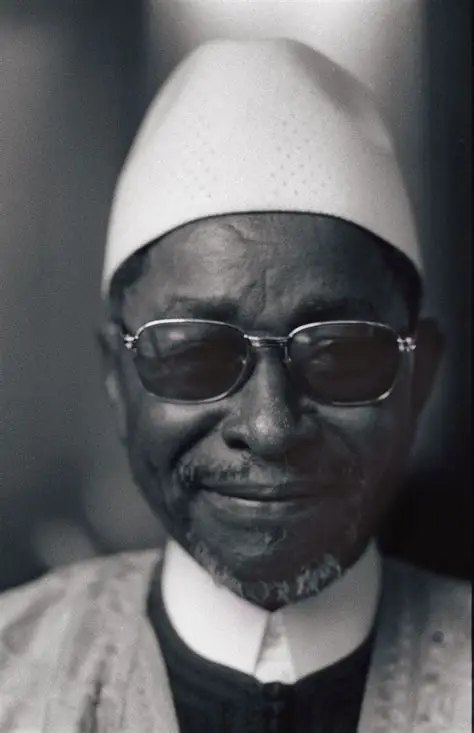
|
Getting your Trinity Audio player ready... |
Faith Bandler was an Australian civil rights activist, writer and campaigner whose work helped advance the rights of Aboriginal and Torres Strait Islander peoples. She played a leading role in the campaign for Australia’s 1967 referendum, which changed the Constitution to allow the Commonwealth Parliament to make laws specifically for Aboriginal people and enabled their inclusion in national population counts. Through years of public speaking, political lobbying and community organizing, she helped bring Indigenous rights to the centre of Australian public debate.
Bandler’s activism also reflected her South Sea Islander heritage. Her father came from what is now Vanuatu to work in Australia’s sugar industry, a history linked to the coercive labour recruitment system known as blackbirding. Through her work, Bandler connected the struggles for Indigenous rights, racial equality and recognition of Australia’s South Sea Islander communities. She died in 2015, leaving a lasting legacy in Australia’s civil rights history.
Early Life and Family Background
Faith Bandler was born Ida Lessing Faith Mussing on 27 September 1918 in Tumbulgum, New South Wales, Australia. She grew up in a large family with a South Sea Islander father and a mother of Scottish and Indian heritage. Her family background gave her a personal connection to the diverse communities whose histories were often overlooked in mainstream Australian society.
Her father, Wacvie Peter Mussing, came from Ambrym Island in what is now Vanuatu. As a child, he was taken to Queensland to work in the sugar-cane fields. His experience reflected the history of Pacific Islanders who were recruited, transported or coerced into labour in Australia under exploitative conditions. This history later became an important subject in Bandler’s writing and advocacy.
Bandler grew up in northern New South Wales and attended school in the Murwillumbah area. She later continued her education through night classes in Sydney. Her early experiences of racial prejudice, combined with her family’s history, helped shape her understanding of discrimination and the importance of equal treatment.
During the Second World War, she served in the Australian Women’s Land Army, working in agriculture while many men were away serving in the armed forces. The experience exposed her to inequalities affecting Aboriginal workers, including differences in pay and treatment. It also strengthened her interest in the broader struggle for social justice.
How Faith Bandler Entered Civil Rights Activism
After the war, Bandler became increasingly involved in campaigns for peace, equality and human rights. She believed that discrimination could not be overcome simply by changing individual attitudes. It also required changes to laws, public institutions and the way Australians understood the country’s history.
In 1952, she married Hans Bandler, an Austrian Jewish refugee who had escaped Nazi persecution. Their family life developed alongside her growing involvement in public affairs. Her understanding of racial discrimination was informed by both her father’s experiences and her awareness of the persecution that had driven her husband from Europe.
A major turning point came in 1956, when Bandler and Aboriginal activist Pearl Gibbs helped establish the Aboriginal-Australian Fellowship in New South Wales. The organization brought Aboriginal and non-Aboriginal supporters together to campaign for equal rights and challenge discriminatory policies. It also helped build public support for changes to laws governing Aboriginal people’s lives.
Bandler became known for her ability to address audiences from different backgrounds. She spoke at schools, churches, universities, trade union meetings and community gatherings. Rather than limiting her campaign to sympathetic groups, she sought to persuade people who had little knowledge of the inequalities faced by Indigenous Australians.
Faith Bandler and the 1967 Referendum
Faith Bandler is most widely remembered for her leadership in the campaign leading to Australia’s 1967 referendum. Before the vote, the Australian Constitution contained provisions that excluded Aboriginal people from certain constitutional arrangements. It also prevented the Commonwealth from making laws specifically for Aboriginal people in the way it could for other groups, leaving important responsibilities largely to the states.
Bandler helped establish the national campaign through the Federal Council for the Advancement of Aborigines and Torres Strait Islanders, commonly known as FCAATSI. Formed in 1957, the council brought together Indigenous activists, trade unions, churches and other supporters. Bandler became one of its leading organizers and served as its New South Wales coordinator during the referendum campaign.
The campaign required years of petitioning, public meetings, speeches and lobbying of politicians. Bandler travelled widely to explain the proposed constitutional changes and persuade voters to support them. She understood that a successful referendum required more than political agreement in Canberra. It needed overwhelming public backing across the country.
On 27 May 1967, Australians voted overwhelmingly in favour of the constitutional amendments. Approximately 90.77 per cent of valid votes supported the changes, and every state recorded a majority in favour. The result became one of the most significant milestones in Australia’s civil rights history.
The referendum’s meaning is sometimes misunderstood. It did not grant Aboriginal people citizenship for the first time, nor did it automatically deliver equality or land rights. Instead, it removed discriminatory constitutional wording relating to Aboriginal people and enabled the Commonwealth Parliament to make laws for them. It also allowed Aboriginal people to be included in national population counts under the relevant constitutional provision.
Bandler’s role was crucial in sustaining public attention and building support for reform. The referendum did not end Indigenous disadvantage, but it marked an important constitutional change and created greater scope for national action on Indigenous affairs.
Advocacy for South Sea Islander Recognition
After the referendum, Bandler focused more on the history and rights of Australia’s South Sea Islander communities. She highlighted how descendants of Pacific Islanders brought to Australia through exploitative labour systems continued to face limited recognition in public life.
In 1974, she helped establish the National Council of Islanders, which advocated for the interests and recognition of Australian South Sea Islanders. Her work sought to preserve their distinct cultural identity and draw attention to their historical experiences, including forced recruitment and labour exploitation in the sugar industry.
Bandler also used writing to document this history. Her book Wacvie, published in 1977, explored her father’s life and the experiences of Pacific Islanders in Australia. Through personal and historical storytelling, she helped bring a neglected part of Australian history to a wider audience.
Her later work demonstrated that civil rights advocacy extended beyond a single campaign or community. She continued to champion recognition, equal treatment and a meaningful place in Australia’s national story for people whose histories society had marginalized.
Awards, Death and Lasting Legacy
Faith Bandler received several honours for her work in human rights and social justice. She received the Medal of the Order of Australia in 1984 and the Australian Human Rights Medal in 1997. In 2009, the Australian government appointed her a Companion of the Order of Australia for promoting human rights, social justice and recognition of South Sea Islander heritage.
She had declined an appointment as a Member of the Order of the British Empire in 1976, reflecting her independent approach to public recognition and the causes she supported.
Bandler died on 13 February 2015. Her life remains closely associated with the 1967 referendum, but her legacy extends beyond that historic vote. She helped demonstrate how sustained organizing, public education and political persuasion could turn a long-standing civil rights demand into constitutional reform.
Her work also broadened public understanding of Australia’s South Sea Islander heritage. By documenting her father’s experiences and advocating for the recognition of his community, she challenged the silence surrounding an important part of the country’s labour and migration history.
Conclusion
Faith Bandler played a central role in Australia’s civil rights movement. Her determination helped secure the successful 1967 referendum campaign. She united Indigenous rights advocacy, public education and political organizing with efforts to recognize South Sea Islander history. The referendum did not end discrimination, but her work helped drive further debate and reform. Her legacy shows how persistent advocacy can change national institutions and deepen a country’s understanding of its past.
Frequently Asked Questions
Who was Faith Bandler?
Faith Bandler was an Australian civil rights activist and writer. She helped lead the campaign for the 1967 referendum on Aboriginal rights and championed recognition for South Sea Islanders.
What was Faith Bandler famous for?
Faith Bandler became a leading figure in the campaign for Australia’s successful 1967 referendum. The constitutional changes gave the Commonwealth Parliament power to make laws specifically for Aboriginal people and allowed their inclusion in national population counts.
What was Faith Bandler’s heritage?
She had South Sea Islander heritage through her father, who came from Ambrym Island in present-day Vanuatu, and Scottish-Indian heritage through her mother.
Did the 1967 referendum give Aboriginal Australians citizenship?
No. Aboriginal people were not granted citizenship for the first time by the referendum. The constitutional changes allowed the Commonwealth Parliament to make laws for Aboriginal people and removed the relevant constitutional exclusion from population counting.
When did Faith Bandler die?
Faith Bandler died on 13 February 2015 in Australia.