|
Getting your Trinity Audio player ready... |
Ashoka was one of the most important rulers in the history of ancient India. Known as Ashoka the Great, he ruled much of the Indian subcontinent during the third century BCE and transformed his approach to kingship after the devastating Kalinga War.
As emperor of the Mauryan Empire, Ashoka inherited one of the largest political territories in ancient South Asia. His early reign was marked by military expansion. However, the destruction caused by the conquest of Kalinga changed his outlook.
After the war, Ashoka increasingly promoted Buddhism, nonviolence, religious tolerance, welfare and ethical government. He communicated his policies through inscriptions carved on rocks and pillars across his empire.
These inscriptions, known as the Edicts of Ashoka, provide some of the most important surviving evidence about his rule. They also offer a rare view of an ancient ruler explaining his political and moral ideas directly to his subjects.
Ashoka’s reign remains significant because it brought together imperial power, public welfare and moral governance in a way that influenced Indian history long after the Mauryan Empire disappeared.
Early Life and Family Background
Ashoka was born into the Mauryan royal family during the third century BCE. His exact birth date is unknown, and ancient sources provide different accounts of his early life.
His father was Bindusara, the second ruler of the Mauryan Empire. Bindusara succeeded Chandragupta Maurya, who founded the empire in the late fourth century BCE.
Ashoka’s mother is identified in some Buddhist traditions as Dharma, although accounts differ on her name and status.
Ashoka grew up within the Mauryan court during a period when the empire was expanding across much of the Indian subcontinent. His grandfather Chandragupta had established the dynasty, while his father continued its expansion.
Ancient Buddhist texts later portrayed Ashoka’s early character in dramatic terms. Some describe him as a harsh prince before his transformation. Historians treat these accounts carefully because they were written centuries after his reign.
What is clearer is that Ashoka received the training expected of a Mauryan prince and eventually entered provincial administration.
Education and Formative Years
There is limited reliable information about Ashoka’s formal education.
As a member of the Mauryan royal family, he would have received training appropriate for a prince. This likely included administration, military affairs, diplomacy and the traditions of court governance.
Later Buddhist accounts describe Ashoka as an able administrator and military commander. They also connect him with important provincial positions before he became emperor.
According to traditional accounts, Ashoka served as governor of Ujjain and later became associated with Taxila.
Taxila was an important centre of trade, administration and learning in the northwestern part of the Mauryan Empire. Experience in such regions would have exposed Ashoka to different languages, cultures, religions and political communities.
These experiences probably helped prepare him for ruling a diverse empire.
Rise Within the Mauryan Empire
Ashoka’s path to the throne was not straightforward.
Bindusara had several sons, and ancient traditions describe a succession struggle after his death. Buddhist sources claim that Ashoka fought rivals before securing the throne.
Some accounts state that he became king around 268 BCE, although dates vary among sources.
The early stories about Ashoka’s accession contain legendary elements. Historians therefore distinguish between the broad historical picture and details that cannot be independently confirmed.
Once established as emperor, Ashoka inherited an empire that stretched across much of northern and central India and extended toward the northwest.
The Mauryan state had already developed a sophisticated administrative structure. Ashoka used this imperial framework to consolidate his authority and expand Mauryan influence.
Expansion of the Mauryan Empire
The Mauryan Empire was one of the largest states of the ancient world.
Its territories covered large parts of modern India and extended into present-day Pakistan, Afghanistan and Bangladesh. The empire contained many different peoples and religious traditions.
Ashoka initially continued the expansionist policies associated with earlier Mauryan rulers.
The most important military campaign of his reign was the conquest of Kalinga, a region on India’s eastern coast.
Kalinga had maintained its independence despite Mauryan expansion. Its strategic location and economic importance made it a significant target.
The resulting war became a decisive event in Ashoka’s life.
The Kalinga War
The Kalinga War probably took place around 261 BCE.
Ashoka’s own inscriptions provide the strongest evidence for what happened. In Major Rock Edict XIII, he recorded the enormous human cost of the conquest.
He stated that approximately 100,000 people were killed, many more died later, and about 150,000 were deported.
The exact numbers should be understood as figures reported in Ashoka’s inscription rather than modern casualty estimates.
More important was Ashoka’s reaction.
He expressed deep regret over the suffering caused by the conquest. He wrote that the death and deportation of people produced sorrow for him and that he regarded the suffering of conquered peoples as deeply troubling.
The Kalinga War therefore became a turning point in his reign.
Rather than abandoning government, Ashoka changed the principles he wanted his rule to represent.
Ashoka and Buddhism
After the Kalinga War, Ashoka became closely associated with Buddhism.
The exact timing and nature of his conversion remain subjects of historical discussion. Buddhist traditions portray him as becoming a committed Buddhist ruler and supporter of the Buddhist community.
Ashoka’s own inscriptions provide a more measured picture. They show that he increasingly embraced Buddhist teachings while also promoting a broader ethical programme.
He supported Buddhist institutions and is traditionally associated with the Third Buddhist Council held at Pataliputra.
Buddhist tradition also connects him with the spread of Buddhism beyond the Mauryan Empire.
According to Sri Lankan chronicles, Ashoka’s son Mahinda and daughter Sanghamitta were involved in the transmission of Buddhism to Sri Lanka. These traditions are important to Buddhist history, although some details cannot be independently verified.
Ashoka’s patronage helped Buddhism gain greater institutional strength.
Government and the Edicts
One of Ashoka’s greatest historical contributions was his use of inscriptions to communicate with his subjects.
His edicts were carved on rocks and pillars across the empire. They appeared in several languages and scripts, reflecting the cultural diversity of Mauryan territory.
The inscriptions discuss morality, government, religious tolerance, welfare and the responsibilities of rulers.
Ashoka appointed officials known as Dhamma Mahamatras to promote his ethical policies.
He also described measures intended to improve public welfare. These included medical treatment for humans and animals, the planting of medicinal plants, the digging of wells and the establishment of facilities along roads.
His inscriptions show that he wanted imperial authority to be associated with responsibility toward ordinary people.
The edicts are especially valuable because they provide direct evidence from Ashoka’s reign rather than relying entirely on later literary traditions.
Religious Tolerance and Dhamma
Ashoka’s concept of Dhamma was broader than simply promoting Buddhism.
His inscriptions emphasized respect for parents, generosity, compassion, moderation and good treatment of servants and dependants.
He also encouraged respect among different religious communities.
One of his inscriptions states that people should not honour their own religious tradition by condemning others without good reason. Instead, they should listen to and respect other traditions.
This emphasis on tolerance was significant in an empire containing numerous religious and cultural groups.
Ashoka did not attempt to erase religious differences. His policies sought to encourage ethical conduct and peaceful coexistence.
His approach demonstrates how he tried to combine personal religious commitment with the practical responsibilities of ruling a diverse empire.
Family and Personal Life
Ashoka’s family history is partly preserved through Buddhist and Sri Lankan traditions, but the sources do not always agree.
He is traditionally associated with several wives, including Devi, Asandhimitra, Padmavati and Tishyarakshita.
Devi is particularly important in Buddhist tradition. She is described as the mother of Ashoka’s children Mahinda and Sanghamitta.
Mahinda is traditionally credited with helping establish Buddhism in Sri Lanka, while Sanghamitta is associated with bringing a branch of the Bodhi tree to the island.
Ashoka’s family therefore became closely connected with Buddhist traditions about the religion’s expansion.
However, later literary accounts contain legendary material. Historical claims about individual family relationships should therefore be separated from traditions that emerged long after Ashoka’s lifetime.
Later Years and Death
The final years of Ashoka’s reign are less clearly documented than his major campaigns and policies.
Ancient Buddhist traditions describe a ruler who became increasingly devoted to religious and charitable activities.
The Mauryan Empire remained a major political power during his lifetime. However, maintaining such a large territory placed considerable demands on the imperial administration.
Ashoka probably died around 232 BCE.
The exact date and circumstances of his death are uncertain. Later traditions provide stories about his final years, but these accounts contain substantial legendary elements.
After his death, the Mauryan Empire gradually weakened.
Decline of the Mauryan Empire
The Mauryan Empire did not survive Ashoka’s reign for long in its earlier form.
His successors struggled to maintain control over the enormous territory inherited from earlier Mauryan rulers.
Within several decades, the empire had fragmented. The Mauryan dynasty eventually ended around 185 BCE when the last Mauryan ruler, Brihadratha, was overthrown by Pushyamitra Shunga.
The decline cannot be attributed simply to Ashoka’s rejection of military expansion. Historians have proposed several factors, including political fragmentation, succession problems and the difficulty of administering a vast empire.
The collapse of the Mauryan state did not erase Ashoka’s historical importance.
Legacy and Historical Significance
Ashoka’s most distinctive legacy is the combination of imperial rule with an explicit programme of moral governance.
His inscriptions remain central to the study of ancient South Asian history. They provide unusually direct evidence about the priorities of a ruler from the third century BCE.
His promotion of Dhamma also became an important part of India’s historical memory. Later generations remembered him not simply as a conqueror but as a ruler who responded to the consequences of war.
Buddhist traditions transformed Ashoka into one of the religion’s greatest royal patrons. Stories about his support helped preserve his name across India, Sri Lanka and other parts of Asia.
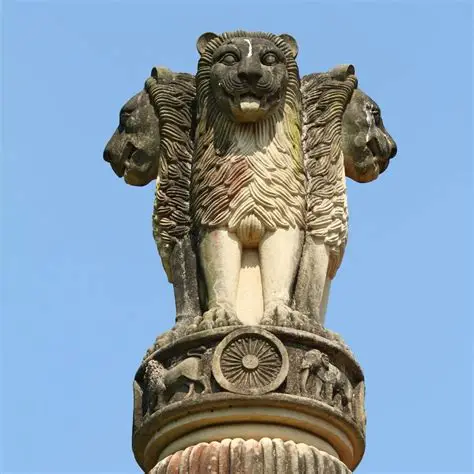
His symbols also returned to prominence in modern India. The Lion Capital of Ashoka at Sarnath became India’s state emblem after independence. The Ashoka Chakra, derived from the wheel depicted on the capital, appears at the centre of India’s national flag.
These symbols demonstrate how an ancient ruler became part of the political identity of the modern Indian state.
Ashoka’s historical record also offers a reminder that political figures can be remembered through different traditions. Archaeological evidence, inscriptions and Buddhist literature do not always tell the same story.
His importance therefore lies not only in the legends surrounding him but in the surviving evidence of a ruler who consciously presented ethical responsibility as part of imperial government.
Read More: Mahatma Gandhi Biography: Early Life, Education, Political Career, Family and Legacy
Frequently Asked Questions
Who was Ashoka?
Ashoka was a Mauryan emperor who ruled much of the Indian subcontinent during the third century BCE. He became famous for promoting Buddhism, Dhamma and nonviolent governance after the Kalinga War.
Conclusion
Ashoka began his reign as the ruler of a powerful expanding empire and became one of ancient India’s most influential advocates of ethical government. The Kalinga War changed the direction of his rule and led him to place greater emphasis on Dhamma, welfare and religious tolerance.
His rock and pillar inscriptions remain among the most important sources for understanding ancient South Asian political history. They reveal a ruler who wanted his subjects to see government as a moral responsibility as well as an exercise of power.
Ashoka’s empire eventually disappeared, but his name survived through inscriptions, Buddhist traditions and modern Indian national symbols. His transformation from imperial conqueror to advocate of moral governance remains one of the most notable stories in ancient world history.