|
Getting your Trinity Audio player ready... |
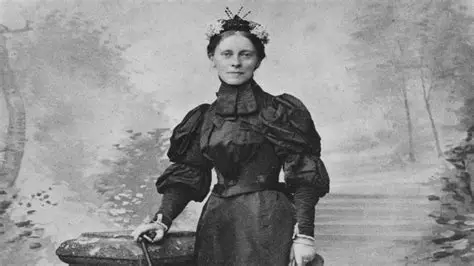
Mary Kingsley (1862–1900) was an English explorer, travel writer and ethnographic observer whose journeys through West Africa influenced European discussions about African societies, cultures and colonial administration. At a time when European accounts often presented African communities through stereotypes, she documented local customs, religious practices, political systems and everyday life from her experiences across the region.
Kingsley travelled through areas that now form parts of Nigeria, Cameroon, Gabon, Angola and other West African territories. Her books, particularly Travels in West Africa and West African Studies, established her reputation as an influential writer on the region. Although some of her views reflected the colonial attitudes of her period, she challenged missionary interference and argued that African communities should retain greater control over their traditional institutions.
Early Life and Family Background
Mary Henrietta Kingsley was born on October 13, 1862, in Islington, London, England. She was the daughter of George Henry Kingsley, a physician, writer and traveller, and Mary Bailey Kingsley. Her uncle was Charles Kingsley, the English novelist and clergyman.
Her father frequently travelled and maintained an extensive collection of books on geography, science and natural history. Mary developed an interest in these subjects through reading, although she received little formal schooling. Much of her education came from independent study and access to her father’s library.
In 1886, the family moved to Cambridge, where her younger brother attended university. The move brought Mary into contact with a wider intellectual environment and strengthened her interest in scientific and cultural subjects.
For several years, she devoted much of her time to caring for her parents. Her mother suffered from poor health, and her father was frequently away or occupied with his own interests. Both parents died in 1892, leaving Mary with greater freedom to pursue her interests and travel.
She first visited the Canary Islands before deciding to explore West Africa. Her father’s unfinished research on African customs and religious practices also influenced her decision to travel.
First Journey to West Africa
Kingsley began her first major African expedition in August 1893. She travelled from England to Sierra Leone before continuing along the West African coast towards Angola.
Unlike many European women of her time, she travelled without a husband or family member accompanying her. She relied on commercial ships, local guides, traders and African assistants to move through unfamiliar territories.
Her journey exposed her to communities and environments that European readers often knew only through missionary accounts and colonial reports. She observed local trading systems, religious practices, social relationships and political structures.
Kingsley also collected zoological specimens, including insects, fish and other animals. She supplied scientific institutions in Britain with material for research, contributing to contemporary studies of West African natural history.
She returned to England in December 1893. The experience strengthened her interest in the region and encouraged her to plan another expedition.
Second Expedition and Exploration of Central Africa
Kingsley returned to West Africa in December 1894. This journey took her through parts of present-day Nigeria, Cameroon, Gabon and Equatorial Guinea.
She spent time around Calabar in what is now southeastern Nigeria. She also travelled through the coastal regions of Cameroon and Gabon, exploring rivers, forests and settlements that few European women had visited.
One of her major interests was the religious and cultural life of African communities. She studied traditional beliefs, spiritual practices and the social institutions that governed local communities. She paid particular attention to the Fang people of Central Africa and documented aspects of their customs and religious traditions.
Her travels included journeys along the Ogooué River in Gabon. She navigated difficult waterways and forest environments, often relying on African knowledge and assistance. She also climbed Mount Cameroon, an active volcanic mountain that presented considerable physical challenges.
Kingsley’s journeys were not simply sightseeing expeditions. She combined travel with observation, collecting specimens and recording information about African societies. Her experiences provided the foundation for the books that later made her famous.
She returned to England in late 1895 and began sharing her experiences through public lectures and writing.
Literary Career and Major Books
Kingsley’s most influential book was Travels in West Africa, published in 1897. The work described her journeys, encounters with African communities and observations of the region’s geography, culture and natural environment.
The book attracted considerable attention because it offered readers an account of West Africa from a woman who had travelled extensively through the region. Her writing combined detailed observations with humour and personal reflections. She also challenged some popular European assumptions about African societies.
In 1899, she published West African Studies. This work examined African religious beliefs, customary laws, social organisation and political institutions. It reflected her interest in understanding African communities through their own systems rather than judging them entirely by European standards.
Her writing also addressed colonial administration. Kingsley criticised aspects of missionary activity and opposed the assumption that European religious and cultural practices should automatically replace African traditions. She argued that colonial authorities should understand local institutions and allow African communities greater control over their affairs.
However, her views were not equivalent to a modern anti-colonial position. She supported British commercial influence and defended some aspects of the liquor trade, positions that attracted criticism. Her writings therefore combined respect for African customs with assumptions and political opinions shaped by the imperial environment in which she lived.
Despite these contradictions, her books became important contributions to the European study of West Africa. They also influenced discussions about the relationship between African societies, missionary activity and colonial government.
Political Views and Public Influence
After returning to Britain, Kingsley became a sought-after lecturer on West African affairs. Her experience gave her a platform to discuss African cultures and the policies affecting communities under European rule.
She argued that colonial administrators should pay attention to African laws, customs and traditional authority. She believed that imposing European institutions without understanding local societies could create unnecessary conflict.
Her ideas influenced debates about indirect rule, a system through which colonial governments governed communities partly through existing traditional authorities. Kingsley believed British administration should rely more on local institutions and less on direct interference.
She also maintained relationships with commercial interests connected to West Africa. Her criticism of missionary activity and support for certain commercial practices made her a controversial figure. Some of her positions reflected the interests of British trade rather than the wider demands for African political independence.
Her legacy therefore requires a balanced assessment. She challenged European cultural arrogance in some areas, but she did not reject British imperial authority as a whole.
Final Journey to South Africa and Death
In 1900, during the Second Boer War, Kingsley travelled to South Africa to volunteer as a nurse. She worked at a hospital in Simon’s Town, where British authorities held and treated Boer prisoners of war.
Her decision to undertake nursing work reflected her willingness to serve in difficult conditions. However, the hospital experienced an outbreak of typhoid fever, and Kingsley contracted the disease.
She died on June 3, 1900, in Simon’s Town, aged 37. In accordance with her wishes, her body was buried at sea.
Her death ended a relatively short but influential career in exploration and writing. In 1903, the Liverpool School of Tropical Medicine established the Mary Kingsley Medal in her memory to recognise contributions to tropical medicine.
Legacy
Mary Kingsley remains an important figure in the history of European exploration and writing about West Africa. Her books provided detailed accounts of communities, environments and cultural practices that many European readers had little opportunity to encounter directly.
Her work also contributed to the development of ethnographic writing and natural history. The specimens she collected supported scientific research, while her observations helped expand European knowledge of West African societies.
Her legacy is complex. She challenged certain European stereotypes and defended aspects of African cultural independence, yet she also held views that supported British commercial and imperial interests. Modern assessments of her work must consider both her observations and the limitations of her colonial-era perspective.
Kingsley’s significance lies in the questions her writing raised about cultural understanding, traditional authority and the relationship between African societies and European power. Her journeys also demonstrated the possibilities of independent female exploration during the Victorian period.
Conclusion
Mary Kingsley was an English explorer and writer whose journeys through West Africa produced influential accounts of African societies, religious practices and natural environments. Through Travels in West Africa and West African Studies, she shaped European discussions about the region and its colonial administration. Although her views contained contradictions, her work remains an important historical record of West Africa during the late nineteenth century.
Frequently Asked Questions
Who was Mary Kingsley?
Mary Kingsley was an English explorer, travel writer and ethnographic observer known for her journeys through West Africa during the 1890s. She documented African cultures, religious practices, political systems and natural environments.
When did Mary Kingsley travel to Africa?
She first travelled to West Africa in August 1893 and returned for a second major expedition in December 1894. Her journeys continued until late 1895.
What books did Mary Kingsley write?
Her best-known books were Travels in West Africa, published in 1897, and West African Studies, published in 1899.
Did Mary Kingsley visit Nigeria?
Yes. During her West African travels, she visited areas around Calabar in what is now southeastern Nigeria, as well as other parts of the region.
How did Mary Kingsley die?
She contracted typhoid fever while working as a volunteer nurse at a hospital in Simon’s Town, South Africa, during the Second Boer War. She died on June 3, 1900, aged 37.