|
Getting your Trinity Audio player ready... |
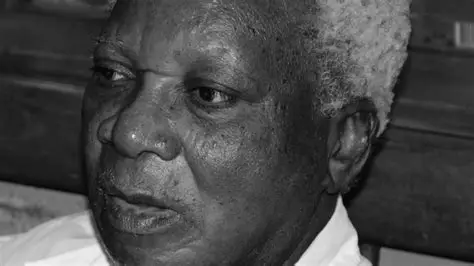
John Pepper Clark-Bekederemo, widely known as J. P. Clark, was one of the leading Nigerian poets, playwrights and literary scholars of the first generation of modern African writers. His poetry and drama drew heavily from the Niger Delta, Ijaw cultural traditions, Nigerian history and the political tensions of postcolonial society. He also helped create important spaces for younger African writers through his editorial and academic work.
Clark was born on April 6, 1935, in Kiagbodo in present-day Delta State and died on October 13, 2020, at the age of 85. Over a career spanning six decades, he produced poetry, plays, essays, travel writing and literary translations. His best-known works include Poems, A Reed in the Tide, Casualties, Song of a Goat, The Raft, Ozidi and The Ozidi Saga.
Early Life and Family Background
John Pepper Clark-Bekederemo was born into a family with strong roots in the Niger Delta. His father was Ijaw, while his mother came from an Urhobo background. He grew up in Kiagbodo, a riverine community whose landscape, traditions and oral culture later became important elements in his writing.
His early education took place in Native Administration schools, including a school in Okrika. He later attended Government College Ughelli, where his academic ability and love of literature became increasingly clear. His experience of growing up in the Niger Delta gave him a perspective that differed from the urban and colonial centres that dominated much Nigerian writing at the time.
Clark developed a deep interest in poetry while still a student. His reading included both European literary traditions and African cultural materials. That combination became one of the defining characteristics of his later work.
Education and University Years
Clark received a government scholarship to study at University College Ibadan, now the University of Ibadan. He studied English and graduated with a bachelor’s degree in 1960. The university was then becoming one of the most important intellectual centres in Africa.
His university years brought him into contact with writers who would later become major figures in African literature. Wole Soyinka, Christopher Okigbo and Chinua Achebe belonged to the wider literary generation that developed around Ibadan. Clark became especially prominent through student journalism and literary publishing.
He edited The Beacon, the university student magazine, and became the founding editor of The Horn, a poetry journal associated with University College Ibadan. The journal gave young writers a platform and helped establish Clark as an important literary organiser as well as a poet.
Journalism and Early Literary Career
After graduating in 1960, Clark entered journalism and public information work. He served as an information officer in the Ministry of Information in the former Western Region and later worked with the Daily Express newspaper group in Lagos as a features editor and editorial writer.
His journalism sharpened his interest in Nigerian political and social questions. At the same time, he continued developing his literary career.
His first major dramatic work, Song of a Goat, appeared in 1961. The play explores infertility, family expectations, sexuality and social pressure through a tragic structure influenced partly by classical Greek drama. Its appearance established Clark as an important Nigerian dramatist at a time when modern Nigerian theatre was still developing its distinctive voice.
His first poetry collection, Poems, also appeared in 1961. The collection introduced readers to a poet whose work combined personal observation, natural imagery, cultural memory and reflections on the changing Nigerian society.
Major Books and Literary Works
Clark produced a substantial body of poetry and drama. A Reed in the Tide, published in 1965, examined personal experience, African identity and encounters beyond Nigeria. His poetry often moved between intimate observation and wider questions about history and society.
One of his most important collections was Casualties: Poems 1966–68. The poems responded to the Nigerian Civil War and its human consequences. Rather than treating war simply as a political contest, Clark focused attention on suffering, loss and the ordinary people caught within violence.
His dramatic works included The Masquerade, The Raft, Ozidi and The Wives’ Revolt. The Raft uses the predicament of men stranded on a drifting raft to explore conflict, fear, authority and survival. The Wives’ Revolt, published in 1991, addresses community conflict surrounding oil wealth in the Niger Delta.
Clark’s relationship with Ijaw oral tradition became especially significant through The Ozidi Saga. While working at the Institute of African Studies at the University of Ibadan, he collected and documented performances of the Ijaw epic. He later transcribed and translated the material, helping bring the story to a wider literary and scholarly audience.
His other important works included America, Their America, State of the Union, A Decade of Tongues, Mandela and Other Poems, All for Oil and Full Tide. Across these works, Clark repeatedly returned to nature, political power, colonialism, violence, cultural identity and the tensions of modern Nigeria.
Academic Career and Literary Scholarship
Clark’s academic career developed alongside his writing. He became a research fellow at the Institute of African Studies at the University of Ibadan and later joined the University of Lagos. At Lagos, he taught English and African literature and eventually became Professor of English and head of the department. He retired voluntarily in 1980.
He also held visiting professorships at universities in the United States, including Wesleyan University and Yale University. These appointments expanded his international influence and placed Nigerian literature within wider academic discussions about African writing.
Clark was also involved in literary publishing and cultural institutions. He edited the influential literary journal Black Orpheus with Abiola Irele and helped establish the Nigeria Academy of Letters alongside writers and scholars including Chinua Achebe and Wole Soyinka.
In 1982, Clark and his wife, Professor Ebun Clark, established the PEC Repertory Theatre in Lagos. The project reflected his belief that literature should exist not only on the printed page but also through performance and public cultural life.
The Niger Delta, Politics and Social Themes
The Niger Delta remained central to Clark’s imagination. Its rivers, forests, communities and oral traditions appeared repeatedly in his poetry and drama. He treated the region not simply as a setting but as a cultural world with its own history and values.
His later works became increasingly attentive to political and environmental questions. The Wives’ Revolt, for example, examines how oil wealth can create conflict within a community. Other works explored corruption, colonialism, war and the difficulties of nation-building.
Clark’s literary response to politics was not always direct or conventional. He often used symbols, natural imagery, tragedy and oral forms to explore social problems. This approach allowed him to examine national issues through the experiences of individuals and communities.
Personal Life and Death
Clark married Professor Ebun Odutola, a scholar and theatre academic who became an important figure in Nigerian cultural and educational life. They had four children, three daughters and a son.
He remained connected to his home community in Kiagbodo throughout his life. His attachment to the Niger Delta was more than geographical. It formed an important part of his cultural identity and continued to influence his writing into old age.
Clark died on October 13, 2020, in Lagos at the age of 85. His family announced that he died surrounded by his wife, children and siblings. He had continued to write and participate in literary life for decades after his retirement from university teaching.
Awards and Recognition
Clark received major recognition for his contribution to Nigerian literature. In 1991, he received the Nigerian National Order of Merit for literary excellence. He also received honorary recognition from Nigerian universities and maintained a prominent place within the country’s literary establishment.
His reputation extended well beyond Nigeria. Universities and literary institutions continued to study his poetry, drama and scholarship because of their importance to African literature and cultural history.
Legacy and Historical Significance
John Pepper Clark belongs to the generation that established modern Nigerian literature in English as a major African literary tradition. Alongside writers such as Chinua Achebe, Wole Soyinka and Christopher Okigbo, he helped demonstrate that Nigerian writers could use English to express distinctly African experiences without abandoning indigenous cultural traditions.
His particular contribution came from his fusion of poetry, drama, oral literature and Niger Delta experience. The Ozidi Saga preserved an important Ijaw epic in written and translated form, while his original poetry and plays explored the tensions created by colonialism, war, oil wealth and political change.
Clark also left an institutional legacy. Through The Horn, Black Orpheus, university teaching, literary organisations and theatre, he helped create platforms through which African writers and scholars could develop their work.
His writing remains significant because it refuses to separate beauty from difficult history. Rivers, rain, landscapes and traditional culture appear alongside war, political conflict, exploitation and human suffering. That combination gives his work both literary richness and historical value.
Frequently Asked Questions
Who was John Pepper Clark?
John Pepper Clark-Bekederemo was a Nigerian poet, playwright, scholar and literary editor who became one of the major figures of modern African literature.
When was J. P. Clark born?
J. P. Clark was born on April 6, 1935, in Kiagbodo in present-day Delta State, Nigeria.
What is J. P. Clark best known for?
He is best known for works including Song of a Goat, The Raft, Poems, A Reed in the Tide, Casualties and The Ozidi Saga.
What did J. P. Clark study?
He studied English at University College Ibadan, now the University of Ibadan, and graduated in 1960.
When did J. P. Clark die?
J. P. Clark died on October 13, 2020, in Lagos at the age of 85.
What award did J. P. Clark receive?
He received the Nigerian National Order of Merit Award for literary excellence in 1991.
Conclusion
John Pepper Clark was a major figure in the development of modern Nigerian and African literature. His poetry, drama, scholarship and editorial work connected Nigerian cultural traditions with international literary forms while addressing the country’s difficult political history.
From the Niger Delta landscapes of his childhood to the classrooms of the University of Lagos, Clark built a career around language, culture and intellectual independence. His work remains an important record of Nigeria’s changing society and a lasting contribution to African literary history.
SEO Details
SEO Title: John Pepper Clark Biography: Life, Books and Legacy
Meta Description:
Focus Keyword: John Pepper Clark
Related Keywords: John Pepper Clark biography, J. P. Clark biography, John Pepper Clark books, J. P. Clark poems, J. P. Clark plays, The Ozidi Saga, Song of a Goat, Nigerian literature, Nigerian poets, African literature, John Pepper Clark education, J. P. Clark legacy
SEO-Friendly URL Slug: john-pepper-clark-biography
SEO Tags: