|
Getting your Trinity Audio player ready... |
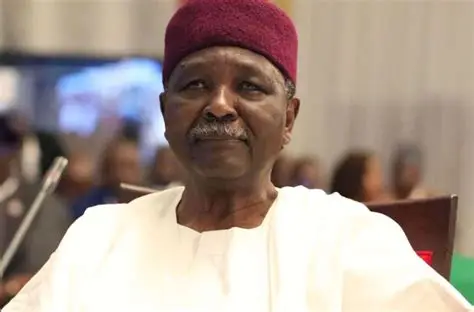
General Yakubu Gowon is a Nigerian military officer and former Head of State who led the country from August 1966 until July 1975. He assumed power during one of Nigeria’s most severe political crises and governed through the Nigerian Civil War, the post-war reconstruction period and the country’s early oil boom. His administration created 12 states, established the National Youth Service Corps and introduced the post-war programme of rehabilitation, reconstruction and reconciliation.
Gowon’s years in office remain closely connected with the history of Nigerian federalism, the Biafran conflict and the expansion of federal institutions. He was overthrown in a military coup in 1975 while attending an Organisation of African Unity summit abroad. He later lived in Britain, studied political science at the University of Warwick and returned to Nigeria for a long period of public and religious service.
Early Life and Family Background
Yakubu Dan-Yumma Gowon was born on October 19, 1934, in Lur, near Kanke in present-day Plateau State. Library of Congress records give Plateau State as his birthplace, while Nigerian biographical records identify Lur and the former Pankshin Division more specifically. He was the fifth of eleven children born to Nde Yohanna and Matwok Kurnyang Gowon.
His parents were Christians associated with the Church Missionary Society and later lived in Wusasa, near Zaria, where his father worked as a teacher and evangelist. Gowon consequently spent much of his childhood in Zaria and received his early education there. His sporting ability was also notable during his school years, particularly in football, boxing, pole vaulting and distance running.
Education and Military Training
Gowon attended St Bartholomew’s School in Wusasa before entering Government College, Zaria, now Barewa College. He completed his secondary education in 1953 and entered the Nigerian Army the following year. His military training began at the Officer Cadet Training School in Teshie, Ghana.
He subsequently trained in Britain, including at the Royal Military Academy Sandhurst. Further professional education took him to Staff College, Camberley, and the Joint Service Staff College at Latimer. He later studied at the University of Warwick, where he pursued political science and completed doctoral research.
Rise Through the Nigerian Army
Gowon entered the Nigerian Army in 1954 and received his commission as a second lieutenant in 1955. His early career included service in Nigeria and participation in the United Nations peacekeeping operation in the Congo between 1960 and 1961. He became a major in 1962 and continued rising through the army’s command structure.
In January 1966, the first military coup ended Nigeria’s First Republic. Major General Johnson Aguiyi-Ironsi became Head of State and appointed Gowon as Chief of Staff. When Ironsi was killed during the counter-coup of July 1966, Gowon emerged as the new head of the federal military government. He was only 31 at the time and formally became Head of State on August 1, 1966.
Becoming Head of State
Gowon inherited a country divided by military mutinies, ethnic violence and competing political demands. The crisis had deepened after massacres of Igbo civilians in parts of northern Nigeria and the displacement of large populations. His government sought to preserve the federation while negotiating with leaders of the Eastern Region.
In May 1967, Gowon announced the creation of 12 states from Nigeria’s existing four regions. The restructuring changed the federal balance and responded partly to long-standing demands from minority communities for separate states. It also reduced the territorial structure of the Eastern Region shortly before the outbreak of full-scale war.
Nigerian Civil War
The political crisis eventually became the Nigerian Civil War after Lieutenant Colonel Odumegwu Ojukwu declared the independence of the Republic of Biafra in May 1967. Gowon’s federal government rejected secession, and fighting began in July 1967.
The war lasted about 30 months and caused enormous loss of life, displacement and humanitarian suffering. The federal government’s blockade of Biafra contributed to severe shortages of food and medicine, while military operations devastated communities. Historical interpretations of Gowon’s wartime leadership remain contested, particularly concerning civilian suffering, military strategy and the humanitarian consequences of the conflict.
The war ended in January 1970 after Biafran forces surrendered. Gowon announced a policy summarized by the phrase “No Victor, No Vanquished.” His administration subsequently adopted rehabilitation, reconstruction and reconciliation as the framework for reintegrating former Biafran territories into Nigeria.
Post-War Reconstruction and National Development
The years after the war brought major changes to Nigeria’s economy and political structure. Rising petroleum revenues gave the federal government substantially greater financial resources, allowing investment in roads, industries and public infrastructure. Projects associated with the Gowon era included industrial plants, expanded road networks and major public facilities.
One of the most enduring institutions created during his administration was the National Youth Service Corps. Established under Decree No. 51 of May 1973, the scheme was designed to promote national integration by placing university graduates in states outside their areas of origin. Its founding documents explicitly connected the programme with overcoming the divisions intensified by the civil war.
Gowon’s government also contributed to the development of Nigeria’s federal structure and supported regional cooperation in West Africa. Nigeria played an important role in the establishment of the Economic Community of West African States in 1975, shortly before Gowon’s removal from office.
Overthrow and Later Life
On July 29, 1975, Gowon’s government was overthrown in a military coup led by senior officers including Murtala Mohammed. The State House records his period as Head of State as August 1, 1966 to July 29, 1975. Gowon was outside Nigeria at the time, attending an OAU summit, and subsequently went into exile in Britain.
During his years outside political office, Gowon continued his education and public activities. He developed a strong interest in Christian ministry and later became associated with the Nigeria Prays movement. His post-government life also included participation in discussions on Nigerian unity, national development and peace.
In 2026, Gowon’s autobiography, My Life of Duty and Allegiance, was formally presented in Abuja. The publication provides his personal account of his military career, government and experiences during Nigeria’s turbulent political history.
Personal Life and Family
Gowon married Victoria Hansatu Zakari in 1969. Biographical records identify their children as one son and two daughters. Victoria has remained publicly associated with him during his later years and public engagements.
Gowon has remained active in public discussions long after leaving office. His continued appearances at national events have kept him connected with debates about Nigeria’s history, unity and political development. As of 2026, he remains a living former Nigerian Head of State.
Legacy and Historical Significance
Yakubu Gowon’s historical significance is closely tied to the transformation of Nigeria during the late 1960s and early 1970s. His government presided over the civil war, the creation of a new federal structure and the beginning of a period of rapid economic expansion driven by petroleum revenues.
The National Youth Service Corps remains one of the clearest institutional legacies of his administration. The programme was created to encourage interaction among young Nigerians from different regions and ethnic communities after the civil war.
His record also contains difficult historical questions. The civil war produced extensive civilian suffering, and the military government operated without the institutions of electoral democracy. At the same time, the post-war reconciliation programme, state creation and national integration initiatives became important parts of the country’s subsequent development.
Gowon’s career therefore provides a window into Nigeria’s transition from the First Republic through military rule, civil war and the early petroleum era. His autobiography, released in 2026, adds another first-person account to the historical record while leaving scholars and readers to compare his interpretation with other evidence from the period.
Frequently Asked Questions
Who is Yakubu Gowon?
Yakubu Gowon is a Nigerian retired army general and former Head of State who governed Nigeria from 1966 to 1975.
When did Yakubu Gowon become Head of State?
He became Head of State on August 1, 1966, following the July 1966 counter-coup and the death of Major General Johnson Aguiyi-Ironsi.
What happened during Gowon’s government?
His government faced the Nigerian Civil War, created 12 states, introduced the National Youth Service Corps and oversaw post-war reconstruction and an expanding petroleum economy.
What did Gowon do after the Nigerian Civil War?
His government adopted a policy of rehabilitation, reconstruction and reconciliation after the war and continued rebuilding national institutions and infrastructure.
When was Yakubu Gowon overthrown?
He was overthrown on July 29, 1975, in a military coup led by senior officers including Murtala Mohammed.
Conclusion
Yakubu Gowon’s life is closely intertwined with some of the defining events of modern Nigerian history. His military career brought him to national leadership at a moment of political crisis, and his government then confronted the Biafran secession, rebuilt the country after the war and introduced institutions such as the NYSC. His later life has added another dimension to his historical record through scholarship, religious service, public engagement and his 2026 autobiography.