|
Getting your Trinity Audio player ready... |
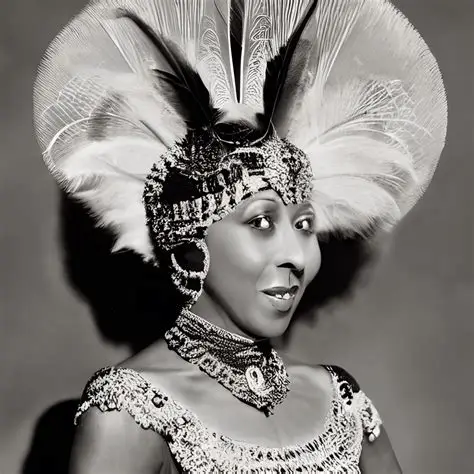
Josephine Baker was an American-born French dancer, singer, actress, civil rights activist and member of the French Resistance during the Second World War. Born into poverty in St. Louis, Missouri, she became one of the most famous performers in 1920s Paris and later used her international reputation in the fight against racism and fascism.
Baker found opportunities in France that were often denied to her in the segregated United States. Her performances made her a major figure of the Jazz Age, while her wartime activities gave her a very different historical role. She passed information to French intelligence during the Nazi occupation and later received French military honors for her service.
After the war, Baker became increasingly active in the American civil rights movement. She refused to accept racial segregation at many performances and spoke publicly against discrimination. In 1963, she joined the March on Washington for Jobs and Freedom.
Her life brought together entertainment, war service, racial justice and international activism. In 2021, France honored her by placing her in the Panthéon, making her the first Black woman to receive that distinction.
Early Life and Family Background
Josephine Baker was born Freda Josephine McDonald on June 3, 1906, in St. Louis, Missouri.
Her mother, Carrie McDonald, worked as a washerwoman and had performed as a dancer. Baker’s biological father has often been identified as Eddie Carson, a drummer, although details about her parentage remain less certain than some popular biographies suggest. She grew up in a poor Black neighborhood during an era of severe racial segregation.
Her childhood was marked by poverty and discrimination. The East St. Louis race riot of 1917 had a lasting effect on her. The violence exposed her at an early age to the racial tensions that shaped American life in the early 20th century.
Baker also worked from a young age. She took domestic jobs and performed in the streets when she could not find other work. Her ability to dance eventually gave her an escape from poverty.
At about 15, she joined a traveling African American theater group. She married during this period and began using the name Josephine Baker, which she kept throughout her career.
Education and Formative Years
Baker did not receive the type of formal education associated with many later public figures. Her early development took place largely through work, performance and life on the road.
The theater became her practical education. Performing before audiences taught her timing, movement and comedy. It also exposed her to the growing African American entertainment culture of the 1920s.
She later moved to New York, where she became involved in productions associated with the city’s Black theater scene. Her work connected her to the cultural environment now remembered as the Harlem Renaissance.
This period was important because Black artists were creating new forms of music, theater, literature and visual culture. Baker’s early stage experience prepared her for the international career that followed.
Early Performing Career
Baker performed in vaudeville and joined Black theatrical productions in New York.
She appeared in shows including Shuffle Along and The Chocolate Dandies. Her style combined dancing, comedy and exaggerated physical expression. Rather than relying only on conventional beauty, she used movement and humor to distinguish herself from other performers.
Her American career, however, developed within a society where Black performers faced severe restrictions. Baker later remembered the contrast between her treatment in America and the opportunities she found in France.
In 1925, she traveled to Paris with La Revue Nègre, a production created around African American music and dance. The troupe’s first Paris performance took place at the Théâtre des Champs-Élysées on October 2, 1925. Baker quickly became the production’s major attraction.
Rise to Fame in Paris
Paris transformed Baker’s career.
Her performance in La Revue Nègre introduced French audiences to her distinctive combination of dance, comedy and stage personality. Her famous Danse Sauvage became one of the most talked-about performances of the period.
She later appeared at the Folies-Bergère, where her famous banana-skirt costume became one of the defining images associated with her career. The performance helped create an exoticized image of Baker that made her internationally famous but also reflected European fascination with African and African American culture.
Her success went beyond dancing. She became a singer and actress and developed a strong presence in French popular culture.
One of her best-known songs was “J’ai deux amours,” which became closely associated with her public image and her attachment to France.
By the early 1930s, Baker was among Europe’s best-known Black performers. She appeared at major Paris venues and toured internationally.
Her popularity also came with contradictions. Some of the imagery used to market her relied on racist stereotypes about Black people and Africa. Baker benefited from this entertainment culture while also gaining unusual independence and influence within it. Her career therefore reflects both the possibilities and limitations faced by Black performers in interwar Europe.
Films and International Career
Baker expanded into cinema as her stage career grew.
She appeared in films including La Sirène des Tropiques, Zouzou and Princesse Tam Tam. Her film work helped establish her as more than a stage performer and made her recognizable to audiences beyond the theater.
She also became associated with Parisian fashion and popular culture. Her short hairstyle, clothing and stage persona influenced contemporary ideas about modern femininity.
Her fame was strongest in Europe. When she returned to the United States in the 1930s, she discovered that international fame did not protect her from American segregation.
That experience strengthened her opposition to racial discrimination.
Josephine Baker During World War II
Baker’s career took a dramatic turn when the Second World War began.
After Germany invaded France in 1940, she joined efforts supporting the French Resistance. Her celebrity provided unusual freedom of movement and gave her access to military and political circles.
She passed information to French intelligence and used her travels as cover for carrying confidential material. According to the Library of Congress, she wrote information about German military activity in invisible ink on sheet music and passed it to Allied authorities.
Her work was dangerous because she was operating under German occupation. Her fame could have protected her in some situations, but it also made her activities extremely risky if discovered.
Baker also supported the Free French cause through performances and other wartime activities. She worked with military and humanitarian organizations and entertained troops.
French military records recognize her wartime service. She received the Medal of the Resistance with rosette in 1946. In 1957, she was appointed a Chevalier of the Légion d’honneur and also received the Croix de Guerre with palm. The decorations were formally presented in 1961.
Her wartime career therefore became a major part of her historical identity. She was no longer known only as a performer. She had become a decorated participant in the struggle against Nazi Germany.
Civil Rights Activism
After the war, Baker became increasingly active in the fight against racial discrimination.
Her experience in France had shown her a society in which she could achieve a level of fame and public acceptance that was difficult to attain in segregated America. Returning to the United States made the contrast especially clear.
Baker refused to perform for segregated audiences. Her position sometimes forced venues to change their policies before she would appear.
In 1951, she was honored in Harlem with a Baker Day, reflecting her support for integrated performances and racial equality. She also became involved with civil rights organizations and campaigns.
Her most famous political appearance came in 1963, when she participated in the March on Washington for Jobs and Freedom. She was one of the few women invited to speak at the event and addressed the crowd from the Lincoln Memorial.
Baker’s civil rights work was not limited to speeches. Her refusal to accept segregated treatment in entertainment turned her professional success into a practical form of protest. She continued speaking against racism for the rest of her life.
Family and the Rainbow Tribe
Family became an important part of Baker’s later life.
She married several times. Her husbands included Willie Wells, William Baker, Jean Lion and orchestra leader Jo Bouillon. Her marriage to Jean Lion in 1937 also coincided with her becoming a French citizen.
Baker and Bouillon adopted children from different countries and cultural backgrounds. She called them her “Rainbow Tribe.”
The family eventually included 12 adopted children from different parts of the world. Baker presented the household as an example of racial and cultural coexistence.
Her family project was closely connected to her belief in racial equality. She hoped that children of different backgrounds could grow up together without the divisions imposed by racism and nationalism.
The idea was ambitious, but maintaining such a large family was financially difficult. Baker spent substantial sums supporting her household and developing her property at the Château des Milandes in southwestern France.
Later Years and Financial Difficulties
Baker continued performing after the Second World War, but her finances became increasingly unstable.
The Château des Milandes became both a family home and an ambitious tourist and entertainment project. She invested heavily in the property while continuing to tour and perform.
The expenses eventually became overwhelming. Baker lost control of the estate and was forced to leave in 1969. Her departure was a major personal and financial setback.
Princess Grace of Monaco, whom Baker knew from her years in entertainment, later helped her during difficult periods. Baker continued performing despite financial and health problems.
She never completely abandoned the stage.
In April 1975, Baker returned to Paris for a retrospective show celebrating her 50 years in entertainment. The opening performance at Bobino was a major success and attracted many prominent figures. It became her final stage appearance.
Death and Funeral
Josephine Baker suffered a cerebral hemorrhage shortly after her final performances. She died on April 12, 1975, in Paris, at the age of 68. Her funeral took place at the Église de la Madeleine in Paris on April 15. She received military honors, reflecting her wartime service to France. She was later buried in Monaco, where she had spent part of her later life. Her death came only days after the successful opening of the show that celebrated her extraordinary career.
Panthéon and Historical Legacy
Josephine Baker’s legacy extends across several fields. As an entertainer, she became one of the most recognizable performers of the 1920s. Her career helped bring African American dance and music into the center of European popular culture.
As a wartime figure, she demonstrated how celebrity could be used for purposes beyond entertainment. Her work for the French Resistance placed her in a dangerous political environment and earned official military recognition.
As a civil rights activist, she challenged segregation through both public speeches and professional decisions. Her appearance at the 1963 March on Washington remains one of the most important moments in her later career.
Her legacy also contains difficult questions. Some of her early performances relied on exotic stereotypes that reflected colonial attitudes of the period. Historians have therefore examined both her achievements and the cultural forces that shaped the image sold to European audiences.
France gave Baker one of its highest forms of national recognition in 2021, when she entered the Panthéon. She became the first Black woman honored there. The French government described her as an artist, Resistance figure and activist for civil rights.
The honor confirmed the breadth of her historical significance. Baker was not remembered simply because she became famous. Her importance came from the way she used fame, personal conviction and public visibility during periods of war and racial conflict.
Her life remains a powerful example of how an entertainer can become a political and historical figure.
Read More: Muhammadu Buhari Biography: Early Life, Military Career, Presidency, Family and Legacy
Conclusion
Josephine Baker’s life crossed the boundaries of entertainment, war and political activism. She rose from poverty in segregated St. Louis to become an international star in Paris, then used her position to support the French Resistance and challenge racial discrimination.
Her career also reveals the complicated cultural world in which she became famous. Some of the imagery surrounding her performances reflected racial stereotypes of the period, even as she gained unprecedented visibility and independence as a Black performer.
Her later activism gave her public life a broader purpose. Through her Resistance work, civil rights advocacy and family life, Baker became associated with ideals of freedom and equality.
Her entry into the Panthéon in 2021 ensured that her story would be remembered not only as that of a legendary performer, but also as part of the history of France, the United States and the global struggle against racism and oppression.