|
Getting your Trinity Audio player ready... |
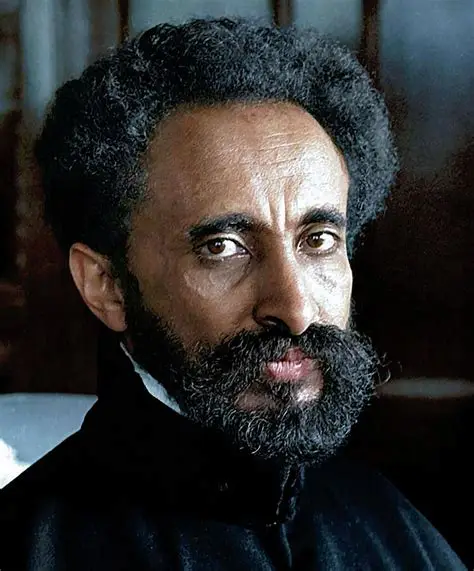
Haile Selassie I was the emperor of Ethiopia from 1930 until his overthrow in 1974 and one of the most internationally recognised African leaders of the twentieth century. Born Tafari Makonnen in 1892, he rose from provincial governor and imperial regent to become Emperor of Ethiopia, leading the country through modernisation, the Italian invasion, exile, restoration and the turbulent final years of his reign. He also became a major figure in African diplomacy and a founding force behind the Organization of African Unity. His influence extended far beyond Ethiopia, particularly through the Rastafari movement, which came to regard him as a sacred figure.
Haile Selassie’s life was also deeply controversial. His government was criticised for authoritarian rule, inequality and the suppression of dissent. He was overthrown during the Ethiopian Revolution of 1974 and died in detention the following year. The circumstances surrounding his death, the discovery of his remains in 1992 and his eventual reburial in 2000 have remained subjects of historical debate.
Early Life and Family Background
Haile Selassie was born Tafari Makonnen on July 23, 1892, in the Harar region of eastern Ethiopia. His father, Ras Makonnen Woldemikael, was a prominent Ethiopian nobleman and governor of Harar who had served Emperor Menelik II. His mother was Woizero Yeshimebet Ali.
Tafari lost his mother when he was very young and his father died in 1906. His connection to the imperial court strengthened after Menelik II took an interest in his education and future. His ancestry was later incorporated into the imperial tradition that presented Ethiopia’s ruling dynasty as descending from the biblical King Solomon and the Queen of Sheba.
Education and Rise to Power
Tafari received an education that combined traditional Ethiopian learning with exposure to modern administrative ideas. As a young nobleman, he held a series of provincial appointments and developed experience in administration.
In 1916, following the deposition of Lij Iyasu, Menelik II’s daughter Zewditu became empress. Tafari was appointed heir apparent and regent, placing him at the centre of imperial government while Zewditu remained the formal monarch. Over the following years, he gradually expanded his influence and became the dominant political figure within the imperial system.
His rise reflected a broader struggle within Ethiopia between conservative aristocratic forces and advocates of centralisation and modernisation. Tafari increasingly represented the latter camp.
Regent and Heir to the Throne
As regent, Tafari pursued reforms that aimed to strengthen the central state and increase Ethiopia’s engagement with the international community. Ethiopia joined the League of Nations in 1923, an important diplomatic achievement for an African state seeking to protect its independence in an era of European colonial expansion.
In 1928, Tafari received the title of Negus, or king, while Zewditu remained empress. When Zewditu died in April 1930, Tafari became emperor. He adopted the name Haile Selassie, meaning “Power of the Trinity,” and was crowned at St George’s Cathedral in Addis Ababa on November 2, 1930.
Coronation as Emperor
Haile Selassie’s coronation was one of the most spectacular royal ceremonies of its era. Foreign representatives attended, and international newspapers followed the event closely.
The ceremony projected an image of Ethiopia as an ancient and independent civilisation with a modern diplomatic identity. It also established Haile Selassie as a globally recognisable monarch at a time when most of Africa remained under European colonial rule.
His imperial title connected him to Ethiopia’s long royal tradition, while his reform programme sought to strengthen the country’s institutions and international position.
Modernisation and Imperial Rule
Haile Selassie attempted to transform Ethiopia’s political and administrative system. His government expanded modern education, created new institutions and strengthened central government authority. The 1931 constitution represented an important step toward formal constitutional government, although real political power remained heavily concentrated in the emperor.
A revised constitution followed in 1955. During his reign, Ethiopia also developed diplomatic, educational and military relationships with other countries.
These reforms made Haile Selassie an important modernising figure, but they did not eliminate the country’s deep social inequalities. His government remained highly centralised, and opposition was often restricted. Critics therefore viewed the emperor’s modernisation programme as incomplete because political participation and economic power remained concentrated among elites.
Italian Invasion and Exile
Haile Selassie’s greatest international crisis came in 1935 when Fascist Italy invaded Ethiopia under Benito Mussolini. Italian forces used overwhelming military power, including chemical weapons, and eventually occupied Addis Ababa in 1936.
Haile Selassie went into exile and travelled to Geneva, where he addressed the League of Nations in June 1936. His appeal became one of the most famous African anti-fascist speeches of the twentieth century. He warned that the failure to stop aggression against Ethiopia had implications far beyond his own country.
The Italian occupation lasted until 1941, when Ethiopian forces, supported by British troops and Ethiopian resistance fighters, helped restore Haile Selassie to the throne.
Return to Ethiopia
Haile Selassie returned to Ethiopia in 1941 and resumed imperial rule. The experience of occupation strengthened his international reputation as a symbol of African independence.
The post-war period also brought new opportunities for African diplomacy. Ethiopia became an important centre for international organisations and African political discussions, with Addis Ababa eventually emerging as one of the continent’s principal diplomatic capitals.
Haile Selassie also supported the development of education and higher learning. The establishment and growth of institutions such as Haile Selassie I University, now Addis Ababa University, reflected his interest in building a modern educated elite.
African Diplomacy and the OAU
One of Haile Selassie’s most enduring contributions was his role in African unity. In May 1963, leaders of 32 independent African states gathered in Addis Ababa to establish the Organization of African Unity. The African Union’s historical archives recognise Haile Selassie as one of the organisation’s founding figures and credit Ethiopia with playing a decisive role in bringing the historic meeting together.
The OAU sought to promote African unity, defend national sovereignty, oppose colonialism and support liberation movements. Haile Selassie’s diplomatic influence helped bridge differences among African leaders who disagreed about how continental unity should operate.
His role in African diplomacy therefore extended his significance beyond Ethiopia. Addis Ababa became the permanent headquarters of the OAU, a position it retains as the headquarters of the African Union.
Rastafari and Global Influence
Haile Selassie’s international image took another remarkable direction through the Rastafari movement in Jamaica.
Rastafari developed from earlier Ethiopianist and Pan-African ideas and was influenced by Marcus Garvey’s teachings about the significance of Africa. When Tafari Makonnen was crowned Haile Selassie I in 1930, some Jamaican believers interpreted the event as the fulfilment of a prophetic expectation concerning a black African king.
Haile Selassie himself did not publicly claim to be God or the Messiah. Nevertheless, Rastafarians came to regard him as a divine or messianic figure. His name, image and speeches became central to Rastafari identity, while reggae musicians such as Bob Marley helped spread that association internationally.
The 1974 Revolution
By the early 1970s, Haile Selassie’s government faced growing opposition. Economic hardship, famine, inequality, political repression and dissatisfaction within the military contributed to a national crisis.
In September 1974, a military committee known as the Derg removed Haile Selassie from power. He was detained in the imperial palace, and the monarchy was abolished. Ethiopia subsequently moved toward Marxist military rule under Mengistu Haile Mariam.
The overthrow ended a dynasty that had claimed an exceptionally long historical lineage and brought one of Africa’s most recognisable monarchies to an abrupt conclusion.
Death and Disputed Circumstances
Haile Selassie died on August 27, 1975, while being held by the military government. He was 83. His death was initially presented by the authorities as resulting from natural causes, but doubts about the circumstances quickly emerged. Later accounts alleged that he had been killed or deliberately neglected while in detention.
His remains were secretly buried on palace grounds. In 1992, after the fall of the Derg, workers discovered remains believed to be those of the former emperor beneath the palace complex. The discovery renewed questions about how he died and who was responsible.
His remains were eventually reburied at Holy Trinity Cathedral in Addis Ababa on November 5, 2000. The ceremony was attended by members of the imperial family, Ethiopian Orthodox clergy and supporters of the former emperor. The Ethiopian government did not treat the occasion as a state funeral, reflecting the continuing controversy surrounding his rule.
Family and Personal Life
Haile Selassie married Menen Asfaw in 1911. She became Empress of Ethiopia following his accession to the throne. The couple had several children, including Crown Prince Asfaw Wossen, who later became known as Amha Selassie after the monarchy was abolished.
Empress Menen played an important ceremonial and charitable role during the imperial period. She was also associated with initiatives involving women’s education, health and welfare.
The imperial family experienced repeated upheaval. Several members were forced into exile during the Italian occupation, while others were detained or killed following the 1974 revolution.
Legacy and Historical Significance
Haile Selassie’s legacy remains one of the most complex in modern African history.
To many Africans and members of the African diaspora, he represented Ethiopian independence and African dignity. Ethiopia’s resistance to Italian colonial aggression made him an international symbol of anti-colonial resistance, while his role in founding the OAU gave him a lasting place in the history of Pan-African diplomacy.
His supporters also remember his efforts to modernise Ethiopia through education, administration, diplomacy and constitutional reform.
Yet his record cannot be separated from the authoritarian nature of imperial rule. Political power remained concentrated around the monarchy, social inequalities persisted and dissent was restricted. The famine and economic difficulties of the early 1970s further damaged his government and contributed to the revolution that removed him.
His influence through Rastafari created an entirely different legacy. Decades after his death, his name remains central to a global religious and cultural movement that views him through a sacred rather than purely political lens.
Haile Selassie’s historical importance ultimately comes from this extraordinary combination of roles. He was an emperor, reformer, diplomat, symbol of resistance, controversial ruler and religious icon. Few African leaders of the twentieth century had an influence that extended so strongly across both African political history and the wider African diaspora.
Read More: Kofi Abrefa Busia Biography: Early Life, Education, Political Career, Family and Legacy
Conclusion
Haile Selassie I was one of the defining African figures of the twentieth century. His journey from Tafari Makonnen to emperor placed him at the centre of Ethiopia’s transformation, the struggle against Italian aggression and the emergence of Pan-African diplomacy. His overthrow and disputed death ended his political career but not his influence. Through Ethiopian history, African unity and the global Rastafari movement, Haile Selassie’s name continues to carry meanings that extend far beyond the imperial throne he once occupied.