|
Getting your Trinity Audio player ready... |
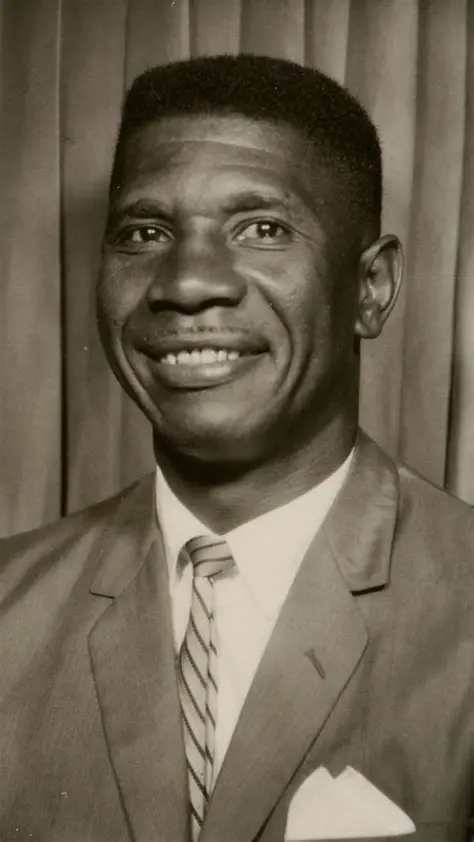
Medgar Evers was an American civil rights activist who fought racial segregation and voter discrimination in Mississippi during one of the most dangerous periods in the struggle for racial equality in the United States. As the state field secretary for the National Association for the Advancement of Colored People (NAACP), he organized voter registration campaigns, investigated racial violence, and challenged the exclusion of Black Americans from public institutions.
Born on July 2, 1925, in Decatur, Mississippi, Evers became a leading figure in the American civil rights movement through his work against segregation and racial injustice. His assassination outside his home in Jackson on June 12, 1963, shocked the nation and intensified demands for civil rights reform. Although he died at 37, his organizing, courage, and commitment to equality helped shape the movement that transformed American law and society.
Early Life of Medgar Evers
Medgar Wiley Evers was born to James Evers and Jesse Wright Evers in Decatur, a small community in Newton County, Mississippi. He grew up in a society where segregation governed education, transportation, public facilities, and many other aspects of daily life. White supremacist violence also threatened Black families who challenged the racial order.
Evers experienced these injustices from an early age. When he was about 14, he learned that a family friend, a Black man named Lloyd, had been murdered by a white mob. The killing and the failure to secure justice left a lasting impression on him.
He attended segregated schools and graduated from high school in 1943. Later that year, he entered military service during the Second World War. He served in the United States Army in Europe, including in the Normandy campaign, and left the service in 1945.
His military experience exposed him to a world beyond Mississippi, but returning home brought him back to a society that denied Black citizens many of the freedoms for which American soldiers had fought overseas.
Education and Early Activism
After returning from military service, Evers became more determined to challenge racial discrimination. One incident proved particularly important: he and several Black friends attempted to vote but faced intimidation from armed white men who prevented them from reaching the polling place. The experience strengthened his commitment to political participation and equal citizenship.
Evers enrolled at Alcorn Agricultural and Mechanical College, now Alcorn State University, where he studied business administration. He also participated in student activities, played football, and developed his leadership skills. He graduated in 1952.
While studying at Alcorn, he met Myrlie Beasley, whom he married on December 24, 1951. Their partnership became central to his personal life and civil rights work. Myrlie supported his organizing efforts and later became a prominent civil rights leader in her own right.
After graduation, the couple moved to Mound Bayou, Mississippi, where Evers worked as an insurance salesman for Magnolia Mutual Life Insurance Company. He also began organizing local NAACP chapters and advocating for Black residents facing discrimination.
He became involved with the Regional Council of Negro Leadership, a civil rights organization led by T. R. M. Howard. Evers supported economic boycotts against businesses that denied Black customers basic services. One campaign urged Black motorists to avoid gas stations that refused to let them use their restrooms. These efforts demonstrated how economic pressure could challenge segregation in everyday life.
Joining the NAACP in Mississippi
In 1954, Evers applied to the law school at the University of Mississippi, which had excluded Black students for generations. The university rejected his application because of racial discrimination. His attempt to gain admission attracted the attention of NAACP leaders, who recognized his determination and organizing ability.
That December, the NAACP appointed him its first field secretary in Mississippi. He moved to Jackson in January 1955 and began building the organization’s presence across the state.
Evers traveled extensively to recruit members, establish local branches, organize voter registration campaigns, and investigate racial violence. He documented cases of discrimination and helped families seek justice when authorities failed to investigate attacks against Black residents adequately.
His work carried serious risks. Mississippi’s segregationist political establishment and white supremacist groups regarded civil rights organizing as a threat. Evers received death threats and faced repeated attempts to intimidate him, yet he continued his work.
Investigating the Emmett Till Murder
One of Evers’s most consequential assignments involved the 1955 murder of Emmett Till. Till, a 14-year-old Black boy from Chicago, was abducted and murdered in Mississippi after being accused of offending a white woman.
Evers helped investigate the killing, gather information, and support efforts to bring national attention to the case. The murder and the acquittal of the two white men tried for it exposed the brutality of racial violence and the failure of Mississippi’s justice system to protect Black citizens.
His work involved considerable danger because investigating racial murders could provoke violent retaliation. Nevertheless, he continued documenting abuses and helping the NAACP bring cases of injustice to public attention.
Evers also investigated other cases involving racial violence and wrongful prosecution. His work helped connect local struggles in Mississippi with the wider national civil rights movement.
Medgar Evers and the Desegregation of Schools
Evers worked to dismantle segregation in education and public life. He encouraged Black families to challenge segregated school systems and helped organize campaigns against discrimination in public facilities, parks, and businesses.
In 1962, he played an important supporting role in the campaign to enroll James Meredith at the University of Mississippi. Meredith’s admission provoked violent resistance, and President John F. Kennedy’s administration deployed federal personnel to enforce the law and protect the integration process.
Evers’s work helped prepare the ground for this breakthrough. His organizing, public advocacy, and efforts to mobilize support were part of the wider campaign to end racial exclusion at the state’s flagship university.
His activities also expanded the NAACP’s influence throughout Mississippi. He encouraged young people to participate in civil rights campaigns and helped communities organize against discriminatory laws and practices.
Family Life and Growing Threats
Medgar and Myrlie Evers raised three children: Darrell, Reena, and James. Their family life unfolded under the constant pressure of threats against Medgar and his work.
The family’s home in Jackson became a target. In May 1963, someone threw a firebomb at the house, and Myrlie helped extinguish the flames. The attack demonstrated how the struggle for racial equality endangered not only activists but also their families.
Despite the threats, Evers continued organizing protests, boycotts, and campaigns for equal rights. He also communicated with national leaders and journalists, helping draw attention to Mississippi’s racial violence.
His work increasingly made him a recognizable symbol of resistance to segregation. That visibility brought national attention, but it also made him a target for white supremacists.
Assassination of Medgar Evers
On June 12, 1963, Evers returned to his Jackson home after attending an NAACP meeting. As he walked toward the house, a gunman shot him in the back. His family heard the gunfire, and he was taken to a hospital, where he died shortly afterward. He was 37 years old.
The assassin was Byron De La Beckwith, a white supremacist associated with the Ku Klux Klan. Authorities arrested Beckwith, but two trials in 1964 ended with hung juries. All-white juries failed to reach a verdict, leaving Evers’s family without a conviction for decades.
In 1994, prosecutors brought Beckwith to trial again. This time, a jury found him guilty of Evers’s murder, and the court sentenced him to life imprisonment. The conviction came more than 30 years after the assassination.
Evers received burial with full military honors at Arlington National Cemetery. His assassination shocked the country and intensified public debate about racial violence and the urgent need for federal civil rights legislation.
Legacy of Medgar Evers
Medgar Evers became one of the defining figures of the American civil rights movement because he challenged segregation through sustained organizing in a state where such work could cost a person their life.
His assassination strengthened demands for federal action against racial discrimination. President Kennedy addressed the nation on civil rights the night before Evers’s death, and the violence surrounding the movement helped build support for legislation that Congress later passed as the Civil Rights Act of 1964.
Evers’s influence also continued through his family. Myrlie Evers-Williams became a respected civil rights activist and later chaired the NAACP’s national board. His brother Charles Evers took over his role as the NAACP’s Mississippi field secretary after his death.
His name now appears on schools, institutions, public memorials, and a United States Navy ship. His home in Jackson has also received national recognition as an important historic site, preserving the place where he lived and where his assassination occurred.
Evers’s legacy is not limited to his death. His daily work recruiting members, assisting families, documenting violence, organizing boycotts, and demanding voting rights helped build the foundations of the civil rights movement in Mississippi.
Why Medgar Evers Remains Historically Important
Evers’s life illustrates the role of local organizers in movements often associated with nationally recognized leaders. While figures such as Martin Luther King Jr. attracted widespread attention through speeches and major demonstrations, Evers built networks and sustained campaigns in communities where resistance to segregation was especially dangerous.
His work also connected voting rights, education, economic justice, and protection from racial violence. He understood that legal equality required organized citizens who could challenge discriminatory practices and press public institutions to enforce the law.
The long delay before his killer’s conviction also reveals the barriers Black families faced when seeking justice for racially motivated murders. The 1994 verdict represented an important legal outcome, although it could not undo the loss suffered by his family.
Conclusion
Medgar Evers devoted his life to ending racial segregation and expanding civil rights in Mississippi. From his military service and education at Alcorn to his leadership in the NAACP, he worked to secure voting rights, challenge discrimination, and expose racial violence.
His assassination in 1963 revealed the dangers faced by those who challenged white supremacy. Yet his organizing helped strengthen the movement for federal civil rights protections and inspired later generations of activists.
Evers remains an important historical figure because he showed how persistent local leadership could challenge deeply entrenched injustice. His legacy endures in the laws, institutions, historical records, and continuing pursuit of equality shaped by the movement to which he dedicated his life.