|
Getting your Trinity Audio player ready... |
Who Is Queen Amina of Zaria?
Introduction
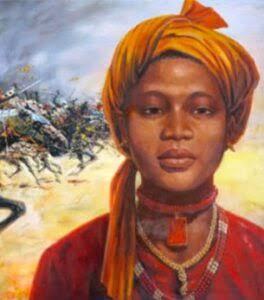
Queen Amina of Zaria, also known as Amina of Zazzau or Aminatu, was a celebrated ruler of the Hausa city-state of Zazzau in what is now northern Nigeria. Remembered for her leadership, territorial expansion, and association with the famous walls attributed to her across Hausaland, she occupies an important place in the history of precolonial West Africa.
Amina is traditionally associated with the 16th century, when Zazzau was an influential Hausa state whose prosperity depended partly on agriculture, trade, and its position along commercial routes connecting the northern savanna with regions farther south. Her reign is remembered for strengthening the kingdom’s political influence and extending its reach into neighboring territories.
Unlike many historical accounts that focus primarily on male monarchs, Amina’s story highlights the role a woman could play in royal succession, military leadership, and state-building in precolonial Africa. Oral traditions portray her as a determined leader who commanded respect and pursued the interests of her kingdom.
However, historians distinguish between the broad traditions surrounding her achievements and details that remain uncertain. The exact dates of her life and reign are disputed, and some stories about her campaigns and personal relationships cannot be independently verified. Despite these limitations, Queen Amina remains one of the best-known female rulers in Nigerian history and an enduring figure in the historical memory of the Hausa people.
Queen Amina’s Age, Birth and Royal Background
Queen Amina is commonly believed to have been born around 1533 in Zazzau, a Hausa city-state centered on present-day Zaria in Kaduna State, Nigeria. Her precise birth date has not been established, and historians acknowledge that the chronology of her life remains uncertain.
She is traditionally identified as the daughter of Bakwa Turunku, a ruler associated with Zazzau’s early modern history, and Nikatau is also named as her father in some accounts. Historical traditions differ on aspects of her family background, reflecting the challenges of reconstructing her life from oral histories and later chronicles.
Amina grew up in a royal environment where political authority, trade, and relations with neighboring states were central to the kingdom’s survival. Zazzau occupied an important position in the Hausa region, connecting commercial routes between the northern savanna and areas farther south.
These connections gave the kingdom economic importance and exposed its rulers to competition over trade, tribute, and territory. Amina’s later reputation as a military leader developed within this political setting.
Queen Amina’s Parents and Family
Bakwa Turunku
Bakwa Turunku is remembered in Zazzau traditions as a ruler and as Amina’s mother. Accounts associate her period of leadership with the development and expansion of the kingdom.
Her place in Amina’s story is significant because it situates the queen within an established royal tradition rather than presenting her rise as an isolated event. The royal family’s influence and political relationships helped shape the circumstances in which Amina developed her leadership.
Nikatau
Nikatau is identified in several historical accounts as Amina’s father. His name also appears in traditional praise associated with the queen, including references to her royal descent.
The surviving historical record does not provide enough reliable detail to reconstruct every aspect of his life or his relationship with Amina. It is therefore best to distinguish the names preserved in tradition from details that remain uncertain.
Amina’s Siblings
Amina is commonly described as having a brother named Karama and a sister named Zaria. Tradition holds that Karama became ruler after the death of their parent and that Amina later succeeded him.
Her sister’s place in the royal family’s history is less clearly documented. The available accounts do not establish a complete record of the siblings’ private lives or relationships.
Queen Amina’s Education and Preparation for Leadership
There is no reliable evidence that Queen Amina attended a formal school in the modern sense. Accounts of her upbringing instead place her within the royal court, where she would have encountered the political responsibilities and traditions of the ruling family.
Oral traditions describe Amina as receiving instruction in leadership and becoming familiar with military affairs from a young age. Some accounts also state that she was appointed Magajiya, a title associated with a female heir or an important royal position in Hausa political tradition.
These stories portray her as a woman who developed an understanding of court affairs and the challenges facing her kingdom. However, the specific details of her training cannot all be independently verified.
What stands out in the historical tradition is that Amina was remembered not simply as a royal daughter, but as a figure who gained authority through her association with the kingdom’s military and political life.
Queen Amina’s Rise to Power
Queen Amina’s rise is traditionally placed in the second half of the 16th century. Historical accounts commonly state that she became ruler of Zazzau around 1576, following the death of her brother Karama.
Before her accession, she is remembered as an important military figure during her brother’s reign. Her experience in this role helped establish the reputation that later became central to her story.
When she assumed the throne, Zazzau was already an influential Hausa state. Its rulers sought to protect trade, maintain political alliances, and increase their influence over neighboring territories.
Amina’s reign is associated with an ambitious period of expansion. Traditions describe campaigns against neighboring states and the extension of Zazzau’s authority across parts of the Hausa region and beyond.
The details of individual campaigns and the extent of the territory under her direct control remain subjects of historical debate. Nevertheless, the broad tradition of Amina as a ruler associated with military expansion has endured in Hausa historical memory.
Queen Amina’s Reign and Leadership
Amina’s reign is commonly dated from around 1576 to approximately 1610, although these dates are not universally accepted. Some historical interpretations place her in an earlier period because the surviving chronicles do not agree on the chronology of Zazzau’s rulers.
Her leadership is remembered for strengthening Zazzau’s regional influence. The kingdom’s location made control of trade routes and relationships with neighboring communities important to its prosperity.
Traditions credit Amina with using military campaigns and political pressure to secure tribute and improve her kingdom’s standing. The wealth and commercial connections associated with Zazzau helped support its political ambitions.
Her story also demonstrates that women could occupy positions of substantial political authority in precolonial African societies, even where succession practices and political expectations varied between states.
A balanced account must recognize both the achievements attributed to Amina and the uncertainty surrounding some details of her reign. Oral traditions preserve important historical memories, but they may combine events from different periods or embellish individual accomplishments over time.
Queen Amina’s Major Achievements
1. Expanding Zazzau’s Political Influence
Queen Amina is best known for the expansion associated with her reign. Traditional accounts describe campaigns that strengthened Zazzau’s position among the Hausa states and extended its influence into neighboring regions.
These campaigns helped establish her reputation as a ruler who sought to increase her kingdom’s political standing and access to commercial networks.
2. Strengthening Trade and Commerce
Zazzau benefited from its position along routes linking the northern savanna with areas farther south. Trade connected communities that exchanged agricultural products, textiles, leather goods, metalwork, and other commodities.
The kingdom’s political influence was closely linked to its ability to protect and benefit from these commercial relationships. Amina’s expansion is traditionally associated with securing important routes and increasing the state’s access to regional wealth.
The precise economic effects of her campaigns are difficult to measure, but trade remains an important part of understanding why Zazzau’s position mattered.
3. The Walls Associated With Queen Amina
One of the most enduring features of Amina’s legacy is the tradition of ganuwar Amina, meaning Amina’s walls.
These were earthen defensive walls associated in popular memory with her campaigns and the towns she visited or brought under her influence. Such fortifications served important purposes in many Hausa settlements, helping protect communities and define urban spaces.
It would be inaccurate to claim that every old wall attributed to Amina was personally built on her orders. The tradition reflects her association with military expansion and fortified settlements, while the construction history of individual walls is not always certain.
Nevertheless, the walls remain one of the strongest symbols of her historical reputation.
4. Establishing a Lasting Place in Hausa History
Amina’s story survived through oral traditions, praise poetry, chronicles, and later historical writing. These traditions preserved her memory as a royal figure associated with courage, political authority, and military leadership.
Her continued recognition demonstrates the importance of oral history in preserving the experiences and achievements of precolonial African societies.
5. Becoming an Enduring Symbol of Women’s Leadership
Queen Amina is widely remembered as one of the prominent women rulers in Nigerian history. Her story has become an important part of discussions about women’s participation in political leadership and state formation in precolonial Africa.
Her historical significance does not depend on every popular story being literally accurate. The persistence of her memory, together with the traditions associating her with the expansion of Zazzau, makes her an important subject in the study of African monarchy.
Queen Amina’s Military Leadership
Queen Amina’s reputation as a military leader is central to her biography. Historical traditions portray her as a ruler who led campaigns and used military strength to extend her kingdom’s influence.
The Hausa states operated in a region where competition over territory, trade, and political authority was common. Rulers needed to manage relationships with neighboring communities while protecting their own commercial interests.
Amina’s campaigns are remembered as part of Zazzau’s efforts to increase its power within this environment. Accounts also associate her with the use of fortified settlements, which could support defense and help consolidate authority in important locations.
The precise scale of her forces, the number of campaigns she personally led, and the full extent of her conquests are not securely established. Some accounts give dramatic details that cannot be independently confirmed.
A careful historical assessment therefore recognizes her established place in regional tradition while avoiding unsupported claims about exact troop numbers or the outcomes of every reported campaign.
Queen Amina’s Husband, Marriage and Children
Queen Amina’s marital status is not reliably established. Traditional stories sometimes claim that she avoided permanent marriage or took partners during military campaigns, but these accounts are difficult to verify and may reflect later storytelling rather than documented events.
There is no dependable historical record that establishes a complete list of her husbands or confirms that she had children.
Because her life is known largely through oral traditions and later accounts, personal details should be treated with particular care. It is more accurate to acknowledge these gaps than to present unverified relationship stories as established facts.
Her historical reputation rests primarily on her association with the rulership of Zazzau, military expansion, and the walls traditionally attributed to her.
Queen Amina’s Death
The exact circumstances and date of Queen Amina’s death are uncertain. Many modern accounts place her death around 1610, while other interpretations of the historical record question whether she lived and ruled during precisely that period.
Some traditions state that she died during a military campaign in a place identified as Atagara. The details of this account have not been conclusively established.
The uncertainty reflects the limitations of the surviving historical evidence. Unlike rulers whose lives were documented through extensive contemporary records, Amina’s story relies substantially on oral traditions and chronicles written or compiled later.
Despite these uncertainties, her memory endured in the Hausa region, where she became associated with the history and political achievements of Zazzau.
Queen Amina’s Legacy in Nigerian and African History
Queen Amina of Zaria remains one of the most recognizable female figures in the history of precolonial Nigeria. Her story connects the history of the Hausa states with broader questions about trade, political authority, military organization, and women’s leadership in African societies.
Her association with the walls of Hausaland gives her legacy a physical dimension, while oral traditions and historical writing have preserved her reputation across generations.
Amina is also important because her story challenges simplified accounts of African history that overlook the political achievements of women. Her traditional role as a ruler and military leader demonstrates that female authority existed in different forms across precolonial African societies.
At the same time, historians continue to examine the differences between documented evidence and later legends. The dates of her reign, the extent of her conquests, and some aspects of her family life remain uncertain.
These limitations do not make her unimportant. Rather, they show why historical research must consider oral traditions carefully and recognize the complexity of reconstructing the lives of earlier African rulers.
Conclusion
Queen Amina of Zaria was a celebrated ruler of Zazzau whose historical reputation rests on traditions of political expansion, military leadership, and fortified settlements. Her story has endured as an important part of Hausa history and Nigeria’s wider royal heritage.
Although many details of her life remain uncertain, she continues to be remembered as a significant female ruler in precolonial West Africa. Her legacy invites a closer examination of the achievements of African monarchs and the societies they governed.
Frequently Asked Questions About Queen Amina of Zaria
1. Who was Queen Amina of Zaria?
Queen Amina was a ruler of Zazzau, a Hausa city-state centered on present-day Zaria in northern Nigeria. She is remembered for military leadership and the expansion traditionally associated with her reign.
2. When was Queen Amina born?
She is commonly believed to have been born around 1533, although her exact birth date has not been established.
3. How old was Queen Amina when she died?
Her age at death cannot be confirmed. If the commonly cited dates of approximately 1533 and 1610 are used, she would have been around 77, but both dates remain uncertain.
4. Who were Queen Amina’s parents?
She is commonly identified as the daughter of Bakwa Turunku and Nikatau, although historical accounts differ on some aspects of her family background.
5. What kingdom did Queen Amina rule?
She ruled Zazzau, a Hausa state centered on present-day Zaria in Kaduna State, Nigeria.
6. What were Queen Amina’s greatest achievements?
Her principal achievements in historical tradition include expanding Zazzau’s influence, strengthening its political standing, supporting commercial interests, and becoming associated with fortified walls known as ganuwar Amina.
7. Was Queen Amina married?
Her marital status is uncertain. Stories about her relationships survive in tradition, but reliable evidence does not establish a definitive account of her marriage.
8. Did Queen Amina have children?
There is no sufficiently reliable historical record confirming whether she had children.
9. Why are the walls of Amina famous?
The walls, known as ganuwar Amina, are earthen fortifications traditionally associated with her campaigns and the towns connected to her reign. Not every wall attributed to her can be conclusively linked to her personally.
10. Why is Queen Amina important in African history?
She is remembered as a prominent woman ruler associated with the expansion of Zazzau and remains an important figure in the history of Hausa political leadership and precolonial Nigeria.