|
Getting your Trinity Audio player ready... |
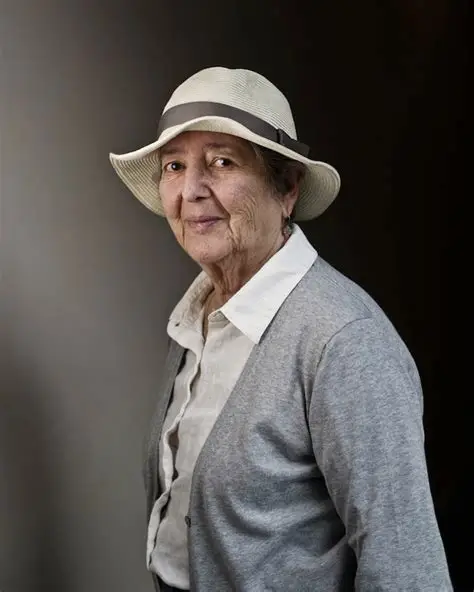
Elaine Mokhtefi was an American-born anti-colonial activist, writer, translator and artist who dedicated much of her life to supporting Algeria’s independence and connecting liberation movements across continents. She became an important link between Algerian revolutionaries, African independence movements and Black American activists during the 1950s and 1960s.
Mokhtefi worked in Algeria after its independence from France and helped the Black Panther Party establish an international presence in Algiers. Her life brought together struggles against colonialism, racial discrimination and political oppression. She died in New York on 11 September 2026, aged 97, shortly after Algeria granted her citizenship in recognition of her longstanding commitment to the country.
Early Life and Education
Elaine Klein, later known as Elaine Mokhtefi, was born on 10 December 1928 in Hempstead, Long Island, New York. Her family moved several times during her childhood, exposing her to different communities and social environments across the United States.
At the age of 16, she enrolled at Wesleyan College in Macon, Georgia. The institution operated within the segregated American South, where racial discrimination shaped education, public life and social relationships. Mokhtefi challenged the segregationist environment and left the college after about a year.
Her experiences in Georgia strengthened her opposition to racism. After returning to New York, she studied languages and joined the United World Federalists, an organisation that promoted international cooperation and the idea of a democratic world government.
Her involvement in political activism developed during the early Cold War, when governments closely monitored left-wing organisations and activists. In 1951, she moved to Paris, France, seeking a new environment and greater opportunities to pursue her interests.
Discovering the Algerian Independence Movement
Mokhtefi’s political life changed after she encountered the struggle against French colonial rule in Algeria. At the time, Algerians faced unequal treatment under a colonial system that denied the majority population full political rights. The National Liberation Front (FLN) launched its armed independence struggle in November 1954.
Living in Paris brought Mokhtefi into contact with Algerian workers and activists campaigning for independence. She became involved in efforts to support the movement and used her language skills and organisational abilities to assist its representatives.
She worked with people connected to the Provisional Government of the Algerian Republic, which sought international recognition and support for Algerian independence. Her activities eventually brought her into contact with influential anti-colonial thinkers, including Frantz Fanon, the Martinican psychiatrist and writer whose work examined colonialism, racism and liberation.
Mokhtefi also helped the Algerian independence movement communicate with audiences outside France and Algeria. Her work involved practical tasks such as translation, coordination and building relationships across political and cultural boundaries.
Algeria achieved independence in 1962 after a long and violent war. Mokhtefi travelled to the newly independent country and remained there until 1974. Her decision to live in Algeria reflected a commitment that had developed before she had even visited the country.
Life and Work in Independent Algeria
After arriving in Algiers in 1962, Mokhtefi worked as a journalist and in the new Algerian government’s administration. She became associated with Algeria Press Service, the country’s national news agency, and helped communicate developments in Algeria to wider audiences.
The newly independent government sought to establish national institutions while supporting other countries and movements fighting colonial rule. Algiers consequently became an important meeting place for activists, revolutionaries and representatives of liberation movements from Africa, Asia and the Americas.
Mokhtefi’s language skills, professional contacts and knowledge of international political networks made her a valuable intermediary. She helped connect visiting activists with Algerian officials and supported the coordination of international gatherings.
One major event during her time in Algeria was the First Pan-African Cultural Festival, held in Algiers in July 1969. The festival brought together artists, intellectuals and representatives of liberation movements to celebrate African culture and discuss the continent’s political future.
The gathering reinforced Algiers’ reputation as a centre of international anti-colonial solidarity. Mokhtefi helped receive and assist representatives of liberation movements, contributing to the relationships that made the city an important destination for activists from around the world.
Connection with the Black Panther Party
Mokhtefi became particularly well known for helping members of the Black Panther Party establish an international headquarters in Algiers. The American organisation emerged in the 1960s amid struggles against racial discrimination and police violence. Its members also promoted Black political power and community self-determination.
In 1969, Black Panther leader Eldridge Cleaver arrived in Algiers after leaving the United States while facing criminal charges. Algeria’s government permitted the group to operate there, reflecting the country’s support for several international liberation movements.
Mokhtefi used her connections within the Algerian administration to help the Panthers navigate local arrangements and establish their presence. She also helped facilitate contact between Algerian officials and prominent Black American activists, including Stokely Carmichael, who later became known as Kwame Ture.
The Panthers’ presence in Algeria demonstrated how the American civil rights and Black Power movements connected with anti-colonial struggles abroad. Algiers offered activists a place to build international relationships and present their political arguments beyond the reach of the American authorities.
Mokhtefi did not lead the Black Panther Party, but her practical assistance helped its members establish an important overseas base. Her work illustrated the often-overlooked role of organisers and intermediaries who supported political movements behind the scenes.
Departure from Algeria and Life in France
Mokhtefi’s relationship with Algeria eventually came under strain. In 1974, Algerian authorities expelled her after a dispute involving government requests that she provide information about a friend. She refused to cooperate with efforts to spy on someone close to her.
Her departure ended a significant chapter in her life. She had spent 12 years in Algeria, working within its post-independence environment and helping connect its government with international movements.
Mokhtefi left with Mokhtar Mokhtefi, an Algerian former member of the National Liberation Army and a fellow revolutionary whom she later married. The couple lived in Paris for two decades before moving to New York in 1994.
During these years, she continued writing and translating. She translated her husband’s memoir, which explored his experiences in Algeria’s independence struggle, into English under the title I Was a French Muslim. She also developed her work as an artist.
Although she no longer lived in Algeria, the country remained central to her identity and political outlook. She continued to follow international affairs and participated in demonstrations, including protests against the Iraq War and events supporting Palestinian rights.
Memoir and Recognition
In 2018, Mokhtefi published Algiers, Third World Capital: Freedom Fighters, Revolutionaries, Black Panthers. The memoir recounted her experiences in Algeria and her encounters with activists, political leaders and liberation movements during a period of major international change.
The book offered a personal account of Algiers as a gathering place for people challenging colonial rule and racial oppression. It also brought greater attention to the practical work required to sustain international solidarity, including translation, administration, personal relationships and political coordination.
The memoir introduced her experiences to a new generation of readers and renewed interest in the connections between African liberation movements and Black American activism. Its publication also established her as a writer who could document a significant period of twentieth-century history from personal experience.
In July 2026, Algeria granted Mokhtefi Algerian citizenship in recognition of her longstanding contribution to the country’s independence struggle and international standing. She had planned to return to Algiers later that year to receive an award, but she died before the visit could take place.
Death and Legacy
Elaine Mokhtefi died in New York on 11 September 2026, aged 97. Her death marked the passing of a woman whose life connected several major political movements of the twentieth century.
Her legacy extends beyond her direct involvement with Algeria’s independence movement and the Black Panther Party. She helped build relationships among activists who challenged colonial rule, racial inequality and political domination in different parts of the world.
Her memoir also preserved experiences that might otherwise have remained outside the main historical narrative. By documenting her work and relationships, she helped explain how international liberation networks operated and why Algiers became a gathering place for activists during the 1960s.
Mokhtefi’s life demonstrates that political change depends not only on prominent leaders but also on people who organise meetings, translate ideas, establish contacts and help movements operate across borders. Her work placed her at the intersection of African liberation, Black American activism and international anti-colonial solidarity.
Conclusion
Elaine Mokhtefi was an American-born activist whose commitment to Algerian independence led to a lifelong connection with the country. She supported the FLN’s international efforts, worked in Algeria’s post-independence government and helped the Black Panther Party establish an international headquarters in Algiers.
Through her memoir, activism and personal relationships, she preserved an important account of the networks that connected African liberation movements with global civil rights struggles. Her life remains a significant part of the history of twentieth-century anti-colonial activism.
Frequently Asked Questions
Who was Elaine Mokhtefi?
Elaine Mokhtefi was an American-born anti-colonial activist, journalist, translator, writer and artist. She supported Algerian independence and helped connect liberation movements across Africa, Europe and the United States.
When did Elaine Mokhtefi die?
She died in New York on 11 September 2026 at the age of 97.
What was Elaine Mokhtefi’s connection to Algeria?
She supported Algeria’s independence movement before 1962 and later lived in Algiers, where she worked as a journalist and government functionary until her expulsion in 1974.
How did Elaine Mokhtefi help the Black Panther Party?
She used her connections with Algerian officials to help members of the Black Panther Party establish an international headquarters in Algiers and facilitated contact between the group and the Algerian government.
What book did Elaine Mokhtefi write?
She wrote Algiers, Third World Capital: Freedom Fighters, Revolutionaries, Black Panthers, published in 2018. The memoir recounts her experiences with Algeria’s independence movement and international activists.
Did Algeria grant Elaine Mokhtefi citizenship?
Yes. Algeria granted her citizenship in July 2026 in recognition of her longstanding commitment to the country and its independence struggle.