|
Getting your Trinity Audio player ready... |
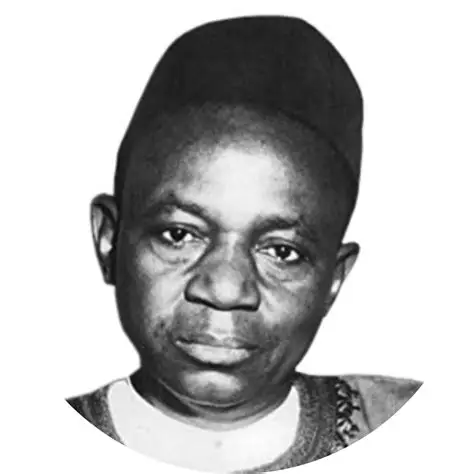
Aminu Kano (1920–1983) was a Nigerian politician, teacher and social reformer who championed the rights of ordinary people during the colonial and post-independence periods. He challenged political inequality in Northern Nigeria, criticised the concentration of power among traditional elites and promoted wider participation in government.
He founded the Northern Elements Progressive Union (NEPU), which became an important platform for political opposition in the region. Later, he established the People’s Redemption Party (PRP) and contested Nigeria’s 1979 presidential election. His political ideas centred on social justice, education, women’s participation and the protection of ordinary citizens.
Early Life and Education
Aminu Kano was born in 1920 in Kano, in northern Nigeria. His family belonged to the Gyanawa Fulani clan and had a strong background in Islamic scholarship. His father, Mallam Yusufu, served as an Islamic judge, while his mother was Malama Rakaiya.
He received an Islamic education before attending Western-style schools in Northern Nigeria. His education exposed him to different approaches to learning and public life. He eventually trained as a teacher and began working in the education sector.
Kano taught at Bauchi Middle School, where he developed relationships with other educated Nigerians, including Abubakar Tafawa Balewa. His experience as a teacher brought him into contact with the social and economic difficulties facing ordinary people.
He became increasingly interested in political reform. He believed education should give people the knowledge and confidence to challenge injustice and participate in public affairs.
Early Political Activism
Kano became politically active during the final years of British colonial rule. He opposed the political and social structures that concentrated authority among traditional rulers and established elites in Northern Nigeria.
In 1948, he established the Northern Teachers’ Association, which provided a platform for teachers to organise around their professional interests. His involvement in the organisation strengthened his commitment to public participation and collective action.
He initially joined the Northern People’s Congress (NPC), which emerged as a major political organisation in Northern Nigeria. However, he disagreed with its conservative leadership and its relationship with the traditional establishment.
Kano believed political parties should represent ordinary citizens rather than protect the privileges of powerful groups. These disagreements pushed him towards a more radical political movement.
Founding of the Northern Elements Progressive Union
In 1950, Aminu Kano helped establish the Northern Elements Progressive Union. The organisation became known as NEPU and developed into one of the strongest opposition movements in Northern Nigeria.
NEPU challenged the political dominance of the NPC and criticised the existing emirate system. Its members called for greater political freedom, social equality and improved opportunities for ordinary people, whom they commonly described as the talakawa.
Kano became the movement’s leading figure and served as its president-general from 1953. He used political meetings, public speeches and organised campaigns to promote its ideas.
The movement also challenged restrictions on women’s participation in public life. Kano supported wider access to education and greater economic and political opportunities for women.
His political activities attracted opposition from established authorities. Nevertheless, he continued to organise supporters and promote his reform programme.
Independence and Parliamentary Career
As Nigeria moved towards independence, Kano became an important voice in Northern Nigerian politics. NEPU provided an alternative to the dominant regional political establishment and attracted support among workers, teachers, young people and other groups seeking political change.
In 1959, he entered the Federal House of Representatives as a representative of Kano East. He served in parliament during the transition to independence and the early years of the First Republic.
His parliamentary work focused on the political and economic concerns of ordinary Nigerians. He also supported national unity and opposed political arrangements that deepened regional and social divisions.
Kano remained an influential opposition figure throughout the First Republic. His movement continued to challenge the NPC’s control of Northern Nigerian politics.
Service in the Military Government
The military coup of January 1966 ended Nigeria’s First Republic and changed the country’s political structure. Kano continued his public service under the military administration of General Yakubu Gowon.
In June 1967, he became Federal Commissioner for Communications. He held the position until January 1971.
He later served as Federal Commissioner for Health from 1972 to 1974. These appointments placed him in charge of important areas of national administration during a period that included the Nigerian Civil War and post-war reconstruction.
Although he had entered government, Kano maintained his interest in social reform and public education. He continued to promote access to learning and greater opportunities for disadvantaged communities.
Founding of the People’s Redemption Party
Following the return to political activity ahead of the Second Republic, Kano established the People’s Redemption Party in 1978. The PRP carried forward many of the political ideas associated with NEPU.
The party promoted social justice, public accountability, education and improved living conditions for ordinary Nigerians. It attracted support among progressive politicians and groups seeking an alternative to the established political elite.
Kano became the party’s leading figure and its presidential candidate in the 1979 general election. He contested against major candidates, including Shehu Shagari of the National Party of Nigeria, Obafemi Awolowo of the Unity Party of Nigeria and Nnamdi Azikiwe of the Nigerian People’s Party.
He did not win the presidency. However, the PRP secured important political support in parts of Northern Nigeria. Its candidates won governorship elections in Kano and Kaduna states, demonstrating the strength of the movement Kano had helped build.
Political Ideas and Advocacy for Social Reform
Aminu Kano’s political philosophy centred on the belief that ordinary people should have a meaningful voice in government. He challenged the idea that political authority should remain concentrated among wealthy families, traditional rulers and established elites.
He also considered education essential to social development. He supported both Western and Islamic education and encouraged opportunities for people who had historically faced barriers to schooling.
Women’s rights formed another important part of his political programme. He opposed restrictions that prevented women from participating fully in education, economic activity and public life.
His reformist ideas attracted young Nigerians who wanted changes in the political and social structures of the country. His home in Kano also became a place where people gathered to discuss religion, politics, education and public affairs.
Death
Aminu Kano died on April 17, 1983, in Kano, following a stroke. He was 62 years old.
His death came during the Second Republic, when the People’s Redemption Party remained active in national politics. The party continued to influence political developments in Kano and Kaduna states after his death.
His passing marked the end of a career that had connected the struggle against colonial rule with Nigeria’s post-independence debates about democracy, equality and public participation.
Legacy
Aminu Kano remains one of the most influential political reformers in Northern Nigeria’s history. His challenge to the traditional political establishment helped create space for alternative political movements and wider public participation.
Through NEPU and the PRP, he built organisations that gave ordinary citizens a platform to demand political representation. His advocacy for women’s education and participation also distinguished his political programme during a period when conservative social structures restricted many opportunities.
His legacy extends beyond party politics. He influenced generations of students, activists and political leaders who viewed education and public accountability as essential tools for social change.
Several institutions and public facilities in Nigeria bear his name. Mambayya House in Kano, associated with his memory, serves as a centre for historical and political research.
His political ideas remain relevant to discussions about democratic participation, social inequality and the role of education in national development.
Conclusion
Aminu Kano devoted his life to challenging inequality and expanding political opportunities for ordinary Nigerians. Through NEPU, the PRP and his work in government, he influenced the development of political opposition in Northern Nigeria. His commitment to education, women’s participation and social reform secured his place among the major figures in Nigeria’s political history.
Frequently Asked Questions
Who was Aminu Kano?
Aminu Kano was a Nigerian politician, teacher and social reformer known for championing the rights of ordinary people. He founded NEPU and later established the People’s Redemption Party.
When was Aminu Kano born?
He was born in 1920 in Kano, Northern Nigeria.
What was Aminu Kano known for?
He was known for opposing political inequality, challenging the dominance of traditional elites and advocating education, women’s participation and democratic government.
What political parties did Aminu Kano establish?
He helped establish the Northern Elements Progressive Union in 1950 and later founded the People’s Redemption Party in 1978.
Did Aminu Kano contest the Nigerian presidential election?
Yes. He contested the 1979 presidential election as the candidate of the People’s Redemption Party but did not win.
When did Aminu Kano die?
He died on April 17, 1983, in Kano, following a stroke.