|
Getting your Trinity Audio player ready... |
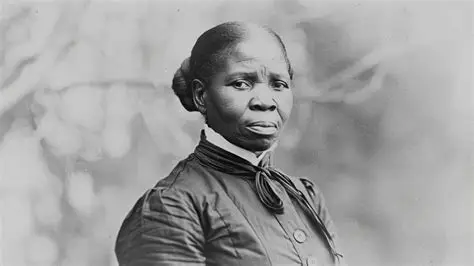
Harriet Tubman was an American abolitionist who escaped slavery and dedicated her life to helping others gain freedom. She became one of the most recognised conductors on the Underground Railroad, a network that assisted enslaved people escaping to free states and Canada. During the American Civil War, she also served the Union Army as a nurse, scout and spy. Her work later extended to women’s rights and the care of formerly enslaved people.
Early Life and Enslavement
Harriet Tubman was born Araminta Ross around 1822 in Dorchester County, Maryland. Her parents, Harriet “Rit” Green and Ben Ross, were enslaved. She grew up in a family of nine children, although slavery repeatedly separated family members.
Tubman experienced forced labour from an early age. As a child, she worked as a domestic servant and cared for other people’s children. She later performed demanding physical tasks in the fields and around local farms. Her enslavers also hired her out to other households.
During her teenage years, an overseer threw a heavy iron weight at another enslaved person who was trying to escape. The weight struck Tubman in the head. The injury caused serious and lasting health problems, including episodes of unconsciousness.
Despite these experiences, Tubman developed a strong determination to resist slavery. Her faith and her desire to protect her family influenced her decisions throughout her life.
Escape from Slavery
In 1844, Tubman married John Tubman, a free Black man. Around this period, she began using the name Harriet, possibly in honour of her mother.
Her situation became increasingly uncertain after her enslaver, Edward Brodess, died in 1849. She feared that his widow would sell her and separate her permanently from her family.
Tubman escaped from Maryland in September 1849. She travelled north and eventually reached Philadelphia, Pennsylvania, where slavery was prohibited. The journey marked the beginning of her life as a free woman.
However, she did not consider her own freedom enough. Her parents, siblings and other relatives remained enslaved in Maryland. She decided to return and help them escape.
Work on the Underground Railroad
The Underground Railroad was not a physical railway. It was a secret network of abolitionists, free Black communities, religious groups and other supporters who helped enslaved people escape.
Tubman became one of its most effective conductors. Between 1850 and 1860, she returned to Maryland several times to guide relatives and other enslaved people to freedom. She made approximately 13 rescue journeys and helped around 70 people escape directly.
She also provided guidance to others who later escaped independently. Her work required careful planning because slaveholders and professional slave catchers pursued people who fled bondage.
The Fugitive Slave Act of 1850 increased the danger. It allowed the capture and return of escaped enslaved people, even in free states. It also threatened free Black people who could be kidnapped and falsely claimed as fugitives.
Tubman therefore adjusted her routes and helped some escapees reach Canada, where slavery was prohibited. She earned the nickname “Moses” because of her leadership and determination.
Her missions involved enormous personal risks. She carried a weapon for protection and maintained strict discipline during journeys. She understood that one person’s return to slavery could expose an entire group to capture.
Harriet Tubman and the American Civil War
When the American Civil War began in 1861, Tubman supported the Union cause. She travelled to South Carolina in 1862 and worked with Union forces. Her duties included nursing, cooking, gathering intelligence and scouting.
Her knowledge of local geography and her experience moving through dangerous territory made her valuable to the military. She also helped the Union recruit Black soldiers and supported formerly enslaved people who reached Union-controlled areas.
One of her most significant wartime achievements came during the Combahee River Raid in South Carolina on June 2, 1863. Tubman worked with Colonel James Montgomery and Union troops, including Black soldiers, to plan and carry out the operation.
The raid destroyed Confederate supplies and infrastructure. It also helped more than 700 enslaved people escape. Tubman’s role made her one of the most notable women to contribute directly to a Union military operation during the war.
Life After the Civil War
After the war ended in 1865, Tubman continued working for the welfare of African Americans. She settled in Auburn, New York, where she had purchased land before the war. The property became a home for relatives, friends and people who needed assistance.
In 1869, she married Nelson Davis, a former Union soldier. They later adopted a daughter named Gertie. Tubman continued to support her family while remaining active in public causes.
She also joined the campaign for women’s suffrage. She attended meetings, spoke at public events and worked alongside other activists who demanded voting rights for women.
Tubman understood that freedom from slavery did not automatically provide economic security or equal rights. She therefore supported efforts to improve the lives of formerly enslaved people and African American communities.
She also helped establish the Harriet Tubman Home for the Aged in Auburn. The institution provided care for elderly African Americans who needed support. This work reflected her long-standing concern for vulnerable people.
Death of Harriet Tubman
Harriet Tubman died on March 10, 1913, in Auburn, New York. She was approximately 90 or 91 years old. Her exact birth date remains uncertain because enslaved children rarely received official birth records.
She received a military funeral and was buried at Fort Hill Cemetery in Auburn. Her death marked the end of a life shaped by resistance, public service and the pursuit of freedom.
Harriet Tubman’s Historical Legacy
Harriet Tubman’s legacy extends beyond her work on the Underground Railroad. She demonstrated the leadership of formerly enslaved people in the struggle against slavery and challenged the idea that women could not participate in military and political affairs.
Her Civil War service also established her place in American military history. The Combahee River Raid remains a significant example of Black military participation in the Union campaign against slavery.
Tubman also contributed to the women’s suffrage movement and spent her later years supporting elderly and disadvantaged people. Her work connected the struggle against slavery with wider demands for equality and social care.
Today, several historic sites and protected areas preserve her memory. The Harriet Tubman Underground Railroad National Historical Park in Maryland and the Harriet Tubman National Historical Park in New York recognise different parts of her life and work.
Her story remains an important part of American history because it records both the determination of enslaved people to free themselves and the efforts of those who helped others escape.
Frequently Asked Questions
What was Harriet Tubman famous for?
Harriet Tubman was famous for escaping slavery and returning to Maryland to guide other enslaved people to freedom through the Underground Railroad. She also served the Union Army during the Civil War and campaigned for women’s rights.
When was Harriet Tubman born?
She was born around 1822 in Dorchester County, Maryland. Her exact birth date is unknown.
How many people did Harriet Tubman help escape slavery?
Historical accounts commonly credit Tubman with directly helping around 70 people escape through approximately 13 journeys to Maryland. She also gave guidance to others who escaped independently.
What did Harriet Tubman do during the Civil War?
She served the Union Army as a nurse, cook, scout and spy. She also helped plan the Combahee River Raid, which freed more than 700 enslaved people in South Carolina.
When did Harriet Tubman die?
Harriet Tubman died on March 10, 1913, in Auburn, New York.