|
Getting your Trinity Audio player ready... |
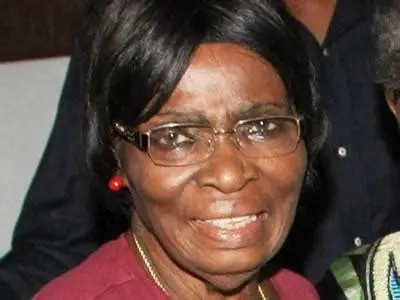
Professor Kamene Okonjo was a Nigerian sociologist, university academic and advocate for women’s empowerment whose research examined the roles women played in traditional African societies. She challenged narrow interpretations of women’s political participation by documenting how Igbo women organised their communities, exercised authority and contributed to local development.
Beyond academia, she was a respected matriarch of the Ogwashi-Uku royal family in Delta State. She was the wife of the late Professor Chukwuka Okonjo, a former traditional ruler, and the mother of Dr Ngozi Okonjo-Iweala, Director-General of the World Trade Organization. Kamene Okonjo died on 23 October 2026 at the age of 96, leaving a legacy of scholarship, women’s advocacy, family leadership and public service.
Academic Career and Sociological Research
Kamene Okonjo built her reputation through sociology, a discipline concerned with social relationships, institutions and the forces that shape human behaviour. Her academic work focused particularly on women’s experiences in Nigerian communities, including the political and economic roles of Igbo women.
Her research challenged the assumption that women in traditional African societies had little influence because they did not always occupy the same formal positions as men. She examined the institutions through which women organised themselves, made collective decisions and contributed to community life.
As a professor at the University of Nigeria, Nsukka, Okonjo contributed to the development of sociology and the study of gender in African societies. Her work documented forms of female authority that conventional accounts of political participation could overlook.
Her scholarship also connected local social structures with wider questions about development, gender equality and the visibility of women’s contributions. By studying how communities actually operated, she helped researchers examine women’s influence beyond formal government institutions.
Major Publications and Contributions to Women’s Studies
One of Kamene Okonjo’s best-known academic works was her 1976 chapter, The Dual-Sex Political System in Operation: Igbo Women and Community Politics in Midwestern Nigeria. The chapter examined how men and women could maintain distinct but connected political organisations within Igbo communities.
The concept of a dual-sex political system helped explain how women’s organisations exercised authority alongside men’s institutions. These structures could provide women with ways to discuss community affairs, organise collective action and influence decisions affecting their lives.
Okonjo’s research was important because it offered an alternative to interpretations that measured political participation only through Western-style institutions. Her work encouraged scholars to consider the social and cultural systems through which African women exercised influence.
She continued exploring women’s roles in later publications. Her 1983 chapter, Sex Roles in Nigerian Politics, examined gender and political life. In a 1989 paper titled Rural Development in Nigeria: How Do Women Count?, she considered women’s economic and social contributions, particularly in rural communities.
The 1989 study highlighted the work women performed in agriculture and other economic activities while examining the obstacles that limited their recognition and opportunities. Her research connected women’s empowerment with practical questions about access to resources, development programmes and economic participation.
Together, these publications established an important body of scholarship on gender, community politics and rural development in Nigeria.
Advocacy for Women’s Empowerment
Kamene Okonjo’s academic work supported a broader commitment to advancing women’s rights and opportunities. She examined how social structures could limit women’s participation even when they performed essential economic and community responsibilities.
Her research drew attention to the gap between women’s contributions and the recognition they received. Rural women, for example, played important roles in farming, food production and small-scale enterprises. Yet social and economic barriers could restrict their access to credit, resources and decision-making.
By documenting these issues, Okonjo contributed to discussions about how development policies could better recognise women’s work. Her approach treated women not simply as beneficiaries of development but as active participants in the political, social and economic life of their communities.
Her scholarship remains relevant to discussions about gender equality in Africa. It encourages researchers and policymakers to examine existing community institutions and understand how women already exercise leadership, rather than assuming that meaningful participation begins only when formal political structures change.
Marriage and Family Life
Kamene Okonjo married Professor Chukwuka Okonjo, an academic in mathematical economics who later became the Obi of Ogwashi-Uku. Their marriage lasted 66 years, until his death in 2019.
The couple raised seven children and maintained a family life closely connected to education and public service. Their daughter, Ngozi Okonjo-Iweala, became an internationally recognised economist, served twice as Nigeria’s finance minister and later became Director-General of the World Trade Organization.
Another of their children, Ifechukwude Anishi Okonjo, succeeded his father as the traditional ruler of Ogwashi-Uku. The family therefore occupied a distinctive position at the intersection of academia, international public service and traditional leadership.
Kamene Okonjo’s identity extended well beyond her children’s public achievements. She had established her own academic reputation through research and teaching. Her professional career also gave the family a strong connection to scholarship and the advancement of education.
As a mother, grandmother and great-grandmother, she remained a central figure in the family. Her life brought together professional achievement and responsibilities within a large family and a traditional institution.
Role in the Ogwashi-Uku Royal Institution
Kamene Okonjo was the matriarch of the Umu Obi Obahai royal family of Ogwashi-Uku Kingdom in Delta State. Her husband served as Obi of Ogwashi-Uku until his death in 2019, and their son later became the reigning monarch.
Her position within the royal family placed her at the centre of a traditional institution with deep historical and cultural significance. Traditional rulers and royal families continue to play important roles in community identity, cultural preservation and local affairs across Nigeria.
Okonjo’s public life therefore connected university scholarship with traditional leadership. Her research examined women’s roles in community politics, while her own life involved a family institution that remained closely connected to the history and identity of Ogwashi-Uku.
Her influence in the kingdom complemented her academic legacy. She represented a generation of Nigerian women who pursued professional careers while also contributing to family and community institutions.
The 2012 Kidnapping
In December 2012, Kamene Okonjo was kidnapped in Ogwashi-Uku. The incident attracted national and international attention because of her daughter’s position as Nigeria’s finance minister at the time.
Ngozi Okonjo-Iweala was involved in government efforts to address corruption and reform public finances. The kidnapping placed her family under intense pressure and raised concerns about the safety of relatives of prominent public officials.
Kamene Okonjo was released after several days in captivity. The ordeal became one of the most difficult public episodes in her later life and brought renewed attention to insecurity in Nigeria.
Despite the distressing circumstances, the incident did not define her broader legacy. Her academic research, advocacy for women and role in the Ogwashi-Uku royal family remained the central contributions of her life.
Death at 96 and Lasting Legacy
Kamene Okonjo died on 23 October 2026 at the age of 96. Her death was announced by the Umu Obi Obahai royal family of Ogwashi-Uku. Tributes from public figures recognised her academic accomplishments, commitment to women’s empowerment and service to her family and community.
Her legacy rests particularly on her scholarship about African women and political organisation. Through her research, she documented how women exercised influence within community institutions and contributed to economic development. Her work provided valuable perspectives for scholars studying gender, African political systems and rural society.
She also left a legacy through her family and her place within Ogwashi-Uku’s traditional institution. Her life connected academic achievement with community identity and the responsibilities of family leadership.
Kamene Okonjo’s work remains significant because the questions she examined continue to matter. Women’s political participation, economic recognition and access to development opportunities remain important issues across Nigeria and Africa. Her scholarship provides a foundation for understanding these questions through the lived experiences and institutions of African communities.
Conclusion
Professor Kamene Okonjo was a distinguished Nigerian sociologist whose research brought attention to women’s political, social and economic roles in African communities. Her publications on Igbo community politics, gender and rural development contributed to the study of women and society in Nigeria.
She also held an important place within the Ogwashi-Uku royal family and raised a family closely associated with education and public service. Her life combined academic work, women’s advocacy and community leadership, leaving a legacy that extends beyond her family connections.
Frequently Asked Questions
Who was Professor Kamene Okonjo?
Professor Kamene Okonjo was a Nigerian sociologist, academic and advocate for women’s empowerment. She taught at the University of Nigeria, Nsukka, and researched women’s roles in Igbo community politics and rural development.
When did Kamene Okonjo die?
She died on 23 October 2026 at the age of 96.
Who was Kamene Okonjo’s daughter?
Her daughter is Dr Ngozi Okonjo-Iweala, an economist and Director-General of the World Trade Organization who previously served as Nigeria’s finance minister.
Who was Kamene Okonjo’s husband?
She was married to Professor Chukwuka Okonjo, an academic in mathematical economics and the former Obi of Ogwashi-Uku. They were married for 66 years before his death in 2019.
What was Kamene Okonjo known for academically?
She was known for research on gender, Igbo women’s political organisation and rural development. Her 1976 chapter, The Dual-Sex Political System in Operation, is among her best-known publications.
What was Kamene Okonjo’s connection to Ogwashi-Uku?
She was the matriarch of the Umu Obi Obahai royal family of Ogwashi-Uku in Delta State. Her husband and later her son held the traditional position of Obi of Ogwashi-Uku.