|
Getting your Trinity Audio player ready... |
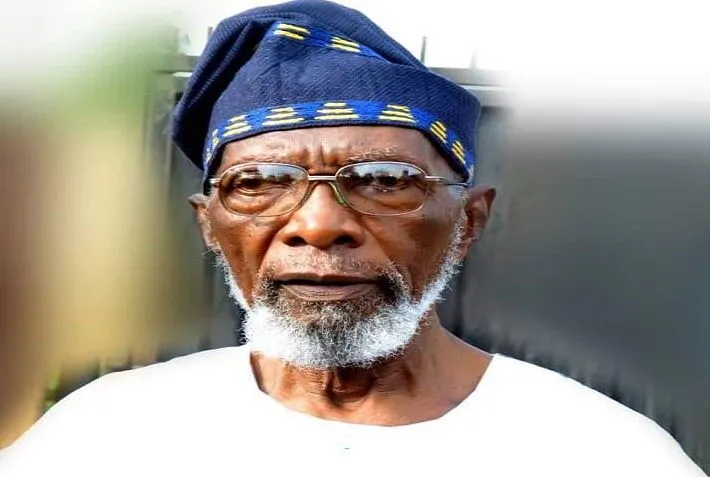
Samuel Olusegun Osoba, popularly known as Segun Osoba, was a Nigerian historian, academic and political activist who helped reshape the study of modern African history. He examined the country’s past through social classes, economic systems, colonialism and the struggles of ordinary people. His work challenged historical narratives that focused mainly on powerful individuals while overlooking the wider forces that shaped society.
Osoba also connected scholarship with political activism. He criticised corruption, opposed military authoritarianism and advocated a more equitable society. His contribution to Nigeria’s constitutional history, particularly the Minority Report and Draft Constitution of 1976, demonstrated his belief that intellectuals should participate in debates about the country’s future. He died in Ijebu-Ode, Ogun State, on May 14, 2026.
Early Life and Education
Segun Osoba was born on January 9, 1935, in Ijebu-Ode, in present-day Ogun State, southwestern Nigeria. He grew up during British colonial rule, when debates about nationalism, self-government and Nigeria’s political future increasingly shaped public life. These historical developments later became central to his academic interests.
He attended Ijebu-Ode Grammar School from 1947 to 1953 before studying at the Nigerian College of Arts, Science and Technology in Ibadan between 1954 and 1956. He subsequently enrolled at University College Ibadan, where he studied history from 1956 to 1959.
After graduating, Osoba returned to Ijebu-Ode Grammar School and taught there from 1959 to 1963. He later travelled to the Soviet Union to pursue doctoral studies at Moscow State University, completing his studies in 1967. His experience in Moscow strengthened his interest in Marxist thought, political economy and the relationship between economic structures and historical change.
Academic Career at the University of Ife
In 1967, Osoba joined the history department at the University of Ife, now Obafemi Awolowo University, in Ile-Ife, Osun State. He taught and conducted research there until 1991. During those years, he became an influential figure in the development of radical historical scholarship in Nigeria.
Osoba approached history as more than a record of past events. He encouraged students to investigate how economic interests, class relationships, colonial institutions and political power shaped historical outcomes. His teaching pushed students to question accepted explanations and support their arguments with evidence.
His approach contributed to the development of the Ife History School, a tradition associated with critical scholarship and the study of social and economic structures. He also mentored students who later became academics, journalists, lawyers, trade unionists and political activists.
Osoba’s academic career reflected his commitment to intellectual independence. Although he qualified for promotion to professor, he refused to pursue the title after disagreements over university practices and the promotion process. He continued to use the title Doctor, a decision that became part of his reputation for standing by his principles.
Historical Scholarship and Major Writings
Osoba’s scholarship examined the economic and political forces behind Nigeria’s development. Rather than presenting colonialism as a series of events involving governors and political leaders, he investigated how colonial rule transformed economic relationships, social classes and the distribution of power.
One of his influential essays, The Deepening Crisis of the Nigerian National Bourgeoisie, examined the emergence and limitations of Nigeria’s postcolonial economic and political elite. He argued that the interests of powerful groups often conflicted with the broader needs of the population.
His writing on corruption also explored its historical roots. Osoba traced the problem through colonial institutions and post-independence governments, challenging explanations that treated corruption as merely the result of individual misconduct. His approach examined the political and economic structures that allowed corrupt practices to persist.
He also wrote about nationalist movements, political elites and the development of Nigeria’s modern state. Through this work, he helped advance a form of African historiography that placed ordinary people, economic relationships and collective struggles at the centre of historical interpretation.
His collected writings, published under the title Critical and Contentious Issues in the Modern and Contemporary History of Nigeria, brought together important aspects of his research and intellectual interests.
Political Activism and Opposition to Military Rule
Osoba believed that historians should engage with the society they studied. He became involved in Nigeria’s left-wing political movement and worked with other scholars and activists who sought economic equality and greater political accountability.
He helped organise socialist groups and supported efforts to strengthen trade unions and mass movements. His political outlook drew on Marxist ideas about class relations, economic exploitation and the concentration of power.
Osoba also criticised successive military governments and challenged corruption in public institutions. His opposition to authoritarian rule exposed him to periods of detention and political pressure. Nevertheless, he continued to argue that public institutions should serve the wider population rather than a privileged minority.
His influence extended beyond university campuses. Through his students, colleagues and political networks, he helped connect historical scholarship with activism in labour organisations, civil society and public debate.
Minority Report and Draft Constitution of 1976
One of Osoba’s most significant contributions to Nigeria’s political history came in 1976, when the military government of General Murtala Mohammed appointed him to the Constitution Drafting Committee. The committee prepared proposals that helped shape the 1979 Constitution and Nigeria’s return to civilian government.
Osoba disagreed with the majority’s approach to constitutional development. Working with fellow historian and activist Yusufu Bala Usman, he produced the Minority Report and Draft Constitution for the Federal Republic of Nigeria, 1976.
Their report challenged the political arrangements they believed favoured established elites. They advocated changes that included removing constitutional immunity for presidents and state governors and creating a political framework that better addressed social and economic inequality.
The military government did not adopt their alternative constitution. However, the report became an important document in Nigeria’s intellectual and constitutional history. Its eventual publication in 2019 renewed attention to the arguments Osoba and Usman had raised more than four decades earlier.
Their work demonstrated how historical analysis and political activism could contribute to debates about constitutional design, accountability and the distribution of power.
Legacy and Influence on African Historiography
Segun Osoba influenced generations of Nigerian scholars by encouraging them to connect historical research with contemporary social questions. His teaching showed students how to examine the structures behind political events rather than accept official explanations without scrutiny.
His work also contributed to broader African debates about colonialism, capitalism, nationalism and postcolonial governance. By examining economic relationships and class formation, he challenged interpretations that placed too much emphasis on individual leaders or ethnic divisions alone.
Osoba’s intellectual legacy includes his published scholarship, his constitutional work and the students he inspired. His approach helped establish historical research as a tool for understanding inequality, political authority and social change.
He remained committed to intellectual debate throughout his later years, even after retiring from university teaching. His life reflected a belief that scholarship carried responsibilities beyond the classroom and that historians should contribute to the search for a more just society.
Death and Conclusion
Segun Osoba died at his residence in Ijebu-Ode on May 14, 2026. His death marked the loss of a prominent Nigerian historian whose career joined academic research with political activism and constitutional debate.
His contributions extended beyond the university. Through his writings, teaching and work on the 1976 minority constitutional proposal, he challenged established accounts of Nigeria’s history and questioned how political and economic power operated.
Osoba’s legacy lies in his determination to make history relevant to public life. He encouraged generations of scholars and activists to examine the past critically, confront injustice and consider how institutions could better serve ordinary people.
Frequently Asked Questions
Who was Segun Osoba?
Segun Osoba was a Nigerian historian, academic and Marxist activist known for his research into Nigeria’s social and economic history and his criticism of political and economic inequality.
Where was Segun Osoba born?
He was born in Ijebu-Ode, in present-day Ogun State, Nigeria, on January 9, 1935.
Where did Segun Osoba study?
He studied at Ijebu-Ode Grammar School, the Nigerian College of Arts, Science and Technology in Ibadan, University College Ibadan and Moscow State University, where he completed doctoral studies in history.
What was Segun Osoba known for?
He was known for advancing a social and economic approach to African history, mentoring students and activists, criticising military rule and co-authoring the 1976 Minority Report and Draft Constitution with Yusufu Bala Usman.
When did Segun Osoba die?
He died in Ijebu-Ode, Ogun State, on May 14, 2026.