|
Getting your Trinity Audio player ready... |
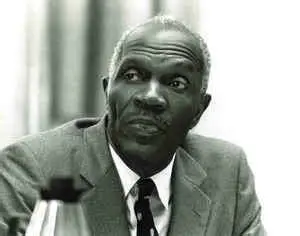
Davidson Nicol was a Sierra Leonean physician, scientist, academic, diplomat and writer who built an exceptional career across medicine, education, international affairs and literature. Born in 1924, he became the first Black African to graduate from the University of Cambridge with first-class honours and later became the first Black African fellow of a Cambridge college. His research on insulin formed an important part of his scientific career.
Nicol also played a major role in Sierra Leone’s educational development and international diplomacy. He served as principal of Fourah Bay College, represented Sierra Leone at the United Nations, became a UN under-secretary-general and headed the United Nations Institute for Training and Research. He also wrote fiction and poetry under the name Abioseh Nicol.
Early Life and Family Background
Davidson Sylvester Hector Willoughby Nicol was born on September 14, 1924, in Bathurst, Sierra Leone, now part of Freetown. His parents were Jonathan Josibiah Nicol and Winifred Clarissa Regina Willoughby. His family belonged to Sierra Leone’s Creole community.
Nicol spent part of his childhood in Nigeria because of his father’s work. He later returned to Sierra Leone and attended the Prince of Wales School in Freetown. His early education prepared him for an academic career that would eventually take him to Britain and back to West Africa.
His upbringing across Sierra Leone and Nigeria gave him experience of different West African societies during the final decades of British colonial rule. That background later informed his academic interests, public service and writing.
Education and Medical Training
In 1943, Nicol received a government scholarship to study natural sciences at Christ’s College, Cambridge. He graduated in 1947 with first-class honours. This achievement made him the first Black African to graduate with first-class honours from Cambridge.
Nicol then studied medicine at the London Hospital Medical College. After completing his medical training, he combined clinical knowledge with teaching and scientific research. He worked at the University of London before joining the medical school at the University of Ibadan in Nigeria.
At Ibadan, Nicol taught medicine and researched tropical malnutrition. His work in Nigeria strengthened his interest in medical research and prepared him for his later return to Cambridge.
His academic achievements continued to break new ground. In 1957, Christ’s College elected him a fellow, making him the first Black African fellow of a Cambridge college.
Scientific Research and Insulin Studies
Nicol returned to Cambridge to conduct research into insulin. He worked on the subject during a period when scientists were making major advances in understanding the hormone and its role in the human body.
His research examined the structure and breakdown of insulin. He published The Mechanism of Action of Insulin and The Structure of Human Insulin in 1960. His work contributed to the scientific understanding of insulin and became one of the most important parts of his medical career.
Nicol’s scientific career stands out because he achieved recognition in an international research environment while also maintaining strong links with Sierra Leone and West Africa. In 1958, he returned to Sierra Leone and served as a government pathologist.
His career therefore extended beyond the conventional boundaries of medicine. He combined laboratory research with medical practice, teaching and public administration.
Fourah Bay College and Academic Leadership
In 1960, Nicol became principal of Fourah Bay College in Freetown. He became the institution’s first Sierra Leonean native principal and led the college during a crucial period surrounding the country’s independence.
Nicol oversaw an important period of expansion at Fourah Bay College. He also served in Sierra Leone’s Public Service Commission and took on wider responsibilities within the country’s university system.
Between 1964 and 1968, he chaired the University of Sierra Leone’s governing structure and served as its vice-chancellor from 1966 to 1968. His academic leadership linked higher education with the development needs of a newly independent African state.
His service also earned national recognition. In 1964, he was appointed a Companion of the Order of St Michael and St George, commonly known as CMG.
Diplomatic Career and the United Nations
Nicol left university administration in 1968 and entered international diplomacy. He became Sierra Leone’s Permanent Representative to the United Nations, serving in New York until 1971. During this period, he participated in major UN discussions and chaired the UN Committee on Decolonization.
In September 1970, Nicol served as president of the United Nations Security Council. His tenure came during a period of major international tension, including the crisis surrounding the Dawson Field hijackings and hostage-taking involving several aircraft.
In 1971, Sierra Leone appointed Nicol High Commissioner to the United Kingdom. He also represented Sierra Leone in diplomatic assignments involving Norway, Sweden and Denmark.
Nicol returned to the United Nations in 1972. He became an Under-Secretary-General and Executive Director of the United Nations Institute for Training and Research, known as UNITAR. He held the UNITAR position until 1982.
After leaving UNITAR, Nicol continued international work. He served as president of the World Federation of United Nations Associations from 1983 to 1987.
Literary Career as Abioseh Nicol
Nicol also developed a significant literary career under the pen name Abioseh Nicol. He wrote short stories, poems, essays and works of historical and academic interest.
His literary publications included Africa: A Subjective View, Two African Tales and The Truly Married Woman and Other Stories. His stories explored everyday life in Sierra Leone and often examined relationships between African communities, colonial institutions and changing social expectations.
Two African Tales, published in 1965, brought together stories such as “The Leopard Hunt” and “The Devil at Yolahun Bridge.” The Truly Married Woman and Other Stories appeared in the same year. These works established Nicol as an important Sierra Leonean fiction writer.
Nicol also wrote about African history. His work on Africanus Horton helped preserve the intellectual history of an earlier Sierra Leonean scholar and nationalist. He later contributed to publications dealing with Africa, international affairs and women’s roles in changing societies.
His literary identity complemented his scientific and diplomatic careers. Through fiction, he examined social life at a more personal level than his professional writing allowed.
Personal Life and Later Years
Nicol married Marjorie Johnston of Trinidad on August 11, 1950. They had five children. His family life continued alongside a career that repeatedly took him between West Africa, Britain, the United States and international institutions.
After his diplomatic career, Nicol maintained strong academic connections. He taught and held visiting academic positions in the United States, including appointments at the University of California and the University of South Carolina. He also remained connected with Cambridge.
Nicol retired in 1991 and settled in Cambridge. He continued his historical and literary interests during retirement.
Davidson Nicol died in Cambridge, England, on September 20, 1994, six days after his 70th birthday. His death ended a career that had crossed medicine, science, higher education, diplomacy and literature.
Legacy and Historical Significance
Davidson Nicol left a distinctive legacy because few African intellectuals of his generation combined so many fields at such a high level. His Cambridge achievements challenged the racial barriers that limited access to advanced education during the colonial period.
His scientific work placed a Sierra Leonean physician within important international research on insulin. His leadership at Fourah Bay College also connected higher education with Sierra Leone’s transition toward independence.
Nicol’s diplomatic career gave Sierra Leone a prominent voice within the United Nations. His work at UNITAR further connected his career to international training and institution-building.
His literary work adds another dimension to his historical importance. Under the name Abioseh Nicol, he recorded aspects of Sierra Leonean society through stories that combined humor, irony and close observation. His fiction remains part of the country’s literary heritage.
The Churchill Archives Centre at Cambridge holds papers connected with Nicol’s career. These records preserve evidence of his work across science, education, diplomacy and literature.
Frequently Asked Questions
Who was Davidson Nicol?
Davidson Nicol was a Sierra Leonean physician, scientist, academic, diplomat and writer. He also wrote fiction under the name Abioseh Nicol.
What was Davidson Nicol known for?
He was known for his insulin research, academic leadership at Fourah Bay College, diplomatic service at the United Nations and literary works about Sierra Leonean life.
What did Davidson Nicol discover about insulin?
Nicol conducted important research into the structure and breakdown of insulin and published major scientific studies on the subject in 1960.
Was Davidson Nicol the first African at Cambridge?
Nicol became the first Black African to graduate from Cambridge with first-class honours and the first Black African fellow of a Cambridge college.
What books did Davidson Nicol write?
His publications include Africa: A Subjective View, Two African Tales, The Truly Married Woman and Other Stories, and Creative Women.
When did Davidson Nicol die?
Davidson Nicol died on September 20, 1994, in Cambridge, England, at the age of 70.
Conclusion
Davidson Nicol built an extraordinary career across science, medicine, education, diplomacy and literature. His achievements at Cambridge opened new academic possibilities for Africans, while his insulin research established an important scientific dimension to his career. His leadership at Fourah Bay College, service at the United Nations and writing as Abioseh Nicol gave him a lasting place in Sierra Leonean and African history.