|
Getting your Trinity Audio player ready... |
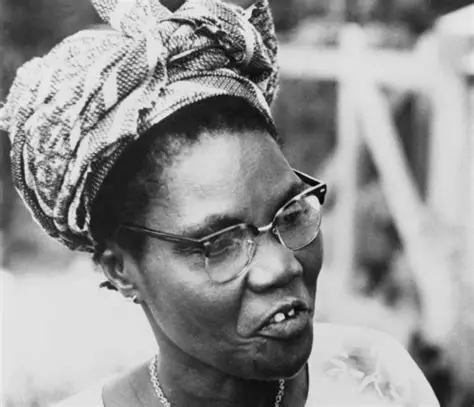
Funmilayo Ransome-Kuti (1900–1978) was a Nigerian educator, nationalist and women’s rights activist who became one of the most important figures in the country’s anti-colonial struggle. She organized women in Abeokuta, challenged unfair taxation, demanded political representation and campaigned for Nigerian independence.
Her activism connected women’s economic struggles with the wider nationalist movement. Through the Abeokuta Women’s Union, she mobilized thousands of women against colonial policies and the Native Authority. She later worked nationally and internationally for women’s political rights, African independence and social justice.
Early Life and Family Background
Funmilayo was born Frances Abigail Olufunmilayo Thomas on October 25, 1900, in Abeokuta, in what was then Southern Nigeria. She came from a Christian Yoruba family that valued education and public service.
Her father was Daniel Olumeyuwa Thomas, while her mother was Lucretia Phyllis Omoyeni Adeosolu. Funmilayo was the first daughter in the family and later became known by the Yoruba name Funmilayo, meaning “God has given me joy.”
She grew up when British colonial rule was becoming more firmly established in southern Nigeria. Abeokuta had its own political traditions and institutions, but colonial officials increasingly worked through local authorities. This system later became central to Funmilayo’s political activism.
Education and Teaching Career
Funmilayo attended Abeokuta Grammar School and was among the first girls admitted after the school began accepting female students in 1914. She became the first female student listed among the school’s initial group of girls. She later taught there, gaining early experience as an educator.
In 1919, she travelled to England for further education at Wincham Hall School for Girls in Cheshire. She studied subjects including French, music and elocution. During her time in Britain, she experienced racial discrimination and became increasingly conscious of the differences between colonial ideas about Africans and African aspirations.
She returned to Nigeria in 1922 and continued working in education. In 1925, she married Reverend Israel Oludotun Ransome-Kuti, an educationist who became an important figure in Nigeria’s teaching movement. They had four children: Dolupo, Olikoye, Olufela, better known as Fela, and Beko.
From Education to Women’s Activism
Funmilayo’s early activism developed through her work with women in Abeokuta. She recognized that education alone could not address the economic and political problems faced by many women.
In the early 1930s, she established the Abeokuta Ladies Club. Its initial membership consisted largely of educated Christian women. Over time, however, Funmilayo expanded her organizing work to include market women and other working-class women. This transformation changed the organization from a social club into a broader political movement.
Her literacy work brought her into close contact with market women. They complained about taxation, price controls, official harassment and the lack of political representation. Funmilayo helped connect these local grievances to larger questions about colonial government and women’s rights.
In 1946, the organization became the Abeokuta Women’s Union. It developed into a mass movement that campaigned for women’s economic, social and political rights. Its objectives also included support for Nigerian independence.
The Abeokuta Women’s Revolt
The defining struggle of Funmilayo’s early political career came from the campaign against taxation and the abuses associated with the colonial Native Authority system.
Women in Abeokuta faced taxes and other economic pressures while having little formal representation in the institutions that governed them. Market women also complained about price controls and the treatment they received from officials. Funmilayo and the Abeokuta Women’s Union responded with petitions, letters, public meetings and organized protests.
By 1947, the campaign had developed into a mass movement. Thousands of women demonstrated around the palace of Alake Ademola II, the traditional ruler of Abeokuta. The women organized vigils, closed markets and used songs, petitions and public protest to demand political and economic changes.
The campaign continued into 1948 and placed substantial pressure on the Native Authority. The separate taxation of women was eventually abolished, while reforms followed in local administration. The Alake temporarily abdicated his position in 1948 before later returning to the throne.
The Abeokuta struggle made Funmilayo a national political figure. It also demonstrated the political strength that women could exercise through organized economic and community action.
Nationalism and Political Career
Funmilayo’s women’s activism became increasingly connected to Nigerian nationalism. She helped establish the Nigerian Women’s Union and worked with the National Council of Nigeria and the Cameroons, commonly known as the NCNC. She also campaigned for women’s voting rights and greater political participation.
She became a member of the Western House of Chiefs in the 1950s, making her one of the earliest women to occupy a prominent formal political position in the region. She also contested elections, although Nigerian women faced major barriers to political participation during the colonial period.
Funmilayo later became critical of the NCNC after disagreements over political representation. In 1959, she formed the Commoners’ People’s Party after being expelled from the NCNC. The new party did not become a major political force and dissolved after about a year.
Her political career therefore included both significant breakthroughs and electoral disappointments. Her importance did not depend solely on holding elected office. Much of her influence came through organizing women outside the formal political system.
International Activism and Pan-Africanism
Funmilayo’s activism eventually extended beyond Nigeria. She represented Nigerian women in international organizations and participated in global discussions about women’s rights, colonialism and African liberation.
She became involved with the Women’s International Democratic Federation and served as a vice president. She also worked with the Women’s International League for Peace and Freedom and maintained connections with African and international political movements.
Her international work reflected her belief that Nigerian women’s rights could not be separated from wider struggles against colonialism and racial discrimination. She supported African liberation movements and maintained links with leaders across the continent.
She was also associated with Ghanaian leader Kwame Nkrumah and was reported to have influenced women’s organizing in Ghana. Her activism increasingly combined Nigerian nationalism with broader Pan-African ideas.
Later Years, Recognition and Political Pressure
Funmilayo continued campaigning after Nigeria gained independence in 1960. She advocated women’s rights, political participation and African unity while remaining critical of authoritarian government.
She received the Order of the Niger in 1965 and an honorary doctorate of laws from the University of Ibadan in 1968. In 1970, she received the Lenin Peace Prize for her political and social activism.
Her political activities also attracted government suspicion. Authorities associated her with communist and anti-imperialist ideas, and restrictions were placed on some of her international travel. She nevertheless continued speaking about African independence and women’s political rights.
The Kalakuta Raid and Death
Funmilayo’s final years became linked to the political struggles of her son Fela Kuti. Fela had become a prominent musician and critic of Nigeria’s military governments.
On February 18, 1977, soldiers raided Fela’s compound in Lagos, known as the Kalakuta Republic. Funmilayo was present during the assault. She was thrown from a second-floor window and suffered severe injuries. She never fully recovered.
Funmilayo Ransome-Kuti died in Lagos on April 13, 1978, aged 77. Her death became another chapter in the history of political repression in Nigeria. Thousands attended her funeral, while market women and traders closed their businesses to honour the woman who had once organized them against colonial taxation.
Legacy and Historical Significance
Funmilayo Ransome-Kuti’s historical importance extends far beyond the Abeokuta tax protests. She helped establish women’s collective political action as an important force in Nigerian public life.
Her work demonstrated that women’s economic concerns could become a foundation for broader political mobilization. The Abeokuta Women’s Union connected market women, educated women and other groups around shared demands for representation, economic fairness and social reform.
She also challenged the assumption that the Nigerian independence movement was driven only by male political leaders. Her activism placed women’s political participation within the history of Nigerian nationalism.
Her educational work is another important part of her legacy. She promoted literacy and argued for greater educational opportunities for women and girls. Her approach linked education with economic independence and political awareness.
Funmilayo also occupies an important place in African women’s history. Oxford Research Encyclopedia describes her as a pioneer in the development of African feminism and an important figure in Nigerian radical political thought. Her life continues to inform historical discussions about gender, colonialism, nationalism and political organizing.
Her family later became prominent in Nigerian public life, but Funmilayo’s own achievements stand independently. Her sons Fela, Olikoye and Beko Ransome-Kuti each became well-known in music, medicine and public affairs. Yet her historical significance began decades before their public careers.
Conclusion
Funmilayo Ransome-Kuti was one of the central figures in Nigeria’s history of women’s political activism and anti-colonial resistance. Through education, grassroots organizing and nationalist politics, she challenged systems that excluded women from economic and political decision-making.
Her leadership of the Abeokuta Women’s Union remains one of the most significant examples of organized women’s resistance in colonial Nigeria. Her later international activism expanded that work into wider struggles for African liberation, women’s rights and social justice. Her life remains an important part of Nigeria’s political and women’s history.