|
Getting your Trinity Audio player ready... |
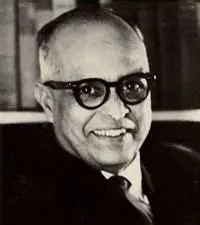
R. K. Narayan was an Indian novelist, short-story writer and essayist who became one of the leading voices of Indian literature in English. His fiction brought ordinary Indian life to international readers through humour, irony and close observation. Much of his work centred on Malgudi, his fictional South Indian town and one of the most recognizable settings in Indian literature.
Narayan wrote about families, schools, marriages, businesses, religion, ambition and everyday social tensions. His best-known books include Swami and Friends, The Guide, The English Teacher, The Financial Expert and Malgudi Days. Over a career spanning more than six decades, he helped give Indian English fiction a distinctive voice.
Early Life and Family Background
Rasipuram Krishnaswami Narayanaswami was born on October 10, 1906, in Madras, now Chennai, India. His father, Rasipuram Venkatarama Narayanaswami Iyer, was an educator and school headmaster. Because his father moved between schools, Narayan spent much of his childhood away from his parents. His grandmother Ammani became an important influence during these years.
Narayan grew up during British rule, when English education had become an important part of Indian public life. He later transformed that colonial language into a vehicle for describing Indian customs, personalities and social change. His younger brother R. K. Laxman became a celebrated cartoonist, creating another major artistic career within the family.
Education and Early Career
Narayan attended schools in Madras before studying at Maharaja’s College in Mysore. He graduated in 1930 after struggling with his university examinations. His education gave him a strong foundation in English literature, but writing rather than formal employment became his central ambition.
His early attempts to earn a living included teaching, journalism and editorial work. He also wrote articles and short pieces for newspapers and magazines. These experiences helped him develop the understated humour and close observation that later became central to his fiction.
Creating Malgudi
Narayan’s breakthrough came with Swami and Friends, published in 1935. The novel introduced Malgudi, an imaginary South Indian town where schoolchildren, merchants, teachers, families and officials lived through ordinary problems and unexpected events. The book also established the setting that would dominate much of his later fiction.
The manuscript initially faced rejection from publishers. His friend Purna helped bring it to Graham Greene, who recognized its quality and helped secure publication by Hamish Hamilton. Greene became an important supporter of Narayan’s career and helped introduce his work to British readers.
Malgudi was fictional, but it reflected recognizable aspects of Indian society. Narayan used the town to examine social relationships without turning his novels into political treatises. Its recurring characters and places gradually created a literary world that readers could revisit across different books.
Major Literary Works
Narayan followed Swami and Friends with novels including The Bachelor of Arts and The Dark Room. His later works explored adulthood, marriage, money, religion and social ambition. The English Teacher, published in 1945, drew heavily on personal grief after the death of his wife.
His most celebrated novel, The Guide, appeared in 1958. It follows Raju, a tourist guide whose life changes after his involvement with the dancer Rosie. The novel explores deception, ambition, responsibility and spiritual transformation while retaining Narayan’s characteristic humour and human sympathy.
The Guide won the Sahitya Akademi Award in 1960, making Narayan the first recipient of the award for an English-language novel. His other important works included The Financial Expert, Waiting for the Mahatma, The Man-Eater of Malgudi, The Vendor of Sweets, A Tiger for Malgudi and The World of Nagaraj.
His short stories were equally important. Malgudi Days, Under the Banyan Tree and A Horse and Two Goats brought his style to shorter forms. He also wrote essays, travel books, memoirs and retellings of the Ramayana and Mahabharata.
Personal Life and Family
Narayan married Rajam in 1934 after meeting her in Mysore. Their marriage lasted only a few years because Rajam died from typhoid in 1939. Their daughter, Hema, was their only child. Narayan never remarried, and the loss deeply affected his personal life and writing.
His memoir My Days later provided readers with insight into his experiences, relationships and development as a writer. His family also remained connected to India’s cultural world through his brother R. K. Laxman.
Later Career and Honours
Narayan’s reputation grew steadily in India and abroad. He received honorary doctorates from universities including Leeds, Delhi and Mysore. In 1980, the Royal Society of Literature awarded him the A. C. Benson Medal. He was also made an honorary member of the American Academy of Arts and Letters.
In 1989, Narayan entered India’s Rajya Sabha as a nominated member. His appointment reflected the national importance attached to his literary career. In 2000, the Government of India awarded him the Padma Vibhushan, one of the country’s highest civilian honours.
He was also elected a Fellow of the Sahitya Akademi in 1994. Although he was repeatedly discussed as a possible Nobel Prize in Literature candidate, he never received the Nobel.
Death
R. K. Narayan died on May 13, 2001, in Chennai at the age of 94. He had remained active in his later years, but his health eventually declined. His death marked the end of one of the longest and most influential careers in Indian English fiction.
Legacy and Historical Significance
Narayan’s greatest historical contribution was his role in establishing Indian English fiction as a literature rooted in local experience. He showed that English could describe Indian towns, families, beliefs and social tensions without losing their cultural character.
Malgudi became the clearest symbol of that achievement. The fictional town gave Narayan a flexible setting for examining generations of Indian life. Through ordinary characters, he explored larger questions about modernity, tradition, ambition, morality and human weakness.
His style also distinguished him from writers who approached colonial and postcolonial India through more overt political narratives. Narayan often found historical change in everyday situations. That approach made his fiction accessible while still preserving a strong sense of Indian social life.
His books continue to be read, taught and adapted. Swami and Friends and Malgudi Days introduced generations of readers to his world, while The Guide remains one of his most critically recognized novels. His lasting achievement was to make the seemingly ordinary lives of Malgudi carry universal literary meaning.
Frequently Asked Questions
Who was R. K. Narayan?
R. K. Narayan was an Indian novelist and short-story writer best known for his English-language fiction set in the fictional town of Malgudi.
When was R. K. Narayan born?
He was born on October 10, 1906, in Madras, now Chennai, India.
What is R. K. Narayan famous for?
He is famous for creating Malgudi and writing major works such as Swami and Friends, The Guide and Malgudi Days.
Did R. K. Narayan win the Sahitya Akademi Award?
Yes. He won the Sahitya Akademi Award in 1960 for The Guide.
Who was R. K. Narayan’s wife?
His wife was Rajam. They married in 1934, and she died from typhoid in 1939.
When did R. K. Narayan die?
R. K. Narayan died on May 13, 2001, aged 94.
Conclusion
R. K. Narayan gave Indian English literature one of its most enduring fictional worlds. Through Malgudi and its ordinary inhabitants, he captured the humour, contradictions and changing social life of modern India. His books established a lasting literary bridge between Indian experience and international English-language readership.